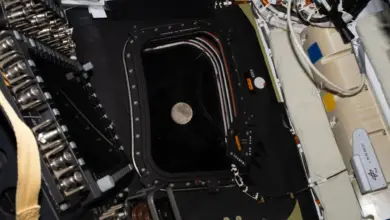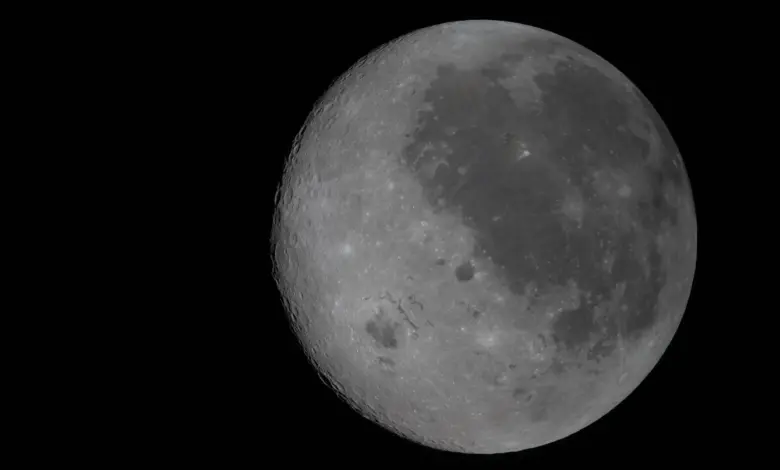
At 1: 57 p. m. ET on Monday, apollo 13 ceased to be the benchmark for how far humans have traveled from Earth. The Artemis II crew crossed that line in a cramped capsule, marking a record that is both technical and symbolic: four astronauts became the farthest-traveled humans in history while flying by the Moon without stopping.
Verified fact: NASA says the crew surpassed the Apollo 13 record of 248, 655 miles set in 1970. Informed analysis: the significance is not only the distance itself, but the fact that a mission designed as a controlled lunar flyby now carries the burden of redefining human reach in deep space.
What exactly changed when apollo 13 stopped being the record?
The answer is precise. NASA’s Artemis II astronauts Reid Wiseman, Victor Glover, Christina Koch, and Jeremy Hansen set the new distance mark during the mission’s lunar flyby phase. The agency places closest approach at 4, 070 miles altitude, with the observation period lasting roughly seven hours. The crew’s journey was expected to go about 5, 000 miles beyond the Moon, exceeding the earlier Apollo 13 figure by about 4, 000 miles.
The moment was staged with intention. Before the record was broken, the astronauts dimmed the lights inside Orion and positioned themselves by the windows. That detail matters because it shows this was not just a navigation milestone; it was also a structured observational event. NASA instructed the crew to make notes and audio recordings on crew position, unexpected sights, lunar target descriptions, and emotional reactions during the flyby.
Canadian astronaut Jeremy Hansen described the view as something that was “blowing” his mind and called on this generation and the next to ensure the record would not last long. That statement frames the mission as both an achievement and a challenge, with apollo 13 standing as a historical marker that Artemis II has now moved beyond.
Why is NASA treating this flyby as more than a distance exercise?
Because the record is tied to science, communications, and mission operations at once. During the flyby, Orion was expected to pass behind the Moon and enter a planned communications blackout from 6: 44 to 7: 25 p. m. ET. NASA said its Deep Space Network would carry communications, even though the antennas in California, Spain, and Australia would not have a direct line of sight.
That is where the operational stress becomes visible. The agency has emphasized that blackouts were tense during Apollo missions, but the flight director said physics would bring the spacecraft back to the front side of the Moon. The point is not dramatic language; it is the dependence of the mission on precise spacecraft behavior during a window when direct contact is interrupted.
The crew’s observational targets reinforce that this is a science mission, not a stunt. The final list of 30 lunar surface targets included Reiner Gamma, a bright swirl whose origin remains under study, and Glushko, a 27-mile-wide crater with visible streaks extending outward. Another target, Orientale basin, is nearly 600 miles wide and 3. 8 billion years old, while Hertzsprung basin on the far side offers a degraded contrast that may help scientists understand lunar evolution over geologic timescales.
Who benefits from the new record, and what does it reveal?
NASA benefits first, because the mission supports a broader space exploration program and demonstrates that the systems around Orion, mission control, and the Deep Space Network are functioning under demanding conditions. The crew benefits in another sense: their observations may help map the Moon’s far side and refine future science objectives.
The public benefit is more interpretive. The record turns an abstract distance figure into something legible. Christina Koch has said the crew does not live on superlatives, but that milestones matter when people can understand and wrap their heads around them. That is a useful framing because it separates celebration from evidence.
It also matters that NASA’s lunar science officer briefed the crew before the observation period and that flight personnel and support staff even sent what NASA described as the longest person-to-person message ever sent in human history. Small details like that can sound playful, but they show how a mission at extreme distance still depends on ordinary human coordination.
What should the public watch next?
The main issue is whether the mission’s success translates into sustained transparency about what the crew saw, what they recorded, and how the spacecraft performed through blackout and lunar passage. NASA has already said image quality may vary because of distance from Earth, system limitations, and bandwidth across its communications network. That caution is important: the record is confirmed, but the full scientific value will depend on the quality of the observations that follow.
For now, the central fact is clear. apollo 13 no longer holds the distance mark, and Artemis II has moved the boundary of human travel farther from Earth than any mission before it. The broader accountability question is whether this milestone will be treated as a one-day headline or as evidence that deep-space operations are becoming routine enough to demand fuller public scrutiny of the systems, targets, and decisions behind them.
That is why apollo 13 remains essential to the story: not as a relic, but as the old standard that Artemis II has now overtaken, forcing a new conversation about what comes next.