An air canada regional jet collided with a Port Authority firefighting vehicle while landing at New York’s LaGuardia, killing the pilot and co-pilot and prompting a full airport shutdown. The strike left dozens injured, damaged the plane’s nose and triggered a multi-agency emergency response that has grounded operations and diverted flights as investigators work to establish the sequence of events.
Air Canada flight and immediate aftermath
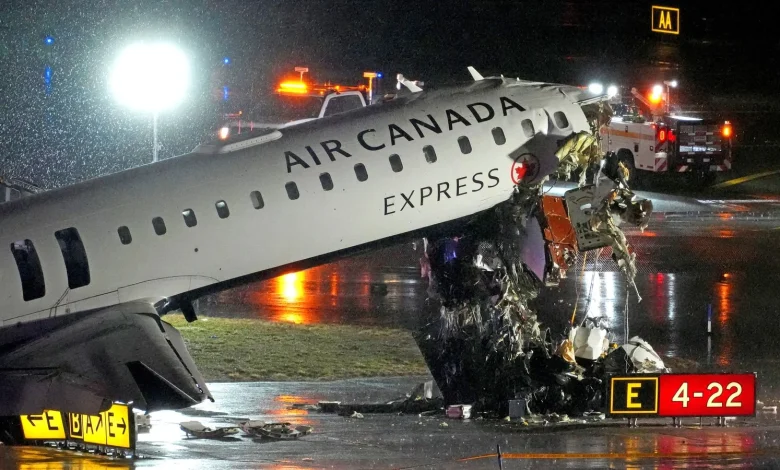
The aircraft involved was an Air Canada Express CRJ-900 operated by Jazz Aviation, a unit owned by Chorus Aviation. Jazz’s preliminary passenger list indicated 72 passengers and four crew on board, though an earlier passenger manifest was cited with a different total that remains subject to confirmation. The flight had arrived from Montreal and struck a Port Authority Aircraft Rescue and Firefighting vehicle that was responding to a separate incident on runway 4.
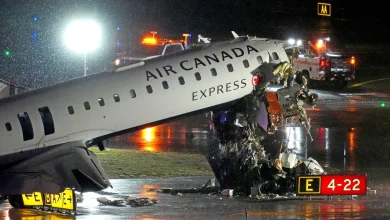
Flight-tracking data recorded the strike at about 24mph, with the last recorded data entry at 11: 37pm ET. Photos taken after the accident showed damage to the nose of the plane, which was tilted upward. Emergency response protocols were immediately activated and emergency services moved to treat and transport injured people; some passengers were taken to Elmhurst and Queens Presbyterian hospitals. Authorities estimate dozens were injured overall, and several police officers operating the fire vehicle suffered broken limbs and were in stable condition at a hospital.
Deep analysis: sequence, operations and airport disruption
Investigators face several immediate technical and operational lines of inquiry. The Port Authority of New York and New Jersey has stated that the firefighting vehicle was responding to a separate incident when it was struck on runway 4. That detail frames the collision not as a routine runway incursion but as an intersection of concurrent emergency responses, complicating control-room coordination and runway-access protocols.
Operational consequences were immediate. Flight-tracking summaries show multiple flights diverted or returned to origin and the Federal Aviation Administration issued a grounding for LaGuardia that is expected to keep the field closed until at least 2: 00pm ET the following day while recovery and investigative work proceed. Ground-operations disruption extended to road closures: streets and highway exits into the airport were closed and the New York Police Department advised travelers to avoid the area because of delays and emergency personnel on site.
From a safety-analysis perspective, the collision raises questions about emergency-vehicle placement and runway incursion safeguards during concurrent incidents. The relatively low closing speed recorded in tracking data does not diminish the severity of the outcome — both pilots were killed — and will focus inquiry on timing, communications between agencies, and the protocols that govern active-runway responses.
Official responses, responsibilities and next steps
Jazz Aviation confirmed the identity of the flight and provided preliminary passenger counts, noting that lists remain subject to confirmation. The Port Authority of New York and New Jersey confirmed the firefighting vehicle was responding to a separate incident when struck, and Port Authority Police units were on scene handling the developing situation. The Federal Aviation Administration said the airport was expected to remain closed until 2: 00pm ET to allow investigative and recovery operations to continue. The National Transportation Safety Board and the FAA were noted as the principal investigative authorities involved.
Local emergency management systems issued public alerts advising citizens to expect cancellations, road closures and traffic delays and to anticipate a significant emergency-services presence near the airport. The combination of an active investigative timeline and an operational shutdown creates an acute logistical challenge for airlines, passengers and ground services as manifests are reconciled and next-of-kin notifications proceed.
It was also noted that air canada referred to Jazz’s statement and indicated awareness of the incident. Agencies will compile cockpit voice and data recorder information, emergency-vehicle logs and tower communications as part of the formal inquiry; those materials will be essential to avoid premature conclusions and to separate verifiable facts from early speculation.
The immediate priority remains victim care, scene preservation and the systematic collection of evidence. How agencies coordinate the release of technical findings — and whether procedural changes for emergency-runway responses follow — will determine the longer-term safety implications for busy urban airports that must balance frequent emergencies with dense arrival and departure schedules.
The loss of two crew members and the partial incapacitation of firefighting personnel leave unresolved operational and human questions: how will procedures change to prevent an emergency response creating a new hazard on an active runway, and how will investigators reconcile differing passenger counts and initial reports as the official record is completed? As authorities continue recovery and investigation, the answers will be essential for restoring confidence in airport safety and emergency protocols.
Will the findings from this investigation prompt immediate changes in runway emergency procedures at high-traffic airports, and how quickly can those changes be implemented to reduce the risk of a repeat event involving air canada operations or any carrier operating under similar conditions?