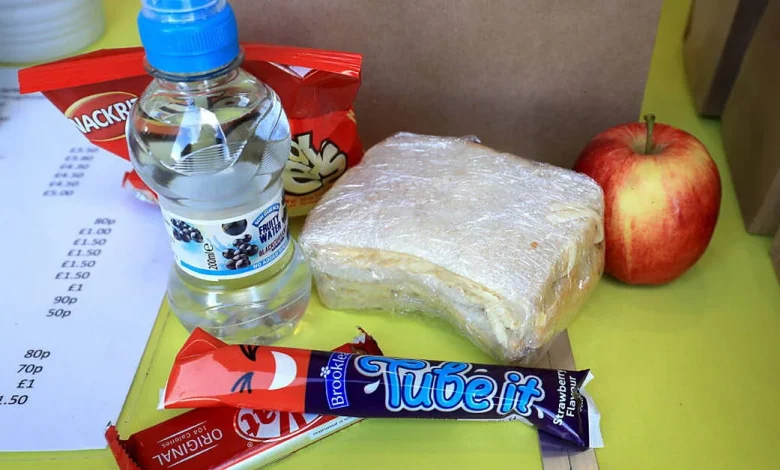
Hot school meals criticism has moved from the margins to the centre of debate after a large survey and fresh government attention exposed persistent problems: reheated food served in disposable containers, uniform portions that ignore age differences, and a pattern of parental top-ups that generates avoidable waste.
Hot School Meals Criticism: what the survey reveals
Verified facts: Fine Gael’s survey, which received 8, 000 responses from parents, teachers and suppliers, documents widespread dissatisfaction with the Hot Schools Meal Programme on multiple fronts. The survey identifies concerns about nutritional quality, taste, freshness and cooking methods. Nearly 80% of parents who signed up to the programme still provide their children with lunches and have not opted out, a behavior the survey links directly to unnecessary food waste. The survey also highlights that identical portion sizes are being distributed to junior infants and sixth class pupils, a practice singled out as contributing to excess waste.
Named positions: Senator Nelson Murray (Senator, Meath) has emphasized the scale and fiscal weight of the programme and called for scrutiny of returns on public investment. The Hot Schools Meal Programme is described in official materials as an initiative of the Irish Government intended to provide school meals.
What is not being told? Who benefits and who is disadvantaged?
Verified facts: The rollout that began after the programme was introduced in 2019 now faces a proposed rejig by government planners before any extension into secondary schools. The proposal from Fine Gael includes recommendations for a hot-and-cold lunch option and an evaluation of portion sizes. Separately, coverage of the programme notes that one-in-five children in Ireland are in families living below the poverty line, signaling a policy imperative to get school food right for vulnerable households.
Analysis: The mismatch between policy intent and practice emerges from the survey results: public investment aimed at reducing food insecurity is being deployed in a format that many families find unsuitable. Parents who continue to pack lunches despite enrolment indicate both a lack of confidence in meals served and a willingness to ensure children have acceptable food, at added personal cost and with environmental consequences. Suppliers and schools are squeezed between procurement rules and logistical realities; the current system appears to advantage scale and convenience over agency and mealtime experience.
Are there viable alternatives and what do they require?
Verified facts: The larger discussion around models for school food includes state-supported community dining with mandated procurement from local producers. The contextual example of food entrepreneur Carly Trisk Grove is offered as a practical case: she opened a first restaurant at 25 and by 2012 secured a purpose-built space on a local authority site with a 50-year lease on a peppercorn rent, running a model that combined commercial viability with community food provision. Trends in consumer behaviour are also documented: an institutional report from Just Eat in 2023 estimated national spending on food delivery at €2. 2 billion annually, with almost 23% of consumers using a food delivery service in the previous year and average monthly grocery delivery spending for that demographic noted at €174. 30.
Analysis: These facts point to two linked pressures shaping the programme: convenience-driven food trends outside schools and policy design inside schools that prioritises uniform provision and centralized supply. Community dining models with local procurement are presented as an alternative that could restore the social experience of shared meals, increase perceived quality and reduce waste by aligning portions and menus with local needs. Implementing such alternatives, however, would require changes to procurement rules, investment in premises and staff, and a different set of performance metrics focused on participation, satisfaction and waste reduction rather than simple per-meal throughput.
Accountability and next steps: The evidence assembled from the Fine Gael survey and the government’s stated plans for revision creates a narrow window for transparent, targeted reform. The combination of high parental non-use of supplied meals, uniform portion sizes across widely different age groups, and documented dissatisfaction on quality suggests a need for independent portion evaluation, pilot models that include hot and cold options, and rigorous measurement of food waste. Any public response should publish baseline data on participation, waste volumes and nutritional outcomes tied to named government units responsible for the programme.
Verified uncertainty: The survey data show patterns of dissatisfaction and behaviour but do not, on their own, determine which alternative model will produce better nutrition outcomes or lower waste. Further pilots and transparent measurement will be necessary.
For now, the facts in hand make clear that hot school meals criticism is not merely a matter of taste: it raises questions about value for public money, equity for low-income families, and environmental waste that call for prompt, documented reform.