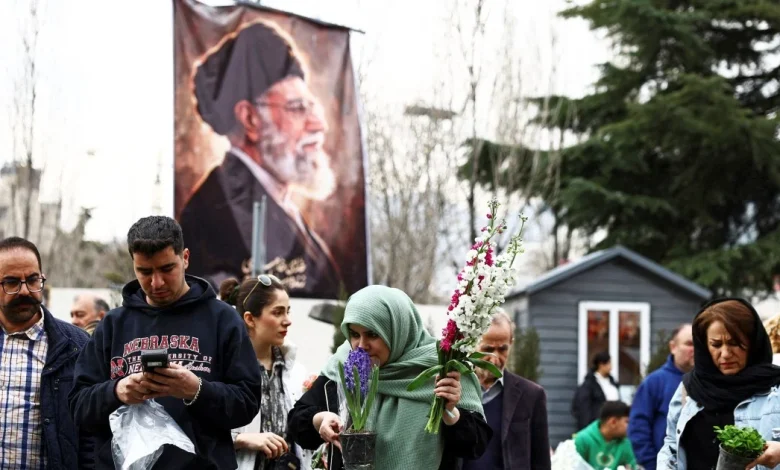
On a night meant for celebration, the skyline flashed with the glow of interceptions: streaks of defensive fire tearing across the darkness as residents listened for the next boom. The iranian new year arrived in a region where air defenses were active, sirens sounded in city streets and routine holidays collided with a widening war.
What happened across the Gulf and why does it matter?
Missiles and unmanned aircraft were launched toward several Gulf Arab countries, with local forces engaging intercept operations. Kuwait’s National Guard shot down at least one unmanned aircraft, and air raid sirens sounded across Kuwait City. The UAE, Saudi Arabia and Bahrain also reported air-defence activity and explosions tied to interception efforts. Those strikes and countermeasures have produced several deaths in Gulf nations and sharp economic damage: Rystad Energy notes that daily output from Middle Eastern oil producers fell from 21 million barrels to 14 million barrels after a little more than a week of conflict, and the moves have disrupted tourism, travel and global supply chains.
How did Iranian New Year become a backdrop for strikes?
The timing amplified symbolism. Iran’s Supreme Leader Mojtaba Khamenei issued a statement marking Nowruz and Eid al-Fitr that praised the public for standing firm amid repeated attacks from Israel and the U. S., and he maintained that cultural and religious ties with neighboring countries remain important despite the strikes. Iranian Foreign Minister Abbas Araghchi criticized U. S. assessments of the conflict and likened some U. S. messaging about progress to historical briefings that concealed battlefield realities, writing that the U. S. government was detached from reality. These public messages came as Tehran justified retaliatory strikes aimed at targets beyond its borders, while Gulf states insisted the attacks on them were unjustified.
Who is speaking and what are officials doing?
U. S. military posture has shifted: the U. S. is accelerating the deployment of thousands more Marines and sailors to the Middle East. Secretary of Defense Pete Hegseth has been a focal point of contention over public statements made about the war. Ukrainian President Volodymyr Zelenskyy wrote that Kyiv has received signals of readiness to continue working within existing negotiation formats to try to end Russia’s war against Ukraine, noting that peace talks have paused amid the Iran war and related security concerns. On the ground in Gulf cities, a reporter in Dubai described frequent nights lit by defensive intercepts and said more than half of the projectiles fired in retaliation have targeted places in the UAE; local authorities confirmed interceptions in their skies.
What are the human and economic consequences, and what is being done?
Beyond the immediate danger to civilians, the strikes have curtailed energy production and rattled regional economies. Factories and supply chains are disrupted, and travel and hospitality sectors face major cancellations. Gulf states continue to use air defenses to protect population centers and key infrastructure. Diplomatic channels remain active: leaders publicly assert commitments to cultural and regional ties even as military exchanges continue. Meanwhile, parties involved in other conflicts are attempting to keep parallel negotiations alive, with one regional leader indicating a willingness to pursue substantive talks when security conditions permit.
Back on the street where the night began, the celebrations of a new year felt reframed. Families who had planned to gather for holiday meals watched the sky instead, weighing whether to sleep or move to shelters. The iranian new year — a moment for renewal — arrived in many places as a test of endurance and of whether public rituals could coexist with wartime realities. As intercepts continued and leaders issued stark public statements, the region faced the uneasy task of protecting civilians while searching for diplomatic openings that could restore both safety and seasonal normalcy.