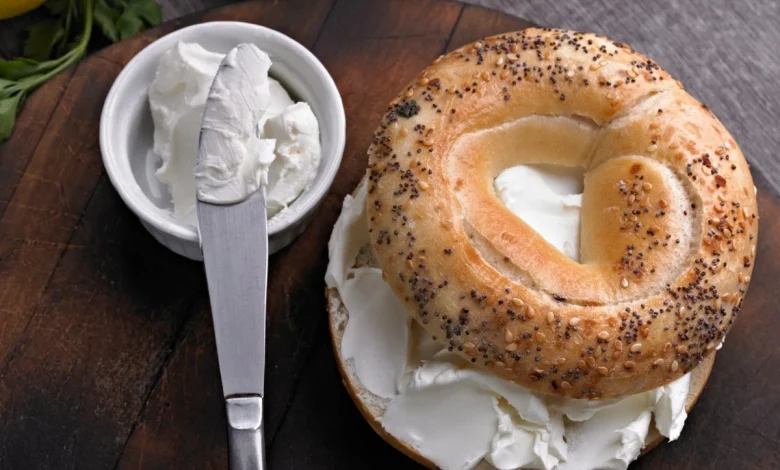
An upgraded cream cheese recall has drawn the Food and Drug Administration’s most serious warning after routine testing found Listeria monocytogenes in equipment used to produce five-pound tubs. The cream cheese recall, announced with a Class I classification, covers fourteen flavors and has prompted withdrawals from retail stores and distributors in New York City; the implicated product has expiration dates through February 27 (ET).
Background and context: scope, products and classification
The recall, issued on February 20 (ET), affects fourteen flavors of five-pound tubs produced by Made Fresh Salads, including Whipped Cream Cheese and Vegetable Cream Cheese. The FDA classed the action as Class I, defining that classification as a situation with a “reasonable probability” that the product “will cause serious adverse health consequences or death. ” Made Fresh Salads said routine sampling identified contamination in part of the mixer used in production and that the company has stopped using the contaminated mixer.
Deep analysis: what the upgrade means and health implications
The elevation to a Class I status signals heightened concern about potential harm. The company noted that otherwise healthy people who contract Listeria may experience short-term symptoms such as high fever, abdominal pain and diarrhea, while the bacterium can pose more severe risks to young children, older adults and those with weakened immune systems. Pregnant women infected with Listeria monocytogenes face increased risk of miscarriage and stillbirth, the company warned. No illnesses related to the recall were reported at the time of the company’s announcement.
Operationally, the finding of contamination in a mixer links the hazard to the production environment rather than an ingredient, and the manufacturer halted use of that equipment as a containment step. The cream cheese recall therefore centers on a control-point failure within production machinery rather than on distribution or storage failures identified in the available statements.
Cream Cheese Recall: logistics, distribution and consumer guidance
The recalled product was delivered to retail stores and distributors in New York City from the company based on Long Island in New York. Consumers who purchased the recalled five-pound tubs with expiration dates through February 27 (ET) have been advised to return the product for a full refund. Made Fresh Salads provided guidance on typical Listeria symptoms and emphasized which populations face elevated risks, while confirming the contaminated mixer is no longer in use.
From a supply-chain perspective, a near-full withdrawal of a single-format item—five-pound tubs in multiple flavors—creates an immediate retrieval burden for retailers and distributors who received shipments. The company’s localized distribution footprint in New York City concentrates the public-health response and the need for targeted consumer messaging in the region.
Implications and forward look: monitoring and unanswered questions
The FDA’s Class I designation frames this as a recall with potentially grave outcomes if exposure occurs, elevating the priority for inspection, environmental testing and verification of corrective actions at the production facility. Key operational steps implicit in the available information include verifying the elimination of contamination in production equipment, broad environmental sampling, and documentation of remediation prior to resuming use of the affected mixer.
While no linked illnesses were reported at the time of the announcement, the public-health rationale for an expedited, visible response remains clear: protecting vulnerable groups and preventing severe outcomes. The recall raises questions about root-cause analysis timelines and the breadth of environmental review now required before production can be considered secure.
Will tighter oversight of production equipment and more frequent environmental sampling become standard practice for similar manufacturers in the region as a result of this event, and how quickly will verification measures reassure regulators and the public that the risk has been contained? The cream cheese recall leaves that forward-looking question squarely on the table.