Lance Stroll retirement sparks Chinese GP safety car — a mid-race jolt that reshaped strategy

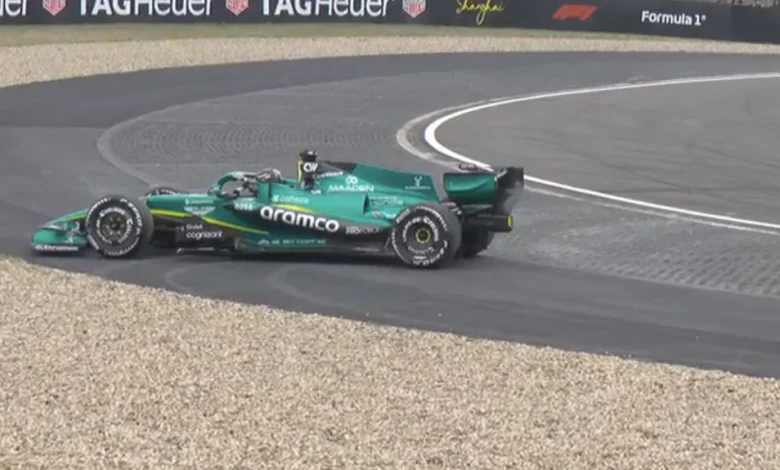
The roar of engines cut to a confused shuffle as lance stroll pulled off at the first corner at the start of the 10th lap, leaving marshals to recover an Aston Martin car and forcing an immediate safety car that lifted the Shanghai circuit’s rhythm into uncertainty.
Lance Stroll’s retirement and the immediate fallout
Stroll’s exit produced the race’s first safety car when his Aston Martin required recovery from the run-off. The intervention reduced the running field to just 17 cars after four drivers—Lando Norris, Oscar Piastri, Gabriel Bortoleto and Alex Albon—failed to take the start because of various issues. For McLaren, the weekend marked an unprecedented setback in the modern era: both of its cars failed to start a grand prix for the first time since the 2005 United States Grand Prix.
How did the safety car reshape strategy?
The neutralization handed a tactical lifeline to those who had begun the race on medium tyres. Teams and drivers who were on the medium compound used the opportunity to pit under the safety car, a move that included the four drivers running at the top of the order: Kimi Antonelli, George Russell, Lewis Hamilton and Charles Leclerc. The pit phase under safety car conditions compressed gaps and altered the sequence of who would defend track position when green-flag running resumed.
Voices from the paddock and the human angle
On the human side of the pit lane, the day carried both frustration and resolve. “We’ll do our best, ” was the succinct message attached to Stroll’s weekend, expressed in a headline that set the tone for his hopes of improvement in China. Lance Stroll, Aston Martin driver, left his team and the spectators confronting the practical consequences of a sudden retirement: recovery work, strategic recalculation and the emotional impact of leaving a race early.
The drivers who did not start added an extra layer of disruption. For the teams and mechanics who prepare cars overnight and manage every check before lights out, seeing multiple cars unable to start amplified the logistical and psychological toll of a race weekend that had already been anything but straightforward.
What happens next and who is responding?
With the safety car having reshuffled strategies mid-race, teams that pitted under neutralized conditions face a new tactical landscape for the remainder of the event. Aston Martin must assess the retirement and its cause as it looks toward recovery at future rounds, while the teams affected by non-starts will examine the failures that kept Norris, Piastri, Bortoleto and Albon off the grid. The statistical note about McLaren underscores how singular the weekend’s problems proved for at least one team, prompting internal reviews and immediate corrective steps.
Back on pit lane, engineers, mechanics and drivers pivoted from surprise to action, recalculating tyre life, fuel strategies and overtaking windows created by the safety-car interruption. The unfolding sequence underlines how a single car’s retirement can ripple through tactics and fortunes across a race.
The afternoon that began with a full grid and clear routines closed with the circuit quieter in places and busier in others: recovery crews attending the stopped Aston Martin, teams adjusting race plans, and fans processing a race altered by an unexpected exit. The image lingers of Stroll’s car at the run-off, a small, decisive moment that forced a reset and left the paddock to answer fresh questions about reliability, strategy and resilience.
As the paddock prepares to analyze the causes and opportunities born of the stoppage, the scene of lance stroll pulling off at the first corner remains a focal point — a reminder that in racing a single moment can redraw the map and that recovery, on and off the track, often begins the instant the checkered flag is still a long way off.