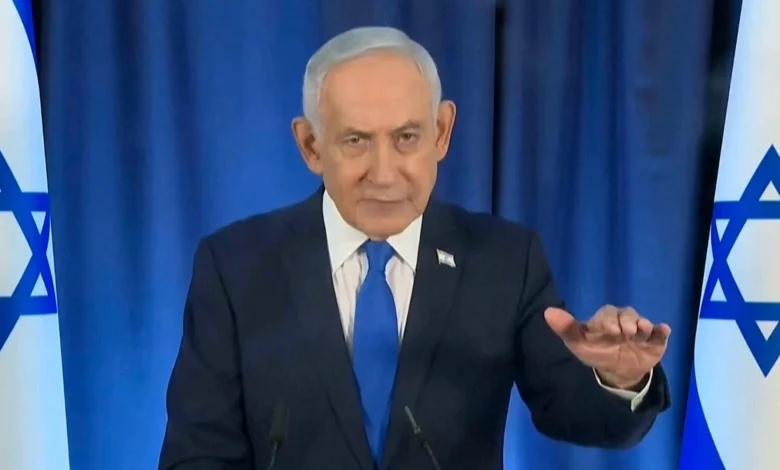
The israeli prime minister Benjamin Netanyahu is facing a sharp political test as hopes for regime change in Iran recede after a high‑intensity campaign; he says strikes have reshaped the balance of power in the Middle East and declared a new path for Iran’s future. Netanyahu has long framed his career around confronting Iran and has described the campaign in existential terms. With military leaders emphasizing deep damage to Iran’s capabilities, Israeli political calculations now hinge on whether victory can be sold without removing Tehran’s leadership.
Israeli Prime Minister’s rhetoric and battlefield claims
Netanyahu has repeatedly cast the conflict as decisive. He called the campaign “a fateful campaign for our very existence” and later told Israelis, “We can already say with certainty: this is no longer the same Iran, this is no longer the same Middle East, and this is not the same Israel. ” The israeli prime minister also stated that several Iranian nuclear scientists were killed in Israeli strikes and said a “new path of freedom” for Iran was approaching, urging Iranians that their country’s future ultimately depends on them.
Military assessments, expert reaction and the political question
Military voices argue the damage to Iran’s weapons programmes is deeper this time, with production sites, leadership, missile stocks and launchers targeted. “Some of it is permanent, and some of it is semi-permanent, ” said Lt Col Nadav Shoshani, spokesman for the Israel Defense Forces, describing the scale of the strikes. Analysts and advisers in Israel have framed the campaign as a rare strategic opportunity; Neri Zilber, journalist and policy advisor to the Israel Policy Forum, said the campaign was “the culmination” of a long strategy and that Netanyahu was still presenting it as a major victory.
The campaign has moved beyond battlefield metrics into political symbolism. The israeli prime minister once urged Iranians to seize a moment after the assassination of Iran’s Supreme Leader Ayatollah Ali Khamanei in an air strike, but now signals suggest the war could end with Tehran’s regime still in place — a shift that complicates the original political promise of regime change.
What happens next
Key decisions loom for Israeli leaders and international partners: whether to press on for deeper change, consolidate gains that senior commanders describe as partially permanent, or accept a new status quo with the regime intact. The central question for the israeli prime minister is how long Israel can sustain public and international backing if the conflict finishes without the regime collapse that many supporters expected. Officials and analysts will be watching political sentiment at home, military assessments of Iran’s remaining capabilities, and diplomatic pressure that could push toward de-escalation or renewed action.