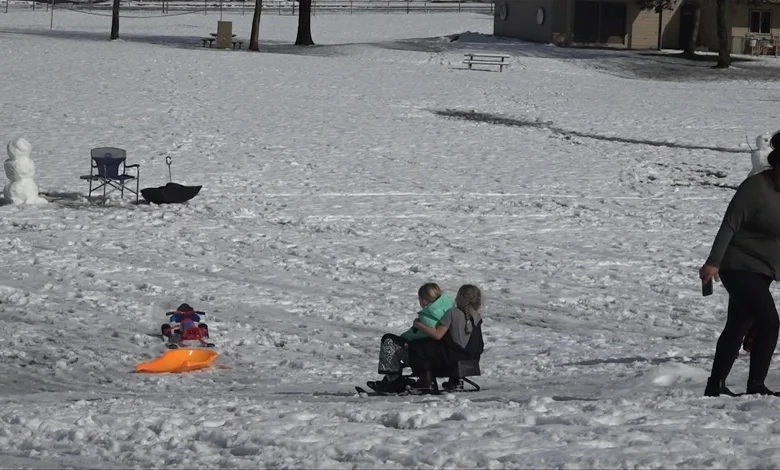
Environment Canada has issued a yellow warning – winter storm for parts of Vancouver Island as a sharp cold front moves across the region, bringing the prospect of westerly gusts and late-season snowfall. The agency posted at 5: 15 a. m. ET that westerly wind gusts of up to 90 km/h are expected to sweep across Greater Victoria beginning Wednesday night, while a special weather statement warns of small but disruptive snow accumulations over higher terrain and inland areas.
Background & context: who and what are affected
The wind warning covers Greater Victoria, the Malahat highway and the Gulf Islands. Environment Canada expects the most intense winds to arrive in the evening, with gusty conditions persisting through the night and into the following day. The concurrent special weather statement applies to the whole of Vancouver Island, with predicted snow amounts of up to five centimetres mainly over higher terrain and inland locations. In the Inland Vancouver Island region, high-elevation roads could see an additional five to 10 centimetres, raising concern for travel and local infrastructure.
Yellow Warning – Winter Storm: analysis and expert perspectives
Environment Canada described the situation succinctly in its early-morning notice: “A sharp cold front crossing Vancouver Island will bring very strong wind gusts to southern Vancouver Island and the Gulf Islands beginning early this evening. ” The weather office warned that “the most intense winds are expected this evening, but conditions will remain gusty through tonight and into Thursday. ” The special weather statement adds that “freezing levels are low enough that precipitation may begin as wet snow or a mixture of wet snow and rain this morning for higher elevation communities and roads, and areas further inland. ” There is also a “slight risk that a heavier pocket of precipitation could generate wet snow down to sea level briefly. “
Regional impact and operational implications
The combined threat of strong gusts and wet snow, even in modest amounts, elevates risks for power infrastructure and transportation corridors. Environment Canada notes that some damage may occur and that residents should prepare for potential power outages. The inclusion of the Malahat highway on the wind warning list highlights the potential for traffic disruption on a key north–south route on the island. The bulletin also marks the third consecutive day in which Environment Canada has warned of potential snowfall, following a localized dumping of snow in Port Alberni that caught residents off guard earlier in the week.
Operational responses will likely focus on road safety at higher elevations where an extra five to 10 centimetres is forecast, and on utility readiness in coastal and southern communities facing gusts up to 90 km/h. Motorists and service operators are being signaled to anticipate sudden transitions between wet conditions and snow as freezing levels remain low enough to permit mixed precipitation in elevated and inland zones.
As communities track this event, the challenge will be balancing the relatively small aggregate snow totals against the outsized effects of strong wind and wet, heavy snow on exposed infrastructure and travel corridors. With the system expected to produce its strongest winds during the evening period, timing of travel and preparedness actions will be critical for minimizing incidents and service interruptions.
Given the persistent uncertainty about where heavier pockets of precipitation might set up, and the potential for brief periods of wet snow at lower elevations, how will local planners and residents adapt their travel and readiness plans as this yellow warning – winter storm unfolds?