Despite more than 40 days of shooting in Korea and Priyanka Arul Mohan’s committed lead turn, the made in korea movie presents a paradox: it stages a Hallyu pilgrimage in visuals but does not fully account for why its protagonist is obsessed with K-culture. That gap — visible in montage moments and in the film’s final choice for the heroine — reframes what the public is being asked to accept as emotional truth.
Made In Korea Movie: Why does the film leave Shenba’s obsession unexplained?
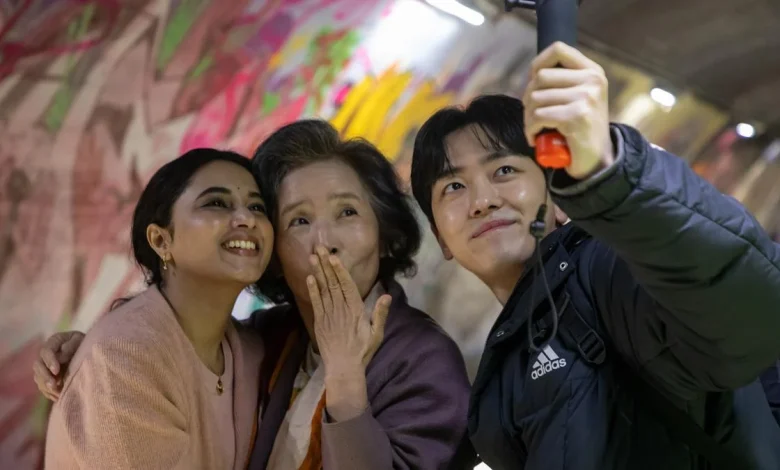
Verified facts: The film centers on Shenba, a girl from a picturesque town in the hills of Tamil Nadu who first learns about Korea in a school fancy dress competition. Shenba’s fascination is signalled by bedroom posters and a desire to learn the language; the narrative shows her in Seoul visiting landmarks such as Namsan tower and an amusement park in brief musical sequences. Director Ra. Karthik has said that his experiences as a first-time visitor to Seoul informed how those scenes were shot. The production places Shenba in work as a helper looking after a bedridden grandmother played by Park Hye-jin, and the screenplay eschews conventional romance to focus on reclaiming identity and self-discovery.
Analysis: The film repeatedly shows external markers of fandom — posters, tourist sites, a learned so-maek order — without giving the audience internal detail about the obsession itself. Visual shorthand replaces motive: we see the accoutrements of K-culture but not the formative experiences or specific texts and artists that would explain Shenba’s attachment. The result is sympathetic surface empathy rather than a persuasive interior life.
What do production details and cast recollections reveal?
Verified facts: Priyanka Arul Mohan, the film’s lead actress, said that food and unpredictable weather were practical challenges while shooting in Korea, and that she bonded strongly with the Korean cast and crew, learning the word “Kamsahamnida” as a daily parting. Sreenidhi Sagar of Rise East Entertainment and director Ra. Karthik are credited as the producer–director team behind the project; their previous work informed the film’s breezy, female-centered approach. The story arc follows Shenba from betrayal to self-discovery, ending with her building an independent life.
Analysis: On-set anecdotes — dietary adaptation, the rhythms of international rehearsal practice, emotional bonds with co-actors — underscore a production committed to authenticity of experience. Yet those same production-level commitments did not translate into narrative excavation of Shenba’s fandom. The filmmaking choices favor mood and cross-cultural encounters over explanatory detail, which can be an artistic decision but one that narrows audience access to the protagonist’s interior stakes.
What does this omission mean for viewers and the film’s mission?
Verified facts: The film deliberately avoids a central romance and instead pairs Shenba’s arc with that of an elderly woman, focusing on mutual reinvention; key set pieces include public landmarks familiar to K-drama viewers, and the ending emphasizes independence. Priyanka Arul Mohan’s role is constructed to be a first international collaboration for the performer, and the director has foregrounded his own newcomer perspective as shaping the Seoul sequences.
Analysis: The omission of concrete motivators for Shenba’s Korea fixation softens the sociocultural claims the movie might have made about K-culture as aspiration. By framing the journey chiefly as a personal rite of passage, the film gains universal resonance but sacrifices explanatory depth. For viewers seeking a portrait of cross-cultural fandom — why a young woman in rural Tamil Nadu dreams of another country — the film offers evocative imagery rather than causal narrative. That stylistic choice shapes how persuasive the ending feels: a conclusion about independence resonates emotionally, but leaves unanswered the central question about the origin and durability of Shenba’s obsession.
Accountability and next steps: Verified facts in the production record point to intentional choices by Ra. Karthik and producer Sreenidhi Sagar to foreground mood and character work over explanatory backstory. To strengthen cultural excavation in future projects, filmmakers can pair immersive location shooting with more explicit character-context scenes that make motive legible. For now, viewers must weigh the film’s strengths — performance, cross-cultural collaboration, and a focus on self-reclamation — against its unwillingness to fully interrogate the very fascination it stages in plain sight. The made in korea movie leaves that central question open, and that omission is the story critics and audiences need to reckon with.