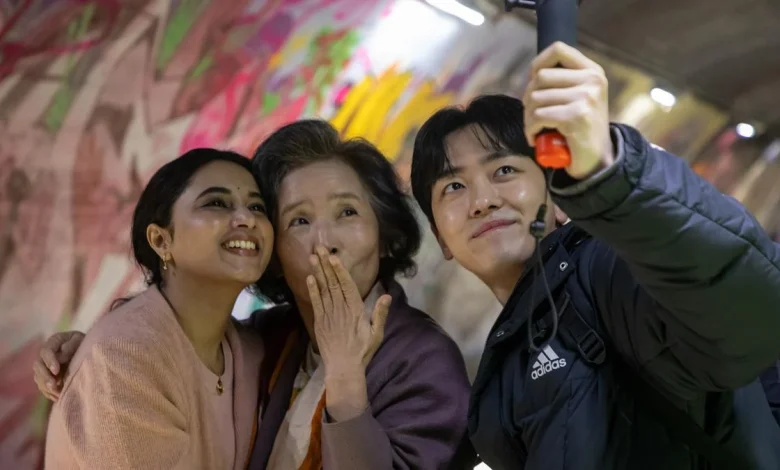
Made In Korea is being prepared for wide multilingual distribution — with dubbing and subtitling in up to 37 languages — even as the film itself leaves the protagonist’s fascination with Korean culture largely unexplained.
What is the central omission?
Verified fact: Priyanka Mohan plays Shenbagam (Shenba), a young woman from a small town in Tamil Nadu whose childhood fascination with Korean culture propels her journey to Seoul. Verified fact: the film follows Shenba as she navigates foreign routines, takes up work as a helper in a mansion and tends to an elderly, bedridden woman played by Park Hye-jin. Verified fact: the director Ra. Karthik has said his experiences as a first-time visitor to Seoul informed scenes in the film that track Shenba learning everyday practices in the city.
Analysis: Those verifiable elements set a clear premise — an intimate, culture-driven personal story. The omission is practical: the screenplay provides fleeting visual shorthand for Shenba’s fandom (posters, a montage at Namsan tower and Lotte World, a single scene ordering a soju-beer mix) but stops short of explaining what sustained emotional or intellectual pull brought her from a hill town to a foreign capital. That gap is the story’s central omission.
Does Made In Korea translate fascination into depth?
Verified fact: one musical sequence shows Shenba visiting well-known landmarks in Seoul, yet the film gives few specifics about why she loves particular shows or which K-pop group she favours. Verified fact: the filmmakers chose to eschew a conventional romance and instead focus on Shenba and her elderly friend reclaiming identity and embarking on self-discovery.
Analysis: Removing a romantic subplot opens space for cultural exploration, but the film’s limited interrogation of Shenba’s fandom undercuts that promise. Scenes informed by the director’s first-hand impressions of Seoul are the most vivid, suggesting the movie’s strongest material comes from lived observation rather than imagined inner life. The result is a tension: an earnest lead performance that wants to probe cross-cultural longing, matched to a script that treats that longing superficially.
Who benefits from the film’s global strategy — and what does localization hide?
Verified fact: Kim Min Ha, a South Korean actress known for stage and screen work, performs the Korean dub of Shenba and has said dubbing the role was an honour and her first dubbing assignment. Verified fact: the production has prepared subtitling and dubbing in up to 37 languages and will be made available in multiple Indian languages. Verified fact: Ra. Karthik is simultaneously directing another high-profile project linked to actor Nagarjuna, a milestone film titled King 100, and observers anticipate Made In Korea may shape expectations for his larger work.
Analysis: The assembly of a Korean dubbing cast led by Kim Min Ha and a broad localization push indicate a clear commercial and distribution strategy: position the film as a cross-cultural product with global reach. That approach can expand audience access, but it also shifts emphasis toward packaging and reach. When localization efforts are foregrounded while the film’s central cross-cultural curiosity remains under-examined, there is a risk that amplification substitutes for narrative depth.
Accountability: verified fact and informed analysis are distinct. Verified fact: the film’s cast, creative choices and localization plans are documented. Informed analysis: those elements, when viewed together, reveal a contradiction between an aggressive global release strategy and a screenplay that leaves the protagonist’s core fascination underdeveloped. Viewers and stakeholders deserve clarity on creative intent and trade-offs.
Final paragraph — call for transparency: Filmmakers should explain why the story elects breadth of audience over depth of cultural interrogation, and the creative team led by Ra. Karthik and principal performers such as Priyanka Mohan and Park Hye-jin should be invited to detail how production choices shaped the portrayal. If the film’s global deployment is to mean more than distribution metrics, future projects must align localization ambitions with storytelling rigor so that Made In Korea becomes an artistic bridge rather than a glossy export label.