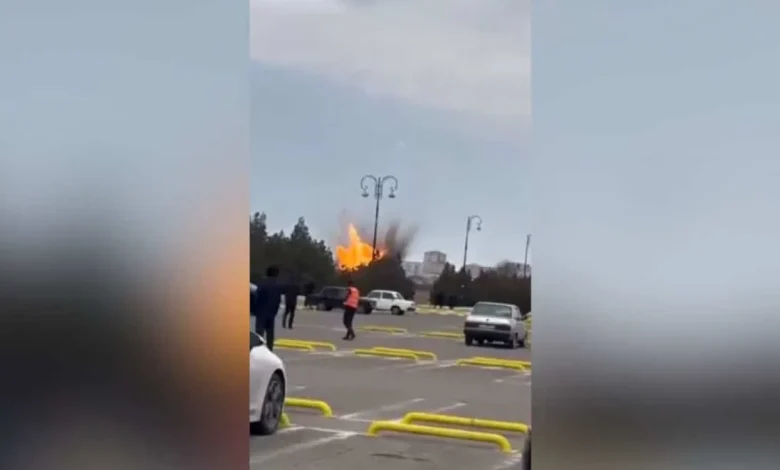
In an unexpected escalation Thursday (ET), azerbaïdjan’s Nakhchivan exclave was hit by two drones that injured two civilians and struck civilian infrastructure, prompting Bakou to summon the Iranian ambassador and warn that the attack “will not remain unanswered. ” The strikes, which touched an airport terminal and fell near a school in Chakarabad, have rapidly shifted a localized incident into a diplomatic and security crisis.
Background & context: what happened and why it matters
Officials in Bakou described two separate drone impacts in the Republic of Nakhchivan: one that struck the airport terminal and another that crashed close to a school in the village of Chakarabad. The Azerbaijani foreign ministry condemned the attacks as launched from the Islamic Republic of Iran and lodged a formal protest by summoning the Iranian ambassador to express a “strong protest” and to state that such acts contravene international law and escalate regional tensions.
Azerbaïdjan’s defense ministry said it was preparing “necessary reprisals” to protect territorial integrity and ensure the safety of civilians and civilian infrastructure. At the same time, the Iranian army denied launching any drone strikes on Azerbaijan and attributed blame to Israel. A video released by an Azerbaijani agency, not independently verified, shows a drone crashing near an airport entrance and triggering an explosion.
Azerbaïdjan and regional fault lines
The geographic and political context sharpens the stakes. Nakhchivan is an exclave that borders Iran and is separated from the rest of the country by Armenia, creating a vulnerable frontier where cross-border incidents carry outsized diplomatic consequences. Bakou has previously affirmed it would not permit its territory to be used to launch attacks against Iran, yet Tehran has long expressed concern over Israel’s military ties with Bakou and the possible use of Azerbaijani territory as an observation or launch platform.
The Turkish foreign ministry publicly condemned the drone attacks on Nakhchivan and urged that strikes on third countries that increase the risk of wider conflict must stop immediately. That diplomatic rebuke underscores how a single episode of kinetic violence can generate wider condemnation and deepen suspicions among regional capitals.
Analysis and consequences: escalation, denials and the road ahead
The incident exposes three intersecting dynamics. First, the physical impacts on civilians and civilian infrastructure — two injured and damage to an airport terminal — convert a tactical strike into a political crisis that obliges official responses. Second, the competing narratives from Bakou and Tehran — an accusation of Iranian drone fire versus an Iranian denial and counter-accusation against Israel — create an accountability gap that heightens the risk of miscalculation.
Third, the public posture of Azerbaijan’s defense and foreign ministries, which reserve the right to respond with appropriate measures, indicates a preparedness to escalate militarily if leaders judge their sovereignty threatened. The Azerbaijani reference to necessary reprisals frames any future action as defensive measures to protect civilians and infrastructure.
Beyond the immediate border, the episode ripples into broader regional dynamics. Maritime and logistical disruptions tied to the broader conflict environment were noted by international maritime authorities: Arsenio Dominguez, Secretary-General of the International Maritime Organization, stressed the large number of seafarers and passengers affected in the wider regional crisis and the agency’s willingness to work to safeguard maritime security and crew welfare. Such statements highlight how land-based confrontations can align with wider disruptions to commerce and movement across neighboring theaters.
Conclusion: where does this leave Azerbaïdjan — and the region?
The near-term outlook hinges on three choices by state actors: whether Iran sustains its denial, whether Bakou pursues measured reprisals or broader military steps, and whether third states press for de-escalation. For azerbaïdjan, the immediate calculus involves balancing a public demand for accountability with the risks of widening conflict. Will diplomatic channels and regional actors succeed in containing this incident before retaliatory steps widen the crisis?