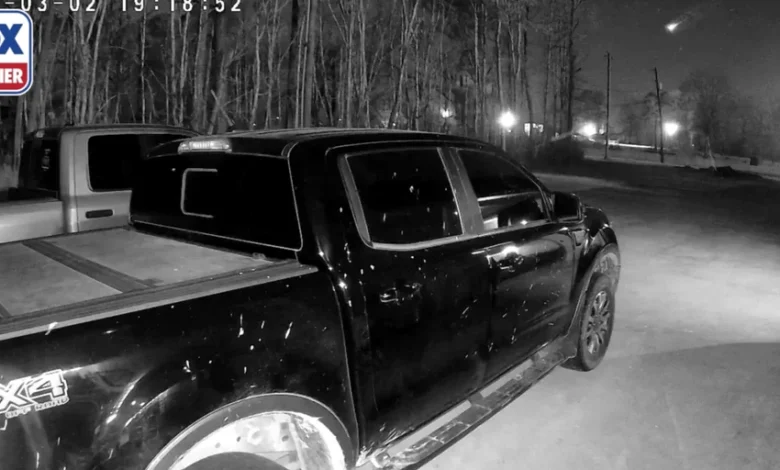
A meteor streaked across northeastern Louisiana on the night of March 2, producing a bright fireball captured on at-home and security camera footage in Walker and observed across multiple states. The event began some 50 miles above the ground, traveled west at 30, 000 miles per hour for more than 41 miles, and disintegrated above the Georgia Pacific Wildlife Management Area at an altitude of 27 miles. Eyewitnesses in Louisiana, Arkansas, Mississippi and Texas filed reports with the American Meteor Society, and NASA classifies the event as part of the sporadic “background” meteor complex rather than an active meteor shower.
What happened when the Meteor blazed across the sky?
Home and security camera footage documented a single, extremely bright fireball moving westward across the northeastern Louisiana night sky. Observers described a sustained streak of light that crossed a wide area; the recorded trajectory began at high altitude, continued for tens of miles, and ended when the object broke apart above a wildlife management area. The phenomenon captured on video matches the description of a fireball — an astronomical term for unusually bright meteors that can be visible across a broad region.
What does the data show?
- Approximate initial altitude above ground: 50 miles.
- Travel direction and distance: westward for more than 41 miles.
- Speed: about 30, 000 miles per hour along the observed path.
- Point of disintegration: above the Georgia Pacific Wildlife Management Area at about 27 miles altitude.
- Geographic reports: eyewitnesses filed reports with the American Meteor Society from Louisiana, Arkansas, Mississippi and Texas.
- Brightness context: the International Meteor Organization notes fireballs typically reach visual magnitude -3 or brighter; magnitude -5 is comparable to the brightest view of Venus and can cast a very faint shadow under the darkest conditions.
- Shower association: NASA classifies this event as part of the sporadic background meteor complex and not associated with any currently active meteor shower.
What should observers expect next?
The official classification of the event as part of the sporadic background complex indicates it was not tied to a known, predictable meteor shower. That means similar, isolated fireballs can appear without relation to a named shower. Observers who captured images or video of the event have already filed reports with the American Meteor Society; continuing to document and submit sightings helps maintain the record of sporadic events. For those tracking unusual night-sky flashes, keeping camera footage and reporting details such as location and time supports follow-up analysis of any future meteor