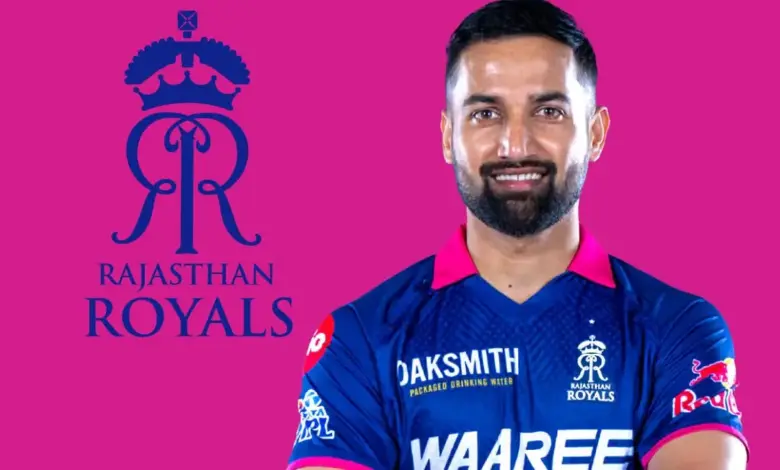
Shubham Dubey did not just finish a chase in the IPL 2026 match against Punjab Kings. He also exposed a deeper truth about how fragile cricket careers can be: one unbeaten 31 off 12 deliveries can change a result, but it cannot erase years spent sleeping in crowded dormitories, fighting financial strain, and waiting for an opportunity that arrived late.
Verified fact: Rajasthan Royals used Shubham Dubey as an impact player while chasing 223 runs. He walked in after a strong start from Vaibhav Sooryavanshi, who made 43 off 16 balls, and Yashasvi Jaiswal, who scored 57. Dubey finished unbeaten on 31 off 12 and helped the Royals return to winning ways, while Punjab Kings suffered their first defeat of the season.
Informed analysis: The innings mattered not only because it won a match, but because it showed how much of modern cricket is decided by players who are still fighting for stability outside the spotlight.
What does the scorecard not show about Shubham Dubey?
The scorecard tells only part of the story. Shubham Dubey was born on 27 August 1994 in Yavatmal, Maharashtra, and is a left-handed middle-order batter who also bowls right-arm offbreaks. But the match-winning cameo only makes sense when placed beside his long climb through hardship.
He comes from a modest middle-class family in Nagpur. His father first ran a paan stall and later took up a private job. Dubey discovered cricket late, in ninth grade, while bunking classes to play tennis-ball matches with friends. That street-cricket background, played under public pressure and often funded through his own efforts, shaped him into a finisher who is most comfortable in the closing overs.
Verified fact: During his early years, Shubham Dubey frequently slept in crowded dormitories, sharing spaces with as many as 10 others because limited resources made better accommodation impossible. That detail is not a side note; it is part of the cost of surviving in competitive sport.
How did Shubham Dubey move from the margins to the IPL stage?
Dubey’s domestic career with Vidarbha began in 2021 with a List A debut in the Vijay Hazare Trophy. For years, he remained on the fringes and was not selected for senior teams despite consistent camp performances. To supplement his income, he played in Mumbai’s Times Shield.
The first major turning point came in the 2023-24 Syed Mushtaq Ali Trophy. There, he scored 221 runs in seven innings at a strike rate of 187. 28 and produced a 58 off 20 balls. That performance put him back into the conversation and eventually led Rajasthan Royals to secure him for ₹5. 8 crore.
Verified fact: Dubey made his IPL debut in 2024 but received limited opportunities. He was released ahead of the 2025 auction and later brought back by Rajasthan Royals. The return matters because it suggests a team saw value in a player whose numbers, patience, and late-innings power were already visible in domestic cricket.
Why did this innings matter to Rajasthan Royals?
Rajasthan Royals were chasing a demanding target of 223. Vaibhav Sooryavanshi and Yashasvi Jaiswal gave the innings shape, but the chase still needed a finisher to close it out. Dubey did that with control and urgency, scoring 31 not out off 12 deliveries.
Verified fact: His strike contribution helped Rajasthan Royals secure the victory and move to third in the points table. Punjab Kings, meanwhile, suffered their first defeat of the season. In a format where momentum can shift quickly, this was more than a single cameo; it was a result that altered the table and the mood around both sides.
Informed analysis: The timing of Dubey’s innings is what makes it significant. He entered after others had laid the foundation, but he still had to absorb the pressure of a 223-run chase. That is where players with his background often become most valuable: they are trained by uncertainty to stay calm when the margin for error is gone.
Who benefits when a player like Shubham Dubey delivers under pressure?
Rajasthan Royals benefit first, because a difficult chase turned into a win. The team also benefits from a player whose profile fits a specific tactical need: a hard-hitting middle-order batter who can finish innings. Dubey benefits too, because a decisive performance restores visibility after limited chances at IPL level.
But the broader picture is less flattering for the system. A player can go from dormitory life and financial strain to a high-value contract, yet the path remains narrow and unpredictable. Many of the markers that define Dubey’s rise — late discovery, fringe selection, side income, and years of waiting — point to a structure that rewards perseverance only after extended uncertainty.
Verified fact: Dubey’s rise is rooted in persistence, but it is also rooted in the material limits that shaped his early career. His background is not a marketing line; it is the context that explains why this innings carried meaning beyond the final total.
What should the public take from this result?
The public should see this as more than a single good night for Rajasthan Royals. The match against Punjab Kings highlighted a player whose success was built through years of financial pressure, limited opportunities, and work away from the spotlight. It also showed how quickly the IPL can turn a long struggle into a headline performance.
Rajasthan Royals’ comeback was real, and so was Shubham Dubey’s role in it. Yet the deeper truth is that the sport still depends on players who spend years proving they belong before they are trusted with decisive moments. That is the contradiction at the center of the story: a late-order finisher can become match-defining in seconds, while the hardship that shaped him remains invisible until the runs arrive. In that sense, Shubham Dubey is not just part of the result; he is the evidence of how much the game asks before it gives anything back.