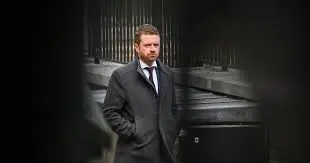
In a committee room in Westminster, Morgan McSweeney put his own role at the center of a controversy that has shadowed Keir Starmer’s government. In his evidence on the Mandelson appointment, morgan mcsweeney said he made a serious mistake in advising the prime minister to appoint Lord Mandelson as US ambassador, then drew a line between judgment and process.
What did Morgan McSweeney tell MPs about the Mandelson appointment?
McSweeney told MPs that the appointment of Mandelson was a “serious error of judgment” and that he was wrong to advise Starmer to support it. He said he resigned because he believes responsibility should rest with those who make serious mistakes, adding that accountability in public life cannot apply only when it is convenient.
He also rejected the claim that he had asked for vetting checks to be “cleared at all costs. ” In his account, he said he did not oversee national security vetting, ask officials to ignore procedures, request that steps be skipped, or communicate that checks should be cleared at all costs. He said those processes exist to protect national security.
McSweeney said his recommendation was based on his view that Mandelson’s experience, relationships and political skills could serve the national interest in Washington at an important moment. But he said that judgment was a mistake.
Why does this hearing matter beyond one appointment?
The hearing has become more than a review of one ambassadorial appointment. It has opened a wider debate about judgment, responsibility and how much trust ministers can place in advice from senior aides. The issue has also turned on what was known, when it was known, and how far the truth about Mandelson’s links to Jeffrey Epstein had been understood during the process.
McSweeney said he initially believed Mandelson had been telling the truth throughout the process. He said it was only later, after the publication of files in September, that he realised he had not been told the truth. He described discovering the closeness of Mandelson’s relationship with Jeffrey Epstein as “a knife through my soul. ”
That personal language gave the session a human edge, but it also underlined the institutional stakes. MPs are considering whether there should be an inquiry into whether Starmer misled Parliament over Mandelson’s vetting. Starmer has called the move a stunt and pure politics, while Tory leader Kemi Badenoch says he misled MPs multiple times over the appointment.
How did McSweeney describe his relationship with Mandelson?
McSweeney said he had been a “confidant” and at times an “adviser” to Mandelson, but not a “mentor. ” He also said he did not try to get Mandelson appointed as a favor for a friend or because he regarded him as a hero. In his evidence, he described Mandelson as lobbying for the post, while also hedging because he did not know whether he would be appointed.
The hearing also moved into a separate discussion about former communications chief Matthew Doyle and a mooted diplomatic role. McSweeney said the conversations were about a duty of care for someone leaving their role. He said Doyle was not promised a job, and that if he had applied, his application would have been considered in the same way as anyone else. He added that the same would be true if it was a woman leaving a senior role.
Earlier, Philip Barton, the former Foreign Office chief, told MPs he was worried Mandelson’s links to Epstein could be a problem, but said he was not consulted on the appointment. That detail fed the committee’s larger concern: whether warnings were heard clearly enough, and whether the process was robust enough to stop political loyalty from overtaking caution.
What happens next after Morgan McSweeney’s evidence?
The committee’s next step will shape how this story lands in Parliament and beyond. MPs will vote later on whether there should be an inquiry into whether Starmer misled Parliament over Mandelson’s vetting. That vote will test not only the government’s handling of the appointment, but also how much weight lawmakers place on McSweeney’s insistence that he accepts personal responsibility for the mistake while denying that he tried to push the process past its limits.
For now, the image is of a former No 10 power broker trying to separate regret from misconduct. In the room, the question is not only whether the Mandelson appointment was wise. It is whether the people around it understood enough, asked enough, and acted soon enough. The answer, MPs suggest, may still matter long after morgan mcsweeney leaves the witness chair.