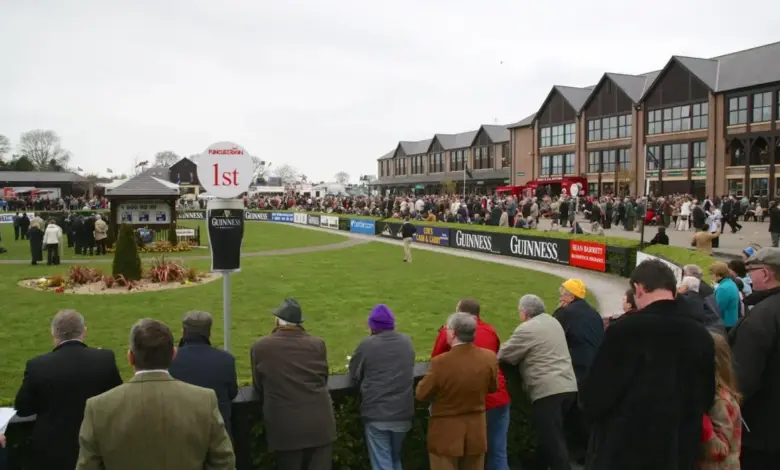
Punchestown is in the spotlight as thousands gather in Co Kildare for the racing, the talk, and the long-running rituals that surround the festival. The Punchestown Festival begins with Walking Sunday, when local people walk the course before the horse racing starts on Tuesday. The event is being framed as more than sport, with family atmosphere, history, and local tradition all part of the draw.
Walking Sunday sets the tone at Punchestown
For many in the surrounding area, Walking Sunday is described as one of the greatest social events of the year. It is a chance to inspect “The Going” before racing begins, but also to meet old friends, catch up on the news of the past year, and trade stories about runners, winnings, and losses. That early gathering underlines why Punchestown carries a meaning that goes well beyond the track.
The festival is also presented as a family occasion, with sideshows and a carnival keeping children occupied while adults focus on horse talk. In that sense, Punchestown has become a temporary town-wide focus point, with life in Naas shaped by the return of the racing crowd.
Tradition runs deep at Punchestown
The history behind Punchestown is part of what gives the meeting its pull. It began as a one-day race meeting in the mid-19th century, with races for farmers’ horses, hunt races, and special events for the army. Judging was far less exact in those early years, and dead heats meant another run because there was no photo-finish.
Some of those older race names remain central to the festival identity. The Bishopscourt Chase is restricted to Co Kildare farmers who breed and train their own horses, while the La Touche Cup remains a fiercely contested feature over banks, stonewalls, and brush fences. The La Touche Cup carries just €2, 000 in prize money, yet it is described as the most prestigious event of the four-day festival. Risk of Thunder, the horse linked to Sean Connery, won it seven times.
There is also a royal echo in the history. Edward VII visited Punchestown before becoming king, and in 1907 local officials in Naas prepared arches, bunting, and a formal welcome. An eyewitness account says the king and queen were so intent on reaching Punchestown for the first race that they sped through Naas without stopping.
Punchestown in the final stretch of the season
The current mood around Punchestown is being tied to the close of an eventful National Hunt season. Five days of championship action are expected to bring the curtain down on a campaign that has already produced winners from eight different trainers in Grade 1 races in Ireland. That breadth of success has been presented as a strong sign for the jumps game.
Among the names singled out are Henry de Bromhead, Colm Murphy, Joseph O’Brien, Noel Meade, Declan Queally, and Andy Slattery. Their recent results have added to the sense that the season has delivered fresh momentum, while Punchestown now stands ready to mark its conclusion.
What Punchestown means now
Mae Leonard describes Punchestown as a place where racegoing and social memory sit side by side. Her account points to a festival that still depends on form, betting, and the race itself, but is equally shaped by local habit, seasonal return, and the shared language of people who know the meeting well.
That is why Punchestown continues to matter: it is a racing festival, but also a yearly gathering where tradition, competition, and community meet in one place. As the festival moves through its five days, Punchestown is set to remain the centre of attention for the closing chapter of the season.