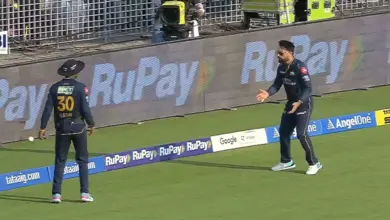
Sahil Parakh arrived at a turning point for Delhi Capitals on Monday, April 27, ET, when the franchise gave the 18-year-old his maiden IPL cap against Royal Challengers Bengaluru at the Arun Jaitley Stadium in New Delhi. The move came inside a broader team reshuffle after a damaging loss in the previous match, with Delhi seeking a sharper balance at the top and in the bowling attack.
What Happens When a Team Needs a Fast Response?
Delhi Capitals made three changes for the match, bringing in Sahil Parakh, Kyle Jamieson and Dushmantha Chameera. Parakh replaced Pathum Nissanka as KL Rahul’s opening partner, a clear sign that the team wanted a different look after the setback in its last outing. The change was not cosmetic. It came after Delhi failed to defend 264 in a shock defeat at the same venue, a result that added pressure to a campaign that has already been uneven.
At this stage, Delhi Capitals sit seventh on the points table with six points and a net run rate of -0. 184. That position matters because it changes the meaning of every selection call. In a tight table, a debut is never only about development; it is also about finding the quickest route back to control. For Sahil Parakh, that meant stepping into the spotlight in a match that was already loaded with tactical consequences.
What If Sahil Parakh Becomes More Than a Stopgap?
Sahil Parakh is not arriving from nowhere. Born in 2007 in Nashik, Maharashtra, he is a left-handed batter who also bowls right-arm leg-breaks. He rose through Maharashtra’s school and Under-19 pathways, captained the Maharashtra U-19 side, and impressed in the Vinoo Mankad Trophy. His profile points to a player trusted to take responsibility early, not merely a squad filler.
His youth record adds weight to that view. Parakh represented India in Under-19 cricket and produced a blistering unbeaten century against Australia in a Youth ODI in Puducherry in 2024. He then carried momentum into the Maharashtra Premier League 2025, where he scored 202 runs in eight matches at a strike rate of 177. 19 for Eagle Nashik Titans. He also made a telling 68 off 33 balls in Qualifier 2 to help his side reach the final.
Delhi Capitals secured him at his base price of Rs 30 lakh in the IPL 2026 auction, a modest outlay for a player viewed internally as part of the next wave of Indian talent. He had also made his debut for Maharashtra in the Syed Mushtaq Ali Trophy last year and played only two games there, which underlines how early he still is in his professional career. Even so, the franchise’s willingness to hand him an IPL debut suggests belief in his ceiling.
What Happens When Opportunity Meets Immediate Pressure?
| Factor | What it means for Delhi Capitals | What it means for Sahil Parakh |
|---|---|---|
| Team form | Seventh place and a negative net run rate increase urgency | Every innings is evaluated in a high-pressure setting |
| Selection change | Three alterations show a tactical reset | He gets a real opening role, not a symbolic appearance |
| Recent form | The team needs quicker stability after a major loss | He can turn promise into trust if he settles early |
| Early setback | Delhi still has to manage a volatile campaign | His debut ended in a two-ball duck, showing the gap between potential and execution |
That gap was visible immediately. Sahil Parakh’s debut lasted only two balls, ending when Bhuvneshwar Kumar uprooted his middle stump. He came in as an opener and left with a brief but revealing first chapter: this level rewards promise, but it does not soften the challenge. Even a highly rated youngster can be exposed quickly if the timing, the pitch conditions, or the opposition’s execution go against him.
There is also the matter of context around his selection. He had recently suffered a facial injury during a practice session, but was fit to play against RCB. That detail adds another layer to his debut story without changing the core reality: Delhi chose him because they needed a fresh option, and because his profile fits a long-term developmental track even in a short-term pressure moment.
Who Wins, Who Loses in This Kind of Debut?
The winners are straightforward. Delhi Capitals gain a look at a young top-order option who has already shown range across age-group cricket, youth internationals, domestic cricket and the Maharashtra Premier League. Parakh gains exposure to the highest level, even if the first outing was brief and difficult. The wider Indian talent pipeline also benefits when a franchise gives meaningful opportunities to players emerging from state and age-group systems.
The risks are equally clear. If Delhi continue to sit outside the top half of the table, every experiment becomes harder to justify. For Pathum Nissanka, the change is a reminder of how quickly roles can shift when a team is searching for a better fit. For Sahil Parakh, the challenge is to turn a single poor debut into a longer runway rather than a premature verdict.
What readers should understand is that Sahil Parakh is now part of a broader Delhi Capitals attempt to correct course while also testing a promising young batter under real pressure. The debut was short, the result was mixed, and the larger picture remains open. But the signal is clear: the franchise sees value in giving him a place in the contest now, not later, and that makes Sahil Parakh one of the names worth watching as the season moves forward.