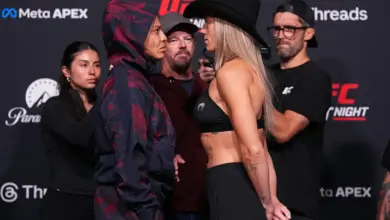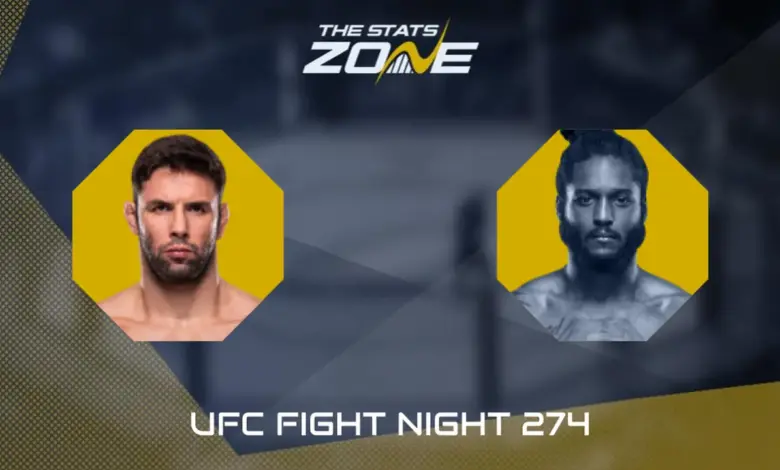
At the Meta APEX in Las Vegas, ryan spann steps into a fight that may be defined less by pedigree than by timing, cage size, and preparation. The matchup with Marcus Buchecha opens the main card Saturday, and the central tension is simple: one fighter is trying to secure a first UFC win, while the other is adjusting to a short-notice heavyweight assignment.
What is the real issue in Ryan Spann’s short-notice heavyweight assignment?
Verified fact: Marcus Buchecha enters at 5-2-1 in MMA and 0-1-1 in the UFC, still searching for that first promotional victory after a decision loss and a draw in his opening two appearances. His most recent win came by submission over Amir Aliakbari at ONE 169 in November 2024. Ryan Spann brings a 23-11 MMA record and a 9-6 UFC mark, and he is 1-1 since moving to heavyweight. His last outing at the weight class was a first-round submission of Lukasz Brzeski at UFC 318 last July, while his heavyweight debut ended in a second-round loss to Waldo Cortes-Acosta last March.
Informed analysis: The main concern is not simply whether ryan spann can compete, but whether a short-notice heavyweight booking changes the balance of the matchup before the first exchange even begins. The smaller cage and the lack of a full camp are factors that make early danger more likely for both men, but they also sharpen the importance of first-contact decisions. In that setting, the fight becomes a narrow test of who can impose a preferred range before the momentum turns.
Why does Marcus Buchecha enter with the clearer path?
Verified fact: Buchecha was originally scheduled to face Max Gimenis before Spann replaced him on short notice. The matchup is set as the main card opener, with the fighters expected to walk to the cage at approximately 8: 10 p. m. ET. The event is at the Meta APEX, and the fight is listed to stream live on Paramount+. The odds in the matchup favor Buchecha at -136, while Spann is listed at +116.
Informed analysis: The betting line reflects a wider view that Buchecha’s grappling gives him the more reliable route if the fight stretches beyond the opening bursts. That does not eliminate the danger from Spann, who remains live early, especially after showing that he can finish quickly at heavyweight. But the evidence in the matchup profile points to a more stable ground edge for Buchecha, which matters most if the contest becomes a scramble-heavy exchange rather than a clean striking match. In a smaller cage, the submission threat can become even harder to escape.
Who benefits if the fight stays chaotic?
Verified fact: The matchup has been framed as one of the heavier, less predictable fights on the card. Spann is coming off his first heavyweight win, and Buchecha is still chasing a first UFC victory. The context points to a clash built on immediacy rather than caution.
Informed analysis: Chaotic fights tend to reward the athlete who can convert a single opening into control, and that is where the matchup becomes revealing. Buchecha’s submission history suggests he can capitalize if the bout reaches the mat or becomes entangled in clinch work. Spann’s most direct path is to make the early moments count before the Brazilian grappler settles into rhythm. In that sense, ryan spann benefits most from a fast start, while Buchecha benefits from any stretch of time that allows the technical gap on the ground to matter.
What should the public know before the main card opens?
Verified fact: The fight is expected to be one of the most consequential openers on the card because it pairs a heavyweight newcomer to the division with a proven finisher looking for a first UFC win. The published pick leans toward Buchecha by submission in Round 1.
Informed analysis: This is not a simple tale of experience versus inexperience. It is a test of whether short notice, heavier weight, and a smaller fighting space can tilt a fight away from the cleaner grappling path. If Spann makes the bout messy early, he may force a different outcome than the line suggests. If Buchecha gets the fight where he wants it, the finish could arrive quickly. That is the core contradiction at the center of ryan spann: he can be dangerous enough to threaten an upset, yet the structure of the matchup still points toward the submission specialist.
Accountability conclusion: The clearest reading of the available facts is that this matchup deserves attention not because it is flashy, but because it exposes how short-notice heavyweight bookings can compress risk and reward into a few decisive minutes. The evidence favors Buchecha, but the uncertainty around Spann’s adjustment period makes the opening bell matter more than usual. If the sport wants transparency in matchmaking, this is the kind of fight that shows why preparation, replacement timing, and weight-class transitions should be examined with care. In that frame, ryan spann is more than a name on a card; it is the variable that could determine whether the night ends in control or chaos.