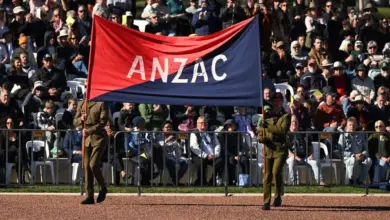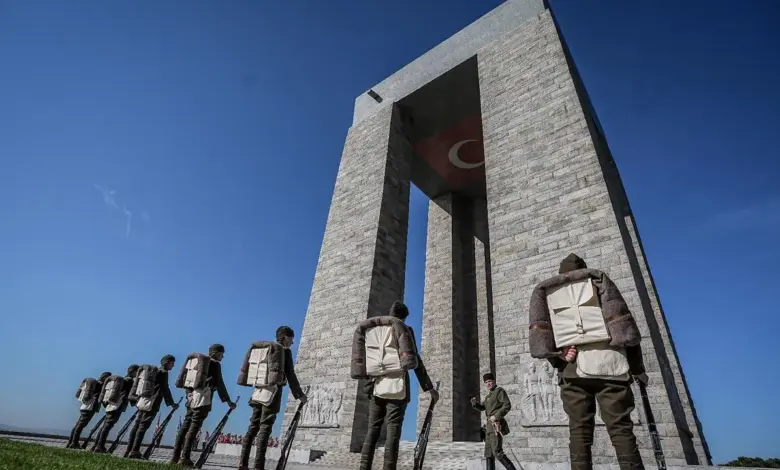
Gallipoli Turkey is back in focus as delegations from Türkiye and more than a dozen nations gather at the Canakkale Martyrs’ Memorial to mark the Allied landing on the Gallipoli Peninsula in 1915. The timing matters because this anniversary is not only a remembrance of a long and costly campaign; it is also a moment when former wartime rivals are meeting again in a shared act of memory.
What makes this the turning point?
The commemoration comes 111 years after a campaign that began with the Allied fleet’s failed attempt to force the Dardanelles on March 18, 1915. Six weeks later, Allied forces launched landings at Seddülbahir, Ariburnu, and Kumkale, setting in motion eight and a half months of fighting across a difficult landscape. The terrain narrowed movement into steep corridors, and that geography helped shape the entire campaign.
At Ariburnu, the role of Lt. Col. Mustafa Kemal remains central to the story being remembered today. He moved his regiment toward high ground on his own initiative and ordered engagement while troops were low on ammunition. That action helped hold the ridge and prevent a breakthrough toward the strait. In August 1915, after months of stalemate, he again played a decisive role at Anafartalar, where a bayonet assault at Conkbayiri forced Allied forces back to the shoreline.
What is happening now in commemoration?
The annual ceremony at the Martyrs’ Memorial is being opened by Canakkale Governor Omer Toraman, underscoring the official character of the remembrance. The gathering brings together participants from Türkiye and over a dozen nations, reflecting how the Gallipoli story now functions as both national memory and shared international history.
This broader frame matters because the campaign ended without the Allied strategic objective being met, and because the scale of the losses on both sides still shapes the language of remembrance. The commemoration is therefore less about victory or defeat than about how states and publics choose to interpret sacrifice, endurance, and historical consequence.
What if memory becomes a diplomatic bridge?
Gallipoli Turkey shows how commemoration can act as a low-friction form of diplomacy. When nations that once fought one another gather in the same place, the act itself signals that history is being carried forward through dialogue rather than rivalry. That does not erase the past, but it can soften the edges of how the past is discussed.
There is also a wider regional pattern in the parallel commemorations on Lemnos, where the island will honour the memory of those who fell in the Gallipoli Campaign. The programme there includes memorial services, wreath-laying, student presentations, and speeches on the meaning of historical memory. That parallel observance shows that the campaign’s legacy is no longer confined to one shore or one national narrative.
| Scenario | What it would mean |
|---|---|
| Best case | Shared remembrance strengthens historical understanding and keeps the Gallipoli story visible across participating nations. |
| Most likely | Annual commemorations continue to balance national memory with international attendance and measured diplomatic symbolism. |
| Most challenging | Competing interpretations of the campaign narrow the common space for remembrance and reduce the value of the gathering. |
What if the anniversary shapes tomorrow’s winners and losers?
The clearest winners are institutions that can turn remembrance into continuity: memorial organizers, historical associations, and governments that use commemoration to reinforce civic memory. Also benefiting are educators and younger audiences, especially where events connect history to new generations through presentations and speeches.
The potential losers are not political in the narrow sense, but interpretive. If the campaign is reduced to a fixed national myth, the shared human dimension of the losses can be overshadowed. That would weaken the broader meaning of gatherings such as the one at Canakkale Martyrs’ Memorial and the parallel tribute on Lemnos.
What should readers understand next?
The key lesson is that Gallipoli Turkey now operates as more than a site of wartime memory. It is a recurring test of whether nations can preserve difficult history without flattening it. The facts of the campaign remain stark: a failed naval push, a major land campaign, repeated landings, intense fighting, and tens of thousands of casualties. But the 111th anniversary shows something else too — that the same place can become a platform for reflection across former battle lines.
Readers should expect commemorations like these to remain important because they connect history, identity, and diplomacy in a single setting. The value of the moment lies in what it allows people to remember together, and in what it asks them not to forget. Gallipoli Turkey