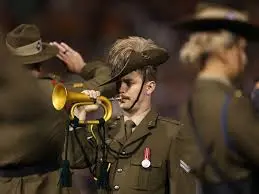
At Sydney’s Martin Place, the morning carried the careful quiet of Anzac Day until a small group broke it. The anzac day dawn service booing heard in Sydney, Melbourne and Perth did more than interrupt a speech; it sharpened a national argument about respect, protest, and who gets to speak on a day meant for reflection.
What happened at the dawn services?
At Anzac Day dawn services across Sydney, Melbourne and Perth on Saturday morning, Indigenous speakers were booed during welcome to country speeches. The interruptions followed a campaign by Fight for Australia, the group formerly known as March for Australia, which has staged major anti-immigration rallies.
In Sydney, at Martin Place, Uncle Ray Minniecon was delivering his acknowledgment of country when a small but noisy group of interjectors shouted and jeered. Once the disturbance was quieted and the acknowledgment concluded, thousands responded with applause and cheering that continued for an extended period.
Minniecon, whose ancestry includes the Kabi-Kabi and Gurang-Gurang peoples of Queensland, said that laws exist to deter such behavior, but some people still choose to act lawlessly. The contrast in the square was stark: interruption from a few, and then a sustained public show of support from many.
Why has the anzac day dawn service booing drawn such a strong response?
The reaction has been driven by the belief that the behavior cut against the spirit of the day. Uncle Jack Pearson, a Yimithurr man and captain in the Australian army, said racism in any form is a cancer to society. He added that there is nothing wrong with free speech and protest, but that it must be respectful, especially on a day he described as very special for all Australians.
Pearson said welcomes and acknowledgments of country are solemn events that recognize First Nations people and their contribution to what is known as Australia today. In his view, racism or racial bias is a disruptor to common humanity and “not in the Anzac spirit. ” That language has placed the issue far beyond one moment of heckling. It has become a discussion about what public ritual is for, and how quickly a ceremony can be turned into conflict.
Who spoke out against the disruption?
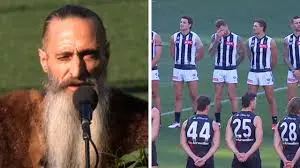
Marcia Langton, laureate professor of Indigenous studies at the University of Melbourne, condemned the people who booed as despicable and ignorant. She said the disruption of sacred moments deserved more than criticism and argued that those responsible should be named, photographed, and banned from future Anzac Day services. She also pointed to the AFL’s ban on disruptive racists as an example that police forces should be able to respond similarly.
Her comments framed the matter not just as a question of manners, but as one of enforcement and consequence. The call was direct: if institutions can bar disruptive behavior in one arena, they should be able to protect solemn national ceremonies in the same way.
What does this moment mean for public memory?
The anzac day dawn service booing has exposed a tension in public life that sits between protest and respect. On one side are those who argue that they were exercising free speech. On the other are Indigenous leaders, military voices, and many in the crowd who saw the interruption as an insult to a ceremony built around remembrance.
The broader meaning lies in the response as much as in the disruption. Thousands in Sydney answered booing with applause. That shift in sound mattered. It suggested that even when a handful try to seize a moment, the public can still choose to defend the dignity of the day.
For now, the question left behind is simple: on a day designed to honor service and sacrifice, how much disruption can a society tolerate before it decides that silence, respect, and accountability must matter more?