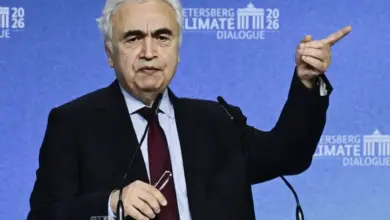
boulerice is moving from Ottawa to Quebec politics, a shift that closes a long-running round of speculation and resets the balance for both the New Democratic Party and Québec solidaire. The decision means the federal NDP loses its only MP in Quebec, while QS gains a candidate with a profile that already reaches well beyond a single riding.
What Happens When a Federal MP Changes Levels?
Alexandre Boulerice plans to leave the House of Commons and run under the Québec solidaire banner in the riding of Gouin in the 2026 provincial election. The move is tied to the departure of Gabriel Nadeau-Dubois, who has announced he will not run in the October general election. That creates an opening in a riding where Boulerice is now expected to seek the nomination.
The timing matters because the move is not just a personal transition. It removes the last NDP seat in Quebec and adds pressure to a party already weakened in the province. It also comes after months of rumours and after QS adjusted its nomination rules in February to allow an exception for Boulerice, despite a rule that had reserved already won ridings for women or nonbinary candidates.
What Happens When Party Strategy Meets Candidate Fit?
The clearest signal in this story is that both parties are acting under constraint. The NDP tried to keep Boulerice in the fold, including efforts from newly elected leader Avi Lewis, who said he had asked Boulerice to stay. Those efforts did not hold. Boulerice’s departure leaves the NDP with five seats in the House of Commons and no official party status.
For QS, the calculation is different. The party is also struggling in the polls, and Boulerice offers profile, experience, and a recognizable name in a contest that will attract attention. The exception to the party’s rules suggests QS viewed this as a strategic opening, not just a routine nomination race. The question now is whether that boost translates into electoral momentum or simply stabilizes a seat the party already expects to defend.
What If the Move Reshapes the Balance on Both Sides?
| Scenario | What it means |
|---|---|
| Best case | QS turns Boulerice’s entry into a clean handoff in Gouin and uses the moment to reinforce its public standing. |
| Most likely | Boulerice becomes the central figure in a competitive but controlled provincial campaign, while the NDP absorbs a further drop in Quebec relevance. |
| Most challenging | The move becomes a symbol of weakness for both parties, with QS failing to convert attention into traction and the NDP left with even less room to recover in Quebec. |
What makes boulerice notable is not only the seat change itself, but the institutional signal it sends. A federal MP with a long record in Rosemont—La Petite-Patrie since 2011 is now leaving Ottawa for a provincial race, and that kind of move is rarely neutral. It indicates confidence in the provincial opening, but also recognition that the old partisan map is shifting under pressure.
Who Wins, Who Loses, and What Comes Next?
At first glance, Québec solidaire gains the most. It gets a candidate with name recognition and a narrative that can travel across party lines. The riding of Gouin also remains in play for the party after Nadeau-Dubois’s exit, so the transition can be framed as continuity rather than disruption.
The NDP loses more immediately. Without Boulerice, it loses its only MP in Quebec and becomes less visible in a province where it already lacks seats. That weakens its ability to claim a meaningful base there and narrows its path back into relevance.
For voters, the larger takeaway is simple: boulerice is a sign that Quebec politics is entering a more fluid phase, where individual figures and strategic exceptions matter as much as formal party lines. The next few months will show whether this move becomes a one-off transfer or a signal that more political realignment is still ahead.