In a Washington hearing room this week, the phrase great salt lake came up as more than a local concern. Utah Rep. Blake Moore used a House Budget Committee hearing to argue that a proposed $1 billion investment would matter far beyond Utah, setting off a discussion about risk, urgency, and what happens when a shared water system keeps shrinking.
What did Blake Moore say in the budget hearing?
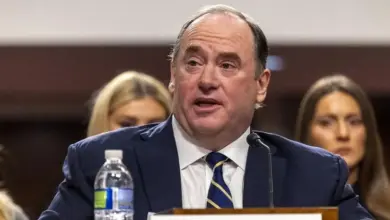
Moore made his case during a hearing with Office of Management and Budget Director Russell Vought, the first hearing to examine President Donald Trump’s budget request since it was sent to Congress earlier this month. He told lawmakers that the spending should be seen as preventive, not excessive.
“This may sound like it’s a large price tag, ” Moore said. “This investment is monumental, but I want to ensure my colleagues that the investment now will save taxpayers down the road from future calamity. ”
He described the great salt lake as an “environmental and economic anchor” for the Great Basin region, saying its condition affects “air quality, snowpack and thousands of jobs across the West. ”
Why is the great salt lake part of a $1 billion request?
The budget request directs the money toward a “comprehensive Federal program” led by the Interior Department. The department would work with the U. S. Army Corps of Engineers, the U. S. Department of Agriculture and the Environmental Protection Agency to improve water flow into the lake.
Beyond water flow, the funds are meant to restore ecosystems, remove invasive species, and deal with toxins within the lake bed outside of active environmental remediation sites. In the hearing, Moore framed that work as a way to reduce larger costs later.
The request has become a test of priorities inside a federal budget that may force other programs to absorb cuts if the lake funding remains in place. Moore said he is hopeful it will be approved, even as the price tag could make the line item difficult to advance.
What happens if the great salt lake keeps falling?
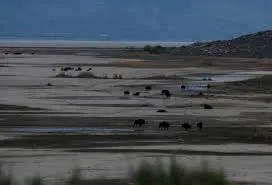
The concern driving the proposal is not abstract. Local scientists and researchers have warned that water levels have dropped dramatically over the last decade or so, putting the lake on the verge of collapse. If it were to dry up, the Wasatch Front could face toxic dust and pollutants.
That warning gives the hearing’s numbers a human edge. A budget figure can look distant on paper, but the potential effects reach households, workers, and communities across the region. Moore’s argument was that the cost of action now may be smaller than the cost of inaction later, especially if the lake’s decline continues.
How are advocates trying to understand the lake’s future?
Another public effort has also placed the great salt lake in sharper view. Advocates took to the air to better understand what its future might hold, using a plane from EcoFlight, a Colorado-based nonprofit. The aerial view, captured with Kelly Hannah of Friends of Great Salt Lake, is part of a broader push to see the lake’s condition clearly and make its decline harder to ignore.
That kind of perspective matters because the lake’s future is tied to multiple systems at once: water, public health, ecosystems, and jobs. The budget hearing showed one part of the response, while the flight showed another. Both point to the same question: how much is worth spending to avoid a much larger crisis later?
What comes next for the federal plan?
For now, the proposal remains subject to congressional approval. The Interior Department, along with the Army Corps of Engineers, the Agriculture Department, and the Environmental Protection Agency, would be part of the federal effort if the request moves forward. Moore’s message in the hearing was direct: the great salt lake is not only a Utah issue, but a regional one with consequences that could spread well beyond state lines.
Back in the hearing room, the argument was about dollars. Outside it, the lake keeps shrinking, and that is what gives the debate its urgency. The choice before lawmakers is whether to treat the great salt lake as a future problem or an immediate investment. For the people who live with its air, its dust, and its economy, the answer may decide far more than a budget line.