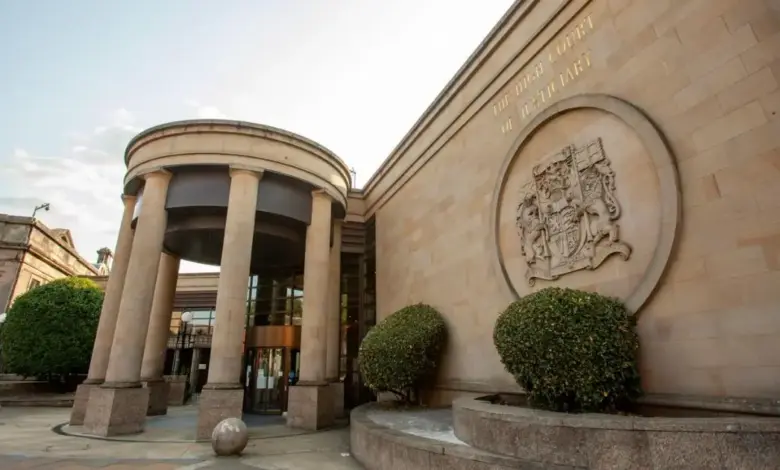
The words catastrophic injury hung over the High Court in Glasgow as jurors heard how three-week-old Thea June Wilson was rushed to hospital after a desperate morning in Greenock. For Nicole Blain, the mother accused of killing her baby daughter, the trial has turned on what was said, what was seen, and what happened in the final hours before Thea died.
What did the court hear about the baby’s condition?
Doctors described a child in extremis. Thea was brought to the Royal Hospital for Children in Glasgow at about 2: 30pm after paramedics were told she had suffered a traumatic cardiac arrest. Dr Danniella Seddon, who was involved in Thea’s care, told the court she saw obvious bruising to the baby’s head and swelling above her ears. She also noted fixed and dilated pupils, which she said were consistent with the brain being starved of oxygen for a significant period of time.
Resuscitation continued, but medics later determined that Thea had suffered a catastrophic non-survivable injury. A CT scan showed extensive and complex fractures. Dr Seddon pronounced the baby dead shortly after 6: 30pm the same day. In her statement to police, she described Blain’s behaviour at hospital as appropriate in the context of the circumstances.
How did the mother explain what happened?
Blain, 30, is on trial at the High Court in Glasgow and denies murdering her daughter at a flat in Greenock on July 14, 2023. Prosecutors claim she repeatedly shook the baby and inflicted blunt force trauma on her by means unknown. The court has heard that Blain said another child had done whatever had happened to Thea. One social worker recalled Blain saying, while distressed at hospital, that she did not know how she would forgive another child for this.
A support practitioner who had been called to the flat shortly before 2pm said Blain told her another child had removed Thea from her cot and dropped her. The baby had been born on June 25, 2023. Evidence also placed a social worker in contact with Blain after the birth, and in the home on the morning of the alleged murder, before learning later that the baby had been taken by ambulance.
What did witnesses describe in the hours before Thea died?
The picture that emerged in court was one of fast-moving confusion. The social worker said Blain had told her she was tired before leaving the flat, then later travelled to Glasgow after hearing that Thea was in hospital. When she met Blain there, the witness said she was extremely distressed and repeated the remark about forgiving another child. Alan Cameron KC, leading for the prosecution, asked the witness if she spoke to Blain, and the answer was yes.
Another account came from Thea’s grandmother, Laura Wilson, 59, who said the baby had been perfect when born. She described a final visit on July 8, 2023, when she saw no concerns about Thea’s wellbeing. On the day of the tragedy, Blain had planned to visit the family home, but instead a call came in the afternoon.
Why does this case matter beyond one family?
This trial is now carrying a wider human weight because it has placed a newborn’s fatal injury beside the language of blame, confusion, and grief. Thea’s age, the speed of her decline, and the competing accounts of what happened in the flat have left jurors with a stark task: weighing the medical evidence against the mother’s denial. The phrase catastrophic injury is not just a legal description here; it is the point at which a family’s ordinary day collapsed into an irreversible ending.
For the people in court, the evidence has been painfully specific. For the public hearing the case unfold, it is a reminder of how quickly a moment can become permanent. The trial continues before Lord Scott, with the question of responsibility still unresolved and the memory of a baby’s final hours still at the centre of it all.