Little Norway Park is now at the center of a larger fight than a waterfront green space should ever have to carry. On Thursday, the province moved to expropriate up to a third of the park as part of its plan to expand Billy Bishop Airport, a proposal that could erase part of a place many residents see as one of the last calm pockets in downtown Toronto.
Verified fact: the park sits along the route into the airport, and the province says the land is part of a broader effort to modernize and expand the airport. Informed analysis: the dispute is not only about land use. It is about who gets to decide the future of a public space that has become a daily refuge, a neighborhood landmark, and, for some, a symbolic doorway into the city.
What would Toronto lose if Little Norway Park is paved over?
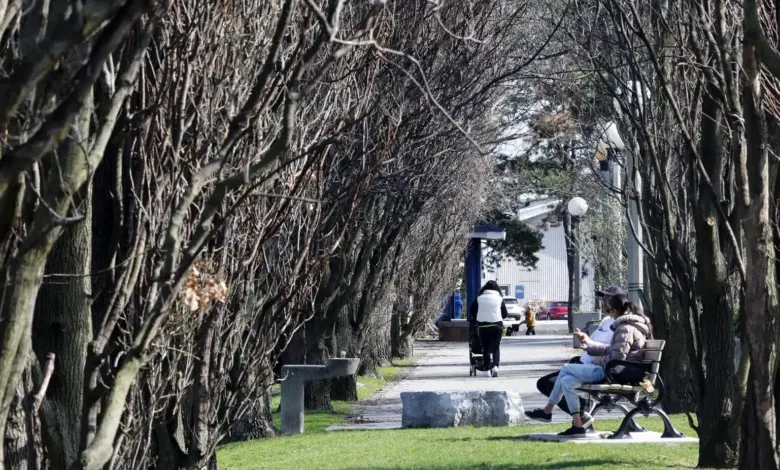
Little Norway Park is not just open land. The park includes a playground, a wading pool, a softball diamond, and a Second World War memorial. For some visitors, it is also the first thing they see after stepping out of Billy Bishop Airport and into Toronto. Keren Lopez described walking through the park as therapy and called it “a very peaceful place” and “a little space in the heart of downtown. ”
Residents nearby say the possible loss cuts deeper than landscaping. Miao Chen is among those who have voiced concern about losing a third of the park. Shirley Hutchison, who has lived nearby for 37 years, called the plan “an atrocity” and said the issue is about people who live there, not jets taking away park space.
Verified fact: the province announced it intends to expropriate up to a third of Little Norway Park in connection with airport expansion. Informed analysis: that scale of loss would not leave the park untouched; it would change the meaning of the space for families, commuters, and airport travelers alike.
Why is the province targeting this land now?
Ontario Transportation Minister Prabmeet Sarkaria said the plan is meant “to unlock Billy Bishop airport’s full potential and support its long-term modernization and expansion. ” He also said the move would open the runways to jets and more than double the airport’s annual passenger count. The federal government still must approve anything before the plan can proceed.
What remains unclear is just as important. Sarkaria did not say how long the new runway would need to be to accommodate jets, or what the taken land from Little Norway Park would be used for. The government says it intends to begin immediately, but there is no timeline for the work to be completed. That leaves the public with a plan that is ambitious in direction but thin on specifics.
Verified fact: the province wants to take control of land in and around the airport and replace the City of Toronto in the tripartite agreement that manages it. Informed analysis: that would shift decision-making power away from City Hall and toward Queen’s Park at the exact moment when residents are asking what the project will cost them on the ground.
Who is pushing back, and what is the core objection?
Mayor Olivia Chow is leading the political resistance. She called the province’s move a “land grab” and said it would “uproot a complete community. ” after the legislation was tabled, she said “unilaterally taking City land is not acceptable. ” She also tabled a motion at city council opposing the move and suggested the province should buy the properties of affected residents and apologize.
The criticism is not limited to process. It is also about the precedent. Chow warned that if the province can take land, public space, and parks for paving without the City of Toronto having a say, it sends a message to all Torontonians about how easily public assets can be removed from local control.
Verified fact: the bill would give the province the power to take control of land around the island travel hub. Informed analysis: the fight over Little Norway Park has become a test of whether public land can be reclassified as expendable when a larger economic argument is made for it.
How does Little Norway Park fit into the city’s larger history?
The park’s history complicates the current plan. Little Norway Park was created in the 1980s, but before that it was an autowrecker’s yard and landfill site — and before that, a Norwegian air force base. Norway’s air force built a base at the site in 1940, and in 1976 Norway gifted the city a boulder now placed in the park, engraved with words of gratitude to Canada for help and hospitality.
That layered history matters because the park is not an empty lot waiting to be optimized. It is a site that has already been remade several times, and each transformation has carried its own public meaning. The current proposal would be another transformation, but one driven by airport expansion rather than civic memory or neighborhood need.
For now, the larger question remains unresolved: whether economic modernization should come at the cost of a park that residents treat as both sanctuary and shared history. The province has made its case. The city has made its objection. The federal government still has to decide whether the plan can advance. Until then, the future of Little Norway Park remains the clearest measure of what the airport expansion could take away.