Splc Indicted on Federal Fraud Charges: Why the $3M Informant Program Is at the Center of the Case

The splc indictment has turned a long-running and controversial informant program into a federal fraud case, with prosecutors alleging that donor money was used in ways the organization did not disclose. The Southern Poverty Law Center says the payments helped monitor threats of violence and were shared with law enforcement. At stake is not only the legality of the financing, but the credibility of a civil rights group that has spent decades confronting extremist movements in the United States.
What the federal indictment says
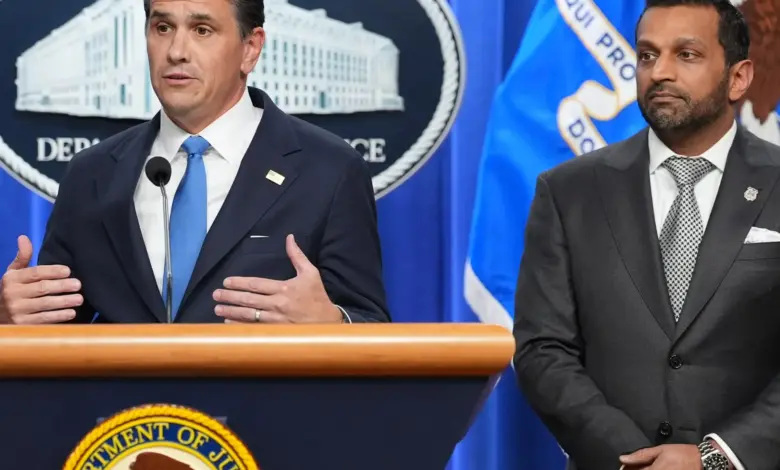
The Justice Department says the Southern Poverty Law Center was indicted in Alabama on charges including wire fraud, bank fraud and conspiracy to commit money laundering. Acting Attorney General Todd Blanche said the center improperly paid informants to infiltrate extremist groups while failing to tell donors how their money was being used. The indictment alleges that at least $3 million went to informants affiliated with the Ku Klux Klan, the Aryan Nations, the National Socialist Party of America and other groups between 2014 and 2023.
Blanche said the money moved through two bank accounts before being loaded onto prepaid cards. He also said the center did not disclose the details of the program to donors, even though nonprofits are expected to be transparent about how contributions are spent. The splc has rejected that framing, saying the informants were part of a quiet effort to reduce danger, not intensify it.
Why the splc says the program existed
CEO Bryan Fair said the payments went to confidential informants so the organization could monitor threats of violence from extremist groups. He said the information gathered was frequently shared with the FBI and other law enforcement agencies. Fair added that the center is outraged by the allegations and will vigorously defend itself, its staff, and its work.
The organization says secrecy was necessary to protect informants. Fair said the center used informants in the shadow of earlier eras of racial violence, when bombings, state-sponsored abuse of demonstrators, and murders of activists went unanswered. That claim is central to the splc defense: that the payments were not a hidden political tactic, but a protective measure tied to public safety.
Still, the indictment presents a sharper view of the same conduct. It says at least nine unnamed informants were paid through a secret program that prosecutors say began in the 1980s. One informant was allegedly paid more than $1 million between 2014 and 2023 while affiliated with the neo-Nazi National Alliance. Another was said to be the imperial wizard of the United Klans of America. Those details, if sustained, could deepen scrutiny of how far a nonprofit may go in pursuing intelligence work.
A civil rights mission now under legal pressure
The splc was founded in 1971 by Morris Dees and Joe Levin as a civil rights-focused law practice for people who were poor or disenfranchised. Its early cases helped push desegregation and other reforms. By the 1980s, it was monitoring white supremacist organizations through what was first called Klanwatch and later became the Intelligence Project.
That history matters because it shows why the organization sees itself as a watchdog rather than a combatant. But the same history also explains why critics have long accused it of activism dressed as legal work. The current case places that tension inside a criminal courtroom, where intent, disclosure, and donor expectations are likely to matter as much as the choice of targets.
The splc’s finances also give the case wider weight. The center said its endowment had just under $732 million as of last October, and most of its funding comes from donor contributions. That makes the allegation about nondisclosure more than a technical issue: it goes to the core of whether donors were given an honest picture of what their money supported.
Broader impact beyond one organization
Whatever happens next, the case could influence how nonprofits explain controversial security or intelligence work to supporters. It may also sharpen debate over how civil rights groups interact with law enforcement when they believe extremist violence is a real threat. If prosecutors prevail, the outcome could set a warning for organizations that rely on secrecy while asking the public to fund their mission. If the defense succeeds, the case may reinforce the view that some private intelligence-gathering can be justified when public safety is on the line.
For now, the splc faces both a legal challenge and a reputational one. The question is no longer only whether the informant program saved lives, but whether the organization crossed a line by failing to spell out what it was doing. In a case that blends donor trust, extremism, and nonprofit transparency, how far can a watchdog go before it becomes the subject of the scrutiny it once directed at others?