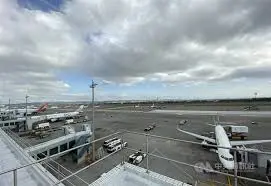
eva air is moving into a larger North American footprint at a moment when Taiwan’s aviation sector is rethinking where future demand will come from. In the second half of 2025 and into the present, the airline expanded into Dallas and is preparing to launch a new Washington, D. C. route, part of a broader shift among Taiwan’s major carriers toward the United States.
The strategy is not unfolding in isolation. China Airlines has added Phoenix, and Starlux Airlines has entered Ontario, California and Phoenix. Together, these additions will bring around 20 direct flights per week between Taiwan and the United States, while codeshare agreements extend access to hundreds of additional destinations across the country. The pattern points to a market that is becoming central to Taiwan’s international aviation plans.
Why are Taiwan’s airlines leaning harder into North America?
The answer, in part, is demand. Taiwan’s airlines are looking for new sources of customers as the island’s local market faces structural limits. Lin Yi-chi, an aviation analyst at Horizon Securities, said the push into North America reflects the sector’s growing dependence on transit passengers.
“It’s not about whether developing transfer markets is worth it — it’s about having no choice, ” Lin said.
He pointed to Taiwan’s aging population and demographic decline as factors that will likely restrain future growth in outbound tourism. The market appeared close to saturation even before the COVID-19 pandemic, at around 17 million annual outbound trips, and although travel to Japan and South Korea pushed that figure to nearly 19 million in 2025, Lin said the deeper trend has not changed. In his view, transit traffic is becoming “the only way forward. ”
How does eva air fit into the wider shift?
eva air has made North America a core part of that adjustment. The airline said transfer passengers account for more than 65 percent of its North America traffic, a share that shows how central connecting travelers have become to its long-haul business. Its strategy combines direct flights to major U. S. gateways with partnerships that reach more than 200 destinations across the continent.
The airline described its coming Washington, D. C. service as a route that will open a new gateway to the political and economic heart of the United States while strengthening Taoyuan Airport’s role as a trans-Pacific transit hub. That language captures the larger logic now shaping Taiwan’s aviation sector: growth is increasingly tied to the ability to move passengers through Taiwan rather than only to and from it.
Other carriers are making similar calculations. China Airlines said transfer passengers account for roughly 50 to 60 percent of its North America routes, helping stabilize load factors when direct demand softens. The carrier linked that outlook to rapid economic growth in Southeast Asia and the expansion of the middle class, which it said has increased long-haul travel demand. Starlux Airlines said transfer passengers make up about 50 to 60 percent of its North America traffic as well.
What is driving the route choices behind the expansion?
The new routes also show how Taiwan’s airlines are choosing destinations. Starlux said it is targeting cities with strong industrial potential and regional characteristics beyond traditional hubs, pointing to Phoenix as a technology center and Ontario as an alternative gateway to the greater Los Angeles area. That approach suggests a search for travelers and business links outside the most crowded airport corridors.
For eva air, Dallas and Washington, D. C. are not only additions to a route map. They are part of a larger effort to balance direct service with connecting networks, and to serve a market where long-haul demand from Southeast Asian consumers is expected to matter more. The airline’s expansion mirrors the wider push among Taiwan’s carriers to widen their reach while keeping load factors and network relevance intact.
For travelers, these changes may mean more options and shorter paths across the Pacific. For the airlines, they reflect a more fundamental question: how to build a future when the home market is no longer expected to grow on its own. In that sense, eva air’s North American expansion is less a single route decision than a sign of where Taiwan’s aviation industry believes its next chapter will be written.
Image alt text: eva air expansion into North America as Taiwan’s airlines target transit passengers and new U. S. routes.