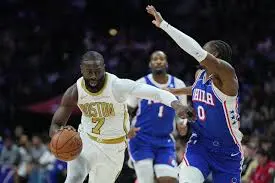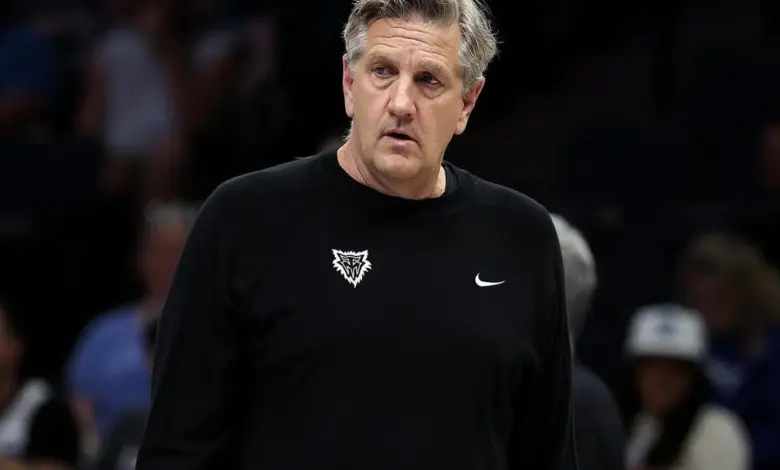
The timberwolves walked into Game 2 carrying more than a playoff deficit. They carried a grievance. After Minnesota’s 116-105 loss to Denver in Game 1, coach Chris Finch returned again and again to one number: Jamal Murray’s 16-for-16 night at the free-throw line.
“Maybe we ought to start flopping, too, ” Finch said before Monday night’s game in Denver, a remark that captured how raw the discussion had become. For Finch, the issue was not just the score. It was the feeling that physical drives were not being rewarded the same way Murray’s contact appeared to be.
Why did Finch keep talking about the free-throw gap?
Finch called Murray’s 16 attempts a “head scratcher” after the series opener, when Minnesota shot 19 free throws. He said Monday that the problem, in his view, was how the league rewards contact. Players who draw contact and fall away often benefit, while those who stay upright and drive through the first hit may not get the same whistle.
He pointed to Julius Randle and Anthony Edwards as examples of players who do not fit the flopping label. “Julius is not a flopper. Ant is not a flopper, ” Finch said. “Those are physical drivers. They play through the first line of contact a lot. ”
That tension sits at the center of the timberwolves story in this series. Finch is not only defending his players; he is wrestling with how they should respond when the game seems to reward a different style.
What happened in Game 1, and why does it matter now?
Murray said after Saturday’s game that he did not understand the concern because he believed he was repeatedly fouled by the physical Timberwolves. Finch did not deny every whistle, but he argued that some of the contact should have been treated differently. “They weren’t all fouls. Some of them were fouls, ” he said.
He also rejected the idea that coaches teach embellishment. “We don’t coach it, ” Finch said. Still, he acknowledged that players are smart and learn what officials will allow. That admission matters because it shifts the conversation from one controversial game to a broader playoff reality: teams study the whistle as closely as the film.
Nuggets coach David Adelman offered the other side of the argument. He noted that some of Murray’s trips to the line came after flagrant and technical fouls by Minnesota in a physical Game 1. “It’s the playoffs, ” Adelman said. “Everybody politicks after games. ”
How do both sides see the same game so differently?
The differing views are what make this matchup feel sharper than a simple scoring margin. Finch sees a pattern that undercuts Minnesota’s style. Adelman sees a physical playoff game in which officiating decisions, including flagrant and technical fouls, helped explain the free-throw total.
Adelman also emphasized that Game 2 brought a different officiating crew, and that every game asks officials to react to what they see in that moment. “It changes every night, ” he said. In his view, some nights end with valid complaints, and other nights end with a simpler question: why are we fouling so much?
For the timberwolves, that is the unresolved challenge. They can argue the whistle, but they also have to decide how to play inside it. Finch said he was not sure how to explain the frustration to his players, “but we’ve got to do a better job. ”
What does this mean for Minnesota moving forward?
The immediate response is tactical, but the larger response is emotional. Minnesota entered Game 2 with a chance to reset the tone, yet the conversation remained fixed on how officials interpret contact and how much a physical style is worth in the playoffs. Finch’s comments showed a coach trying to protect his team’s identity without pretending the issue does not exist.
That is what makes the timberwolves moment feel bigger than a single complaint. It is about how a team built on force and speed lives with the possibility that those traits may not always be rewarded in the same way as a different kind of attack. For Minnesota, the next whistle is never just a whistle. It is part of the series now.
And so the scene that began with Finch looking at a free-throw disparity ends with the same question hanging over the bench: can the timberwolves keep playing their way, or will playoff pressure force them to change how they survive contact?