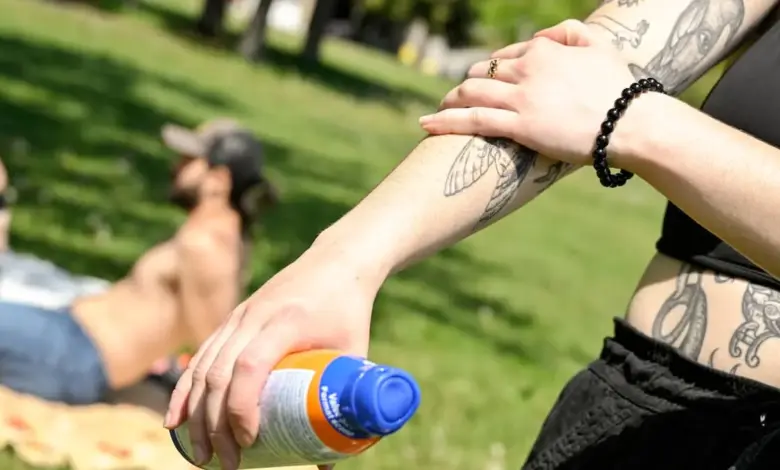
crème solaire is at the center of a growing public debate as social media claims continue to blur the line between caution and misinformation. Sarah Bélanger, a cosmetic chemistry specialist and member of the Ordre des chimistes du Québec, says the concern is not the product itself but a broader “denial of science” that can push people away from protection at the very moment they need it most.
What Happens When Doubt Replaces Protection?
The current turning point is not a new scientific finding, but the speed at which misleading claims can spread and harden into behavior. Bélanger warned that the idea that cream is cancer-causing reverses the real risk: it is the sun that causes skin cancer, not the protective product designed to reduce exposure.
She also addressed claims about hormonal disruption, explaining that some of the concerns stem from studies done on cells or animals. In her view, those findings do not translate in the same way to humans when ingredients are used at authorized doses on skin. That distinction matters because it separates laboratory signals from real-world use.
What If the Wrong Product Choice Leads to Underuse?
The debate is not only about whether people use crème solaire, but whether they choose a formula they will actually apply correctly. Bélanger said the best product is the one people will wear consistently. If a cream feels unpleasant, people may skip it or use too little, which weakens protection.
Selection guidance remains straightforward. A product should have a sun protection factor of at least 30, and it should be labeled broad spectrum so it protects against both UVB and UVA rays. Higher protection can help offset the common problem of applying less than intended.
| Choice point | What it means |
|---|---|
| FPS 30 or higher | Basic threshold for protection |
| Broad spectrum | Needed for UVA and UVB coverage |
| Higher FPS | Can help when too little product is applied |
| Reapplication | Needed regularly, especially after swimming, sweating, or wiping with a towel |
What If Consumers Follow the Science Instead of the Noise?
The science-based message is consistent across the guidance: use enough product, reapply it, and match the formula to the activity. General advice points to reapplication about every two hours. More frequent use is needed after sport, swimming, or towel drying. For outdoor time spent sitting in the shade, there is no need for unnecessary excess.
There is also a clear distinction between chemical and mineral products. Chemical formulas absorb and reduce the sun’s effects after penetrating the skin. Mineral formulas create a physical barrier that reflects rays. Bélanger said the choice comes down to personal preference, while noting a recent tendency to move toward mineral products because of concerns raised in some studies about ingredients crossing the skin.
Who Wins, Who Loses If Confidence Keeps Eroding?
Those who win in a more informed market are consumers who choose products they will use properly, dermatology and chemistry experts who keep the conversation anchored in evidence, and public health efforts focused on prevention. Bélanger said the stakes are real because crème solaire is a highly effective line of defense for reducing skin cancer risk and shielding people from the sun.
Those who lose are the people persuaded by fear over evidence, especially if that skepticism leads to no protection at all. The broader cost is not abstract: when misinformation shapes behavior, the result can be less consistent prevention and greater exposure to avoidable harm.
What Should Readers Do Next?
The most useful reading of this moment is simple. Treat the conversation around crème solaire as a test of evidence literacy, not a referendum on fear. Choose a product with adequate protection, broad-spectrum labeling, and a texture you will actually use. Reapply it when conditions require, and do not let social media claims override the basic science of sun protection. The outlook is clear: the debate may keep evolving, but the protective value of crème solaire does not change.