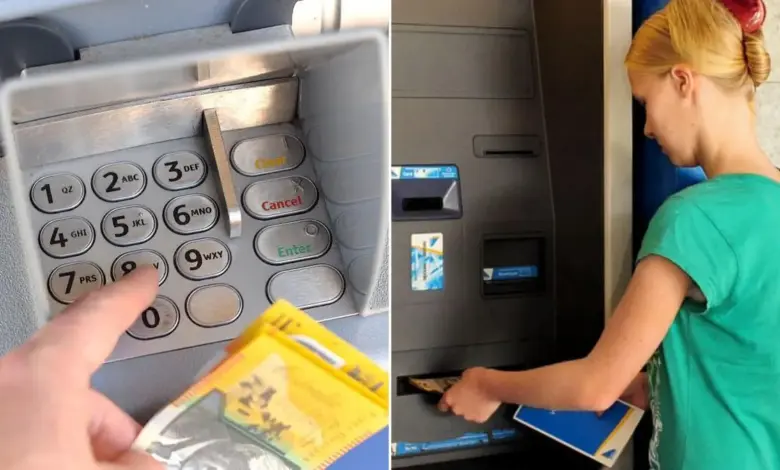
Cash is becoming the point of pressure in a wider argument about how people pay, who controls access, and what is being lost as more transactions move online. On Tuesday, April 28, the 2026 edition of Cash Out Day will ask Australians to withdraw large sums from ATMs in a show of support for physical currency.
What is the real message behind Cash Out Day?
Verified fact: Pro-cash campaigners want ATMs “running hot and spitting out note after note” as part of an ongoing effort to keep physical currency alive. Their message is not subtle: they want people to demonstrate that not everyone is comfortable with digital and tap-and-go payments becoming the default.
Cash Welcome campaigner Jason Bryce said recent developments have made the campaign more urgent. He pointed to what he described as “the world’s weakest cash mandate” passing the senate and the end of card surcharging, which he said would raise prices for everyone. He added that Australians should show the prime minister and the banks that cash remains important as a reliable, private, surcharge-free payment option.
Informed analysis: The campaign is not only about money in hand. It is also about bargaining power. If enough people withdraw cash on the same day, organizers hope to turn a payment preference into a public signal that banks and policymakers cannot ignore.
How much cash are campaigners hoping to pull out of the system?
Bryce hopes as many as two million Australians will use ATMs on April 28 to fill their wallets and purses with physical money. That target sits against a broader decline in cash use and cash withdrawals. Reserve Bank of Australia data shows Australians made more than 25. 5 million cash withdrawals from ATMs in February, down from 26. 1 million in the same month of 2025 and 53. 7 million ten years ago.
The Reserve Bank of Australia’s data also shows a structural shift in everyday payments. Notes and coins accounted for 70 per cent of payments in 2007, but that had fallen to 13 per cent in 2022. The Australian Banking Association has previously forecast that consumer payments using physical currency could fall to four per cent by 2030.
Verified fact: The pro-cash community claimed more than $500, 000 was withdrawn during the 2024 protest. The Australian Banking Association disputed that the action made any material impact.
Informed analysis: Even if the 2026 event draws attention, the numbers show the same tension: cash is still used, but far less often than before. The question is no longer whether cash exists, but whether the infrastructure needed to support it can keep pace with declining use.
Why are banks and regulators part of the argument?
Cash supporters say the problem is not just consumer behavior. They argue bank and ATM closures are making it harder to access notes and coins, especially for people who rely on them. The Reserve Bank of Australia’s Payment System Board has backed calls to keep cash in circulation, while acknowledging the challenge of distributing it and the cost of transportation.
The board said access to cash remains vital for many Australians, particularly in regional and remote communities. It also said members acknowledged the importance of the long-term sustainability of the cash distribution system and supported a proposed regulatory framework for cash distribution services. That framework would include crisis powers for the public sector to manage risks to continuity of cash distribution across Australia.
Verified fact: This is where the debate becomes practical rather than symbolic. Cash users want access, but the system that delivers it is becoming more expensive to maintain.
Informed analysis: That creates the central contradiction. The more cash is treated as outdated, the more fragile its support network becomes; the more fragile that network becomes, the more urgent the case for keeping it.
Who is being asked to act, and what happens next?
The immediate appeal is aimed at ordinary Australians, but the pressure is aimed higher. Campaigners want the prime minister and the banks to see physical currency as more than a niche preference. They see Cash Out Day as a vote against a cashless future and a response to what they view as a steady narrowing of payment choice.
Verified fact: The 2025 effort did not meet expectations, and Bryce said he believes a cash mandate for fuel and groceries may have reduced the urgency around the cause. He also said he was bumped from several media opportunities because of the death of Pope Francis, which affected last year’s promotion efforts.
Informed analysis: The significance of Cash Out Day 2026 will not be measured only by the amount withdrawn. It will also be measured by whether it exposes a wider public unease: that digital convenience is advancing faster than the system built to preserve choice.
For now, the dispute remains clear. One side sees cash as a practical safeguard; the other sees the declining use of cash as proof of where payments are already headed. On April 28, Cash will be tested not as an abstraction, but as something Australians must still be able to hold, spend, and trust.