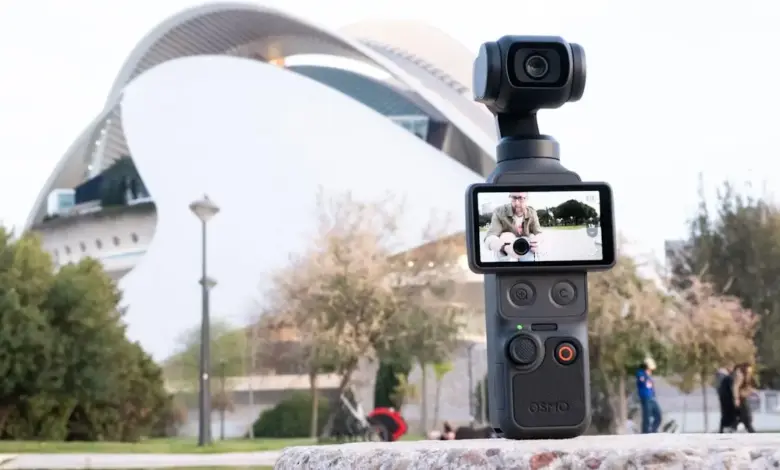
The dji osmo pocket 4 camera arrives at a turning point for compact video creators: the category it enters has already been reshaped by the Pocket 3, and the new model now raises the ceiling again with confirmed upgrades and fresh uncertainty around what comes next.
What Happens When a Category Leader Gets Sharper?
The current state of play is unusually clear for a product launch cycle that has been surrounded by leaks. The dji osmo pocket 4 camera is positioned as the best pocket-friendly vlogging camera in its class, with excellent image quality, improved photos, stronger stabilization, pro D-Log mode, and extended battery life. The device remains built around 4K video, but the updated 1-inch CMOS sensor is designed to deliver another two stops of low-light performance, bringing the total to 14.
Other headline changes are practical rather than flashy. The camera keeps the 20mm equivalent, f/2. 0 lens, but raises the maximum frame rate to 240 fps from 120 fps, enabling up to 10x slow motion. It also adds full high dynamic range 10-bit D-Log, replacing the lighter D-Log-M option found on the Pocket 3. Shutter speeds now extend down to 1/4 for extreme light effects.
Hardware updates are limited but meaningful. Two new buttons sit below the 2-inch display: one dedicated to zoom and another customizable control that can be assigned to common tasks such as rotating the gimbal or toggling recording presets. Internal storage rises to 107GB, while SD cards remain supported. Gesture Control also joins the mix, letting users start or stop recording and engage ActiveTrack from a distance.
What If the New Controls Matter More Than the Specs?
Some of the most important changes are the ones that remove friction. The zoom system now offers 2x lossless zoom in 4K and 4x in 1080p, and it can be used at any time, including during ActiveTrack face-tracking. That makes the dji osmo pocket 4 camera feel less like a niche gadget and more like a flexible tool for creators who move quickly and want fewer menu interruptions.
The camera also adds on-camera Film Tones, with six options at launch, designed to create different moods without manual color grading or an external LUT. Live photos are easier to capture as well, and the audio system now includes audio zoom. Even in a compact body, these choices point in one direction: faster decisions, fewer post-production steps, and more room for direct capture.
- Best case: the new mix of 4K, 14-stop low-light performance, 240 fps, and easier controls makes the dji osmo pocket 4 camera the default choice for solo creators.
- Most likely: it strengthens the Pocket line while leaving room for a more ambitious follow-up if demand keeps rising.
- Most challenging: a split market emerges if a dual-camera version becomes the more talked-about option.
What Happens When the Rumor Layer Returns?
That final scenario is now part of the market narrative. A separate leak has pointed to a possible Pocket 4 Pro version, described as a dual-camera concept with a 1-inch main sensor and a second camera that could offer 3x optical zoom. The same discussion also links the broader competitive picture to Luna, an anticipated rival from Insta360 that has already been teased in public-facing previews.
This matters because the pocket gimbal category is no longer defined only by one model’s upgrades. It is being shaped by expectation, anticipation, and the pace of creator demand. The dji osmo pocket 4 camera may be the official release, but the surrounding talk suggests buyers are already thinking one step ahead. That creates a short-term advantage for DJI, while also making the next product move more important than usual.
For creators, the winners are clear: vloggers, solo shooters, and mobile filmmakers who want portability without giving up stronger image quality or more advanced color control. The likely losers are older devices that suddenly look less compelling on slow motion, low light, and workflow convenience. But the broader market effect may be the bigger story. Once a compact camera adds this much flexibility, rivals are forced to answer not just with image quality, but with speed, control, and identity.
What readers should take away is simple: the dji osmo pocket 4 camera is not just a refresh, but a marker of where pocket video is heading. The near-term debate is no longer whether compact cameras can do serious work. It is whether the next standard will be a single strong camera, or a more ambitious dual-camera format that changes expectations again. For now, the official model is the reference point, and the market will spend the next few months testing whether anything can displace it.