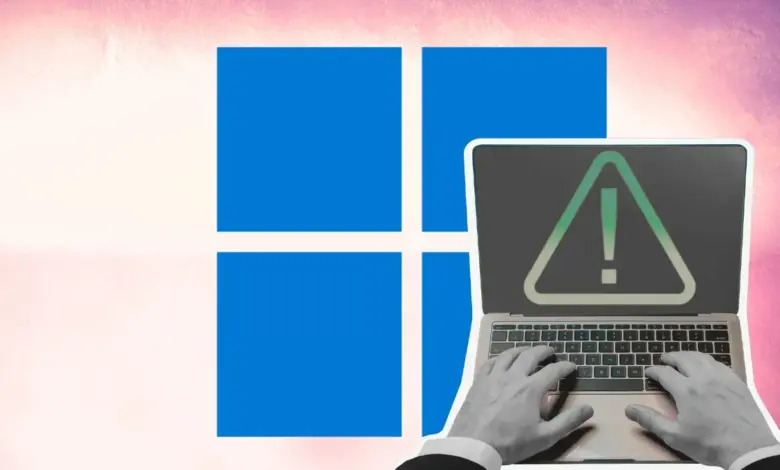
A fake Microsoft Windows Update page is turning a familiar routine into a security risk. Instead of offering a harmless system patch, the site pushes a deceptive installer designed to capture passwords, payment details, and account access. The lure is simple, but the mechanics are more careful: the file appears legitimate, the page looks official, and the download button invites quick action. That combination makes the Microsoft Windows Update scam especially dangerous because it can bypass both hurried users and some security tools.
How the fake update is being presented
The page was found at a typosquatted domain built to resemble an official support destination. It is written entirely in French and promotes a fake cumulative update for Windows version 24H2, complete with a believable KB article number. A large blue download button is the central hook. What users receive is WindowsUpdate 1. 0. 0. msi, an 83 MB Windows Installer package that is made to look normal at first glance.
The file’s properties are deliberately spoofed. The Author field reads “Microsoft, ” the title shows “Installation Database, ” and the Comments field claims it contains “the logic and data required to install WindowsUpdate. ” The package was built with WiX Toolset 4. 0. 0. 5512, a legitimate open-source installer framework, and was created on April 4, 2026. Those details matter because they show how the Microsoft Windows Update disguise is built to survive casual inspection.
Why the French-language lure matters
The choice of French is not random. The campaign is aimed at users in an environment where stolen personal data is already widely available. France has faced a long run of major breaches over the past two years, leaving large amounts of personal information circulating on criminal marketplaces. That makes any targeted lure more credible, especially when it can be tailored to details already exposed elsewhere.
In October 2024, Free, France’s second-largest internet service provider, confirmed that an attacker had accessed personal data tied to roughly 19 million subscriber contracts, including bank account details. Weeks earlier, Société Française du Radiotéléphone disclosed a breach exposing customer names, addresses, phone numbers, and banking details. Earlier in 2024, France Travail said an intrusion compromised records of 43 million people, covering current and past jobseekers across two decades. Researchers also found an unprotected Elasticsearch server aggregating 90 million records from at least 17 separate French breaches into one database. In that context, a French-language Microsoft Windows Update page becomes far more convincing than a generic English one.
What happens after the installer runs
Once the MSI executes, it installs an Electron application into C: Users< USER> AppDataLocalProgramsWindowsUpdate. The main binary, WindowsUpdate. exe, is a renamed copy of the standard Electron shell; metadata from VirusTotal identifies it as electron. exe. Across 69 antivirus engines, it drew zero detections because the executable itself is clean. The malicious logic appears to live inside the Electron app’s bundled JavaScript, typically packaged as app. asar.
That structure is important for defenders. A clean executable can create a false sense of safety, while the real threat hides in the application layer. In this case, the Microsoft Windows Update branding is not just cosmetic; it is part of the delivery system that gets the installer opened in the first place.
Why this campaign is hard to catch
One of the main reasons this campaign is effective is that it blends in at multiple levels. The domain is crafted to resemble a legitimate service. The page language targets a specific audience. The update description sounds routine. The installer is large enough to look plausible. And the executable itself appears harmless under broad scanning because the malicious logic is embedded elsewhere. That combination gives the Microsoft Windows Update impersonation unusual staying power.
The broader pattern is clear: when attackers already hold fragments of personal information from earlier leaks, they can build lures that feel customized rather than generic. That makes credential theft more efficient, because the victim sees a page that appears to match expected language, geography, and platform behavior.
What users and organizations should take from this
The immediate lesson is restraint. A system update should not be trusted just because it looks polished or uses familiar branding. Users need to treat unexpected update prompts with skepticism, especially when a page pushes a direct download from an unfamiliar domain. Organizations should also remember that a convincing Microsoft Windows Update lure can be built around local language, familiar file names, and seemingly valid installer metadata.
The larger warning is that leaked data continues to feed new attacks. As long as breach records remain available, campaigns like this can be tailored for higher success rates. The question now is not whether the Microsoft Windows Update disguise works in isolation, but how many other lookalike pages are already being prepared for the next target group.