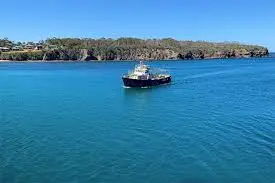
What looked like a routine end-of-life decision for a vessel became a rare test case for marine enforcement after scuttling was linked to a deliberate dumping offence off the New South Wales coast. Two fishermen, Marcus Clem McDermott and Mark Anthony McDermott, were fined $15, 000 each after a court found they had intentionally sunk their fishing boat without a permit. The case stands out not just for the penalty, but for what it reveals about how authorities are responding when commercial waste is pushed into the ocean instead of handled on land.
Why the Ulladulla case matters now
The vessel, the Maria Louise K, was a 16-metre former fishing boat built in 1970 and registered in Fremantle. It had previously operated in Western Australia and South Australia as a commercial trawling vessel. The father and son bought it in 2020, and on January 24, 2023, they towed it out to sea and sank it off the coast of Ulladulla. A NSW Maritime inspection had already noted that the vessel was not in a seaworthy state while berthed at Ulladulla Harbour, placing the case squarely in the category of a planned disposal rather than an accident.
The broader significance lies in timing and precedent. The Department of Climate Change, Energy, the Environment and Water said the fines send a strong message that illegal dumping of fishing vessels and other unwanted waste at sea will not be tolerated. The penalty also closes Operation Bannerman, a Commonwealth investigation that turned a local dumping case into a coordinated enforcement action. In practical terms, the matter shows that a vessel’s poor condition does not reduce responsibility for lawful disposal.
How the investigation unfolded
The referral came after a tip-off from a concerned member of the public, which triggered action from the Australian Maritime Safety Authority. With support from NSW Department of Primary Industries resources, investigators later located the MLK 5. 8 nautical miles northeast of Ulladulla Port, resting on the ocean floor at a depth of 80 to 90 metres. That sequence matters because it shows how a complaint, an inspection record, and multi-agency follow-up combined into a prosecutable case.
Judge Julie Zaki found beyond reasonable doubt that the men agreed to dump the vessel because of its low commercial viability and their inability to scrap and sell it. That finding shifts the story from neglect to intent. In enforcement terms, intent is the difference between a marine incident and a deliberate breach of the Environment Protection (Sea Dumping) Act 1981, which prohibits dumping waste in Australian waters without a permit. The maximum penalty is $16, 500 or two years’ jail time, making the $15, 000 fines substantial but still below the ceiling.
What the penalties signal for marine enforcement
The language used by the Department of Climate Change, Energy, the Environment and Water was notably firm: illegal dumping of fishing vessels, and other unwanted items or waste at sea, will not be tolerated, and offenders will face serious consequences. That message is important because it addresses a common assumption that a discarded vessel can simply be taken offshore and left behind if it is no longer useful. In this case, scuttling became evidence of a wider compliance problem, not a shortcut around disposal costs.
This is also a case about coordination. The department said the prosecution demonstrates the effectiveness of multi-agency collaboration and a strong, coordinated compliance and enforcement response to protect Australia’s marine environment. The emphasis on collaboration suggests the result was not isolated to one agency’s effort, but instead depended on inspection, referral, location, and legal action working together. For future cases, that may matter as much as the fines themselves.
Expert view and regional impact
Judge Julie Zaki’s ruling established the intent behind the dumping, while the Department of Climate Change, Energy, the Environment and Water framed the outcome as a warning to others. The Australian Maritime Safety Authority’s role in the referral, together with support from NSW Department of Primary Industries, shows that regional enforcement can extend beyond the immediate shoreline. For coastal communities, the practical concern is that abandoned vessels are not only an eyesore; they can become a precedent if left unchallenged.
In a wider sense, the case may affect how owners of aging commercial boats think about disposal. If a vessel is no longer seaworthy and cannot be scrapped or sold, the legal path still matters. This prosecution suggests that authorities are prepared to treat deliberate sea dumping as a serious offence, especially when the evidence shows planning rather than panic. Even in a single incident, the implications reach beyond one boat, one harbour, and one pair of offenders.
What happens after this Australian first?
The fines conclude a case that authorities have described as an Australian first, but the underlying question remains open: will the threat of serious consequences be enough to deter future scuttling and illegal dumping, or will enforcement need to become even more visible along the coast?