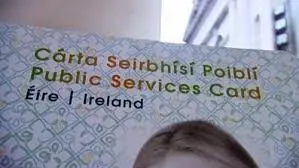
In a bank queue or at a counter for a utility provider, the public services card is set to take on a new role that goes beyond social protection. For some cardholders, that could mean one less document to carry; for others, it opens a fresh debate about what the card is becoming.
The government plans to make the card a form of identity in places like banks, credit unions, and utility providers. It is a change with practical appeal, but it lands in the middle of long-running concern over the card’s legal and data protection history.
What is changing with the Public Services Card?
The proposed change will be included in the Social Welfare and Other Matters Bill 2026, after Minister for Social Protection Dara Calleary received government approval for priority drafting. Under the plans, a cardholder will be able to use the public services card as a form of identity with financial institutions and utility providers.
The move is intended to help people who do not have a driving licence or passport. It is also designed to be at the cardholder’s discretion, rather than something imposed automatically. A separate option would allow people to include their date of birth on the card so it can be used for age verification.
That detail matters because it shows how the card is being reshaped from a document used to access social services into something that could be accepted more widely in everyday life.
Why are privacy groups warning about the plan?
The wider use of the public services card has drawn immediate concern from the Irish Council for Civil Liberties and Digital Rights Ireland. Both groups said they are seriously concerned about the move, describing the expansion as a legal quagmire that relies on a system they say is already in breach of data protection law.
Dr TJ McIntyre, Chair of Digital Rights Ireland, said the card was originally introduced for social welfare purposes and is now being turned into a de facto national identity card. He also said there has been no public debate about introducing a national identity card and no proper legislative framework.
The caution is rooted in earlier developments. In 2019, the Data Protection Commission found that Public Services Cards should not be required to receive State services such as obtaining a driving licence or passport. Then in 2021, the Department of Social Protection acknowledged there is no legal basis for people to be compelled to get a Public Services Card for anything other than social welfare payments and benefits.
What does this mean for cardholders and institutions?
For cardholders, the practical effect could be simple: the public services card may become an acceptable form of identification where another document is missing. For institutions, the change removes a legal barrier that previously meant accepting the card could amount to an offence.
That reversal is significant. It suggests the state is trying to create a clearer route for acceptance of the card in ordinary transactions, while also adding an optional age-verification function through date of birth inclusion.
But the policy shift does not erase the card’s contested past. In 2025, the Data Protection Commission fined the Department of Social Protection €550, 000 after a major investigation into its use of facial recognition technology linked to the card. The Irish Council for Civil Liberties and Digital Rights Ireland say extending the card’s use will compound the legal issues rather than resolving them.
What happens next?
The proposals are due to go before Cabinet on Tuesday as part of the general scheme of the Social Welfare and Other Matters Bill. It is understood there was consultation with the Data Protection Commission in relation to the plans.
That process will determine whether the change moves from proposal to law, and how far the state is willing to go in broadening the role of the public services card. For now, the card stands at a turning point: still rooted in social welfare, but edging toward a broader identity function that could change daily life for cardholders and raise new questions for the public.
Image: null