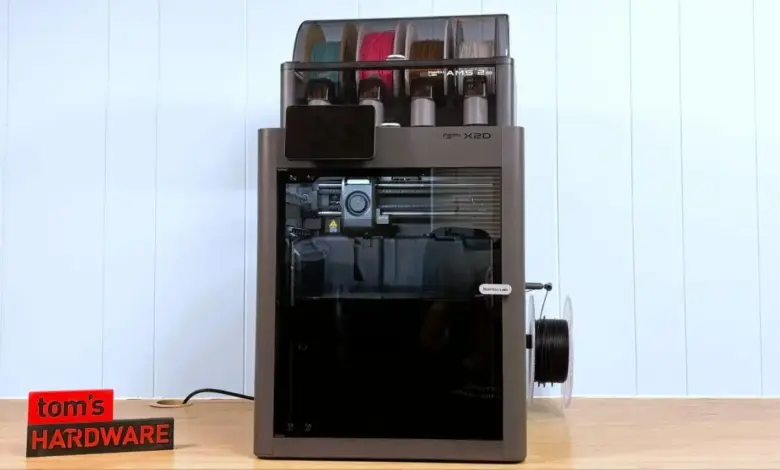
The x2d printer is not trying to win on speed alone. That is the surprising part. Bambu Lab’s newest machine arrives as a thoughtful replacement for the X1 Carbon, pairing familiar build quality with a dual-nozzle setup, a heated chamber, and a more approachable price. At $899 for the Combo, or $649 without the automatic material system, it is positioned as a practical step rather than a flashy leap. The result is a printer that feels both new and recognizable, with upgrades that matter most when a print gets complicated.
Why the X2D matters now
Bambu Lab has been refreshing its lineup across the flagship H series, the midrange P series, and the budget A series. The missing piece was a replacement for its original printer, and the x2d printer fills that gap. It arrives after the X1 Carbon was retired, and its role is clear: keep the strengths that made the older machine a favorite while trimming excess complexity where possible.
The price is part of that story. The X2D Combo sits far below the premium H2 series, while still bringing features that feel close to the top tier. That places it in a narrow but strategically important space, especially for buyers who want advanced capability without moving into the highest price band.
X2d printer hardware: familiar frame, different logic
At first glance, the x2d printer looks like a continuation of Bambu Lab’s established design language. It is a fully enclosed machine made of metal, plastic, and glass, and the build quality is described as excellent. The setup process is simple, taking about 20 minutes in the hands of a cautious user, and its size means accessories made for other Bambu machines can fit as expected.
The deeper changes are more revealing. The X2D uses steel rods rather than the carbon rods found in the X1 Carbon. It also includes active filtering and airflow, borrowed from the P2S, which helps protect the machine’s internals. The most notable shift, however, is the second nozzle. Unlike a toolchanger, the X2D uses a main nozzle for the AMS color system and an auxiliary nozzle designed primarily to support the main extruder.
What dual extrusion changes in practice
This is where the x2d printer becomes more than a routine refresh. The auxiliary nozzle uses a Bowden setup rather than direct drive, which reduces the weight on the print head and helps it move faster and accelerate more quickly. The tradeoff is material flexibility: flexible filaments such as TPU do not work well through that system without extra effort.
The real promise is in support material and waste reduction. Bambu Lab is positioning the second nozzle as a way to print supports that do not bond to the main filament, making them easier to remove and less likely to scar the model’s surface. That matters because support cleanup is one of the most frustrating parts of multi-material printing, and it is often where convenience is lost.
Expert perspective on the tradeoffs
One view from the testing notes is that the x2d printer is less about chasing headline-grabbing speed and more about making smart choices. The machine keeps the same print speeds as the X1 Carbon, while gaining a faster acceleration rate thanks to the lighter toolhead. It also uses tool-free quick-release nozzles, a system that makes maintenance simpler than on the older X1 Carbon and the more complex H2 dual-nozzle design.
The same testing notes also point to other additions that strengthen the package: hardened steel rods, a thermal system that can keep the printer hot or cool as needed, a three-layer filtration system for odor and VOC removal, an AI camera for monitoring, and upgraded lighting for video. These are not isolated features; together they suggest a printer designed for daily use rather than occasional showcase prints.
Regional and global impact for buyers and the market
At 256 x 256 x 256 mm, the build volume keeps the machine in familiar territory, but the market impact comes from pricing and positioning. A standalone price of $649 and a Combo price of $899 make the X2D a direct challenge to what buyers expect from a premium enclosed printer. In that sense, the x2d printer is less a niche upgrade than a signal that advanced features are moving downward into a more accessible bracket.
That has consequences beyond one product cycle. If the X2D succeeds, it reinforces a model where dual extrusion, filtration, and camera-based monitoring become expected features rather than premium extras. For users, that could mean easier support removal, less cleanup, and fewer compromises between speed and usability. For the broader 3D printing market, it raises the bar for what a mid-to-upper tier machine must deliver.
The open question is whether the x2d printer’s balance of convenience, capability, and compromise will prove enough to make it the new standard for Bambu Lab’s next chapter.