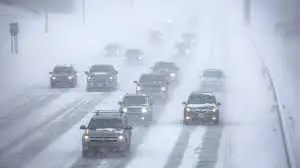
storm conditions are tightening across multiple states as the National Weather Service warns that travel may become very difficult to impossible in parts of Alaska, Oregon, Washington, Utah, and California from Monday or Tuesday. The pattern matters because the alerts now span winter storm warnings, watches, and advisories, with snowfall totals reaching as high as 20 inches in some mountain zones.
What Happens When The Warnings Spread?
The current setup shows a broad stretch of impacts rather than a single isolated event. In Alaska, winter storm warnings signal heavy snow within the next 24 hours. In Oregon and Washington, winter storm watch alerts mean conditions are favorable for a winter storm. Utah and California are under winter weather advisories, which call for preparation for snow, sleet, freezing rain, and blowing snow.
The strongest concern is travel. The National Weather Service says conditions may become very difficult to impossible in some areas, especially where snow combines with strong wind and higher terrain. That combination can quickly reduce visibility, make roads hazardous, and slow or halt movement across mountain corridors.
What Happens When Snow Totals Climb?
In Alaska, the Upper Tanana Valley is expected to see up to 6 inches of snow southeast of Tok and up to 12 inches northeast of Tok by Tuesday, with winds around 35 mph. The heaviest snowfall is likely along and near the Alaska Highway, from southeast of Delta Junction to Tok. Farther east in the Alaska Range, north of Trims Camp, snowfall could reach 6 to 12 inches below 1, 500 feet and 12 to 18 inches above 1, 500 feet by Tuesday afternoon.
On the West Coast, the eastern slopes of the Oregon Cascades could see up to 10 inches of snow with 45 mph winds, creating difficult driving conditions from Tuesday afternoon until Wednesday evening. The National Weather Service advises drivers to delay all travel if possible.
In the south-central Cascades of Klamath and Douglas Counties, snowfall could reach up to 15 inches with 45 mph winds from late Tuesday afternoon until Wednesday night. The heaviest snow is expected overnight Tuesday into Wednesday morning. The northern and central Cascades of Oregon could receive between 9 and 18 inches with winds near 45 mph from Tuesday afternoon through Wednesday. In Washington, the Cascades of Snohomish, Whatcom, Pierce and southern King County, along with northern King, Skagit and Lewis Counties, could get up to 20 inches of snow and winds reaching up to 35 mph from Tuesday afternoon through Wednesday.
What If The Pattern Holds Through Midweek?
| Area | Expected impact | Time window |
|---|---|---|
| Alaska Highway corridor | Heavy snow, difficult travel | By Tuesday |
| Oregon Cascades | Up to 10 inches, 45 mph winds | Tuesday afternoon to Wednesday evening |
| Washington Cascades | Up to 20 inches, winds to 35 mph | Tuesday afternoon to Wednesday |
| Utah mountains | 8 to 12 inches | Until Tuesday afternoon |
| Southern California mountain corridors | Wet snow up to 6 inches, winds to 40 mph | By mid-Monday morning |
The south Washington Cascades could see up to 18 inches and 45 mph winds, particularly above 3, 500 feet, from Tuesday afternoon until Wednesday night. In Utah, the central and southern mountains—including Joe’s Valley, Alton, Cove Fort, Brian Head, and Fish Lake—could get between 8 and 12 inches of snow, especially near Brian Head and the Tushar Mountains, until Tuesday afternoon.
In California, the northern and southern Ventura County Mountains, the Santa Barbara County interior mountains, the eastern and western San Gabriel Mountains, and the Interstate 5 and Highway 14 corridors could receive up to 6 inches of wet snow above 6, 000 feet by mid-Monday morning, with winds reaching 40 mph.
The clearest near-term signal is that this storm is not a one-state event. It is a multi-region weather system with overlapping timelines, high-elevation snowfall, and wind-driven travel risk. Readers should expect changing road conditions, especially in mountain passes and along corridor routes where snow may intensify quickly. For now, the most practical takeaway is simple: if travel is not essential, delay it. That is the most grounded response to storm impacts that could stay disruptive through midweek.