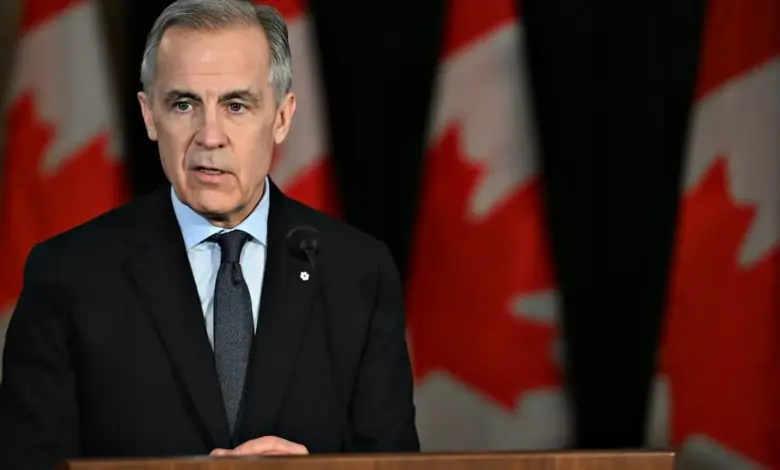
radio-canada became the focus of a sharper media debate after Mark Carney was thanked for his “trust” during a recent interview, a choice of words that Mario Dumont called awkward and even embarrassing. The exchange matters because it touches a broader question that extends beyond one program: how political leaders choose their interview venues, and what that signals about media access and public confidence.
What Happened When Trust Became the Point?
The tension started during an interview on Tout un matin on April 10, when host Patrick Masbourian opened by greeting the prime minister and thanking him for his confidence in the program. That wording became the center of Dumont’s criticism on his Monday morning commentary. He said the phrasing raised a basic question: what does “trust” mean in this setting?
For Dumont, the issue was not only the wording itself but the impression it created. He argued that Mark Carney appears to be giving interviews mainly to Radio-Canada while rarely engaging private media. In his view, that pattern makes the “trust” remark look more loaded than routine. He also suggested that such an approach risks making the public broadcaster seem like the preferred and perhaps exclusive channel for the prime minister’s communication.
The conversation is narrow in its immediate facts, but the reaction shows why media language can become politically sensitive. A small phrase can be read as a sign of access, preference, or imbalance, especially when it comes from a head of government.
What Does the Current Media Pattern Suggest?
The available reporting points to a simple but important backdrop: Dumont says Carney has given relatively few interviews to private media since taking office. That observation is central to the criticism because it frames the Radio-canada exchange as part of a larger pattern rather than a one-off moment.
There is no claim here about formal policy or public instruction. The concern is perception. If a prime minister is seen as appearing mostly in one media environment, viewers and listeners may begin to ask whether that environment offers a different level of comfort, scrutiny, or reach. Dumont raised that possibility directly when he asked whether Carney trusts Radio-Canada more than other stations, and whether that means he expects better interviews or coverage there.
This is where the dispute moves from etiquette to strategy. Media access is not only about availability; it is also about the range of audiences a leader is willing to face. In that sense, the Radio-canada debate is less about one greeting and more about the optics of selective engagement.
What If This Becomes a Broader Pattern?
If the current pattern continues, three outcomes are plausible:
| Scenario | What it could mean |
|---|---|
| Best case | The controversy stays limited to a brief media-cycle debate, and Carney broadens his interview mix while maintaining access across outlets. |
| Most likely | The issue remains a recurring talking point whenever Carney appears on Radio-Canada, with critics using it to question balance and transparency. |
| Most challenging | The perception hardens that one broadcaster has become the default venue, making every appearance there politically charged and harder to separate from access concerns. |
These are not predictions of intent. They are possible paths based on the signals already visible in the exchange.
Who Gains and Who Faces Pressure?
Several stakeholders are affected by this debate. For Carney, the benefit of a familiar interview setting is clear: it can provide a controlled and direct platform. But that benefit comes with a cost if it appears selective.
For private media organizations, the issue is less about one interview and more about whether they are being left out of a meaningful part of the political conversation. Dumont’s criticism reflects that concern plainly.
For Radio-canada, the stakes are reputational. Even when a host’s wording is polite and routine, it can be interpreted as evidence of closeness if the same guest appears there more often than elsewhere. That does not prove bias, but it does raise the burden of perception.
- Carney gains visibility but faces scrutiny over balance.
- Private media gain a debate point about access.
- Radio-canada gains prominence but risks being seen as the default political lane.
What Should Readers Watch Next?
The key lesson is not to overread a single phrase, but to notice the pattern it sits within. When trust is discussed on air, and when one interview venue seems to stand apart from others, the public is likely to ask whether access is being distributed evenly. That question may matter even more than the original comment.
For now, the safest reading is restrained: the criticism is real, the discomfort is explicit, and the broader media strategy remains open to interpretation. What happens next will depend on whether Carney continues to limit his appearances or begins widening the range of interviews he accepts. Either way, radio-canada will remain part of the conversation, because radio-canada has now become a test case for how political trust is performed in public.