President Trump has pulled down a striking AI-generated image that cast him in a Jesus-like role, a move that landed in the middle of an already heated clash over Pope Leo XIV. The post drew instant backlash from some of Trump’s own supporters and sharpened the sense that this was not just a political dispute, but a symbolic fight over faith, authority and tone. Trump later insisted he meant the image to show him as a doctor, not as Christ, but the damage had already been done.
Why the post triggered a backlash
The deleted image showed Trump with divine light streaming from his hands as he appeared to heal a man in a hospital bed. Trump told reporters at the White House that he had posted it, adding: “I thought it was me as a doctor. ” He said: “It was supposed to be me as a doctor, making people better. ”
That explanation did not calm the reaction. Riley Gaines, a conservative commentator, said she “cannot understand why he’d post this” and warned that “a little humility would serve him well. ” Megan Basham called the post “OUTRAGEOUS blasphemy” and demanded that Trump remove it and seek forgiveness. Isabel Brown described it as “disgusting and unacceptable, ” while Steve Deace reduced his response to a single word: “No. ”
The unusual part of the backlash is not simply that critics objected. It is that many of them were among Trump’s most loyal Christian supporters. That matters because the dispute over president trump was unfolding inside a political coalition that often tolerates controversy, yet in this case drew a sharper line.
The deeper clash with Pope Leo XIV
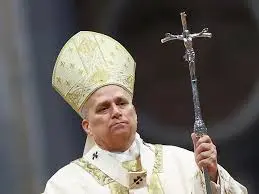
The image episode sits alongside Trump’s war of words with Pope Leo XIV, the first US-born pope in Catholic history. Leo had suggested, without naming Trump, that a “delusion of omnipotence” was shaping US foreign policy, especially around the war with Iran. Trump responded by calling the pontiff “WEAK on Crime, ” saying he was “not a fan of Pope Leo, ” and accusing him of catering to the radical left.
Trump later doubled down, saying he would not apologise to the “very weak” pope. He also said the pope “should get his act together” and described him as a “very liberal person. ” In his telling, the pope does not understand crime or the danger of a country seeking nuclear weapons. That exchange turned a personal rebuke into a wider argument over how power should be spoken about, and by whom.
Marjorie Taylor Greene, who captured a screenshot before the image was deleted, said she “completely denounce[s] this. ” The fact that the post was first reshared, then removed, shows how quickly symbolic content can move through a political ecosystem before institutions or allies can contain it. In this case, president trump became the centre of a debate not only over his words, but over the imagery attached to them.
Meloni’s rebuke adds international pressure
The dispute widened when Italian Prime Minister Giorgia Meloni called Trump’s remarks about the pope “unacceptable. ” She said it was “right and normal” for the pope to call for peace and condemn war. Meloni’s intervention is notable because she is a close Trump ally and had previously been reluctant to criticise him directly.
Her statement also shows how the conflict is being read beyond Washington. Matteo Salvini, her coalition partner, said that attacking the pope “doesn’t seem like a useful or intelligent thing to do. ” Meanwhile, the pope said he did not want a debate with Trump but would continue promoting peace. He also said he had “no fear” of the Trump administration and would keep speaking out against war.
That response is politically significant. In a moment when public faith language is being used as a weapon and a defence, the pope’s refusal to escalate on Trump’s terms may prove more powerful than a direct counterattack. It also places the burden back on the White House, where president trump is choosing confrontation while insisting he is merely defending policy and order.
What this means for Trump’s coalition
The episode exposes a rare fault line inside Trump’s base, especially among Christian conservatives who have usually rallied around him. Their reaction suggests that some images cross a boundary even in a highly permissive political culture. The issue is not just one deleted post. It is that the post collided with a broader argument over reverence, humility and authority.
For Catholics in the United States, the exchange carries added weight. The country has more than 70 million Catholics, and Trump’s vice-president, JD Vance, is among them. That makes the tone of the president’s criticism harder to dismiss as a niche online spat. It is now part of a larger public test of how far a president can push religious rhetoric before even sympathetic audiences push back.
For now, the episode leaves Trump facing two overlapping pressures: outrage over the AI image and criticism over his attacks on the pope. Together, they suggest a political style that thrives on provocation may be running into the limits of religious symbolism. The question is whether president trump sees this as a warning sign or simply another conflict to outlast.