The Australia Singapore Fuel Deal was never supposed to produce a shipload of diesel. Its value lay elsewhere: in reducing the risk that a widening Middle East conflict could interrupt one of Australia’s most important refined fuel supply lines.
What was actually secured in Singapore?
Verified fact: Anthony Albanese’s visit to Singapore was brief and did not produce any immediate new supply of petrol or diesel. The purpose was narrower and more strategic: to shore up existing supply relationships at a time when uncertainty is rising.
Singapore currently supplies 55% of Australia’s unleaded fuel, 22% of jet fuel, and 15% of diesel. That makes the relationship central to Australia’s fuel security, even without any emergency shipment attached to the visit.
Informed analysis: The political success of the trip rests on risk management, not visible delivery. In a period of fragile ceasefire conditions and shipping disruption, preserving continuity matters as much as increasing volume.
Why did the Singapore visit matter if no fuel arrived?
The central question is not whether the prime minister returned with extra fuel. It is what Singapore was willing to say publicly about future supply and what that meant for Canberra’s planning.
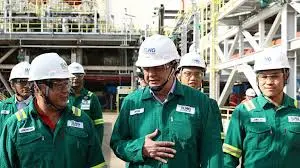
Singaporean Prime Minister Lawrence Wong said, “we do not plan to restrict exports … we will not do so during this energy crisis. ” That was treated in Canberra as the closest thing to a guarantee that Australia would not face a reduction in supply from its biggest source of refined fuels.
Energy Minister Chris Bowen described such diplomatic language as “often quite nuanced, ” while also calling Wong’s response “as strong as you could expect it to be. ” The wording matters because it supports Australia Singapore Fuel Deal as a political reassurance rather than a commercial expansion.
What is the hidden condition behind the reassurance?
The caveat came in Wong’s opening statement: Singapore would continue supplying refined fuels to Australia “as long as upstream supplies continue. ” That sentence is the core of the matter.
Verified fact: Singapore imports crude oil rather than extracting it directly. If its upstream supply chain is disrupted, downstream supply to Australia is affected. That means Canberra’s confidence depends on a wider system that Australia does not control.
The government’s concern is not abstract. The text of the visit points to the possibility that the fragile ceasefire could collapse, that escalated bombing in Lebanon could push Iran to close the strait of Hormuz again, or that shipping shocks already embedded in the system could continue to spread. In that context, the Australia Singapore Fuel Deal is best understood as insurance against deterioration, not proof that the risk has disappeared.
Who benefits, and what does Canberra want to say later?
Singapore benefits from being treated as a reliable partner in a crisis, while Australia benefits from being able to say it acted early. The government’s goal is explicit: if the situation worsens, it wants to be able to show that it “pulled every lever, ” “turned over every rock, ” made every phone call, and called in every favour to reduce the pain at home.
Verified fact: Albanese said on his way to Singapore, “What we have done consistently here is not to wait … we’ve looked at every possible opportunity there is to increase supply. ” That statement confirms the government’s emphasis on preparation, not immediate rescue.
Informed analysis: The domestic message is as important as the diplomatic one. Canberra is trying to project calm now while keeping open the argument that it acted responsibly before shortages became more serious.
What should the public take from the Australia Singapore Fuel Deal?
There is no mystery about the absence of diesel in the prime minister’s return. The visit was never meant to solve the fuel problem on the spot. Its purpose was to secure confidence from Singapore, Australia’s largest source of refined fuels, at a time when uncertainty is the real threat.
The government says there is more supply onshore now than at the beginning of the US-Israel war on Iran, and that the number of service stations without stock continues to fall. Even so, the text makes clear that the next challenge is not just current supply, but certainty of future supply if Middle East tensions deepen or shipping disruptions persist.
That is why the Australia Singapore Fuel Deal matters: not as a headline about barrels arriving tomorrow, but as an early attempt to prevent a shortage narrative from hardening into reality. The accountability question now is whether Australia can turn reassurance into resilience before the next shock tests the system.