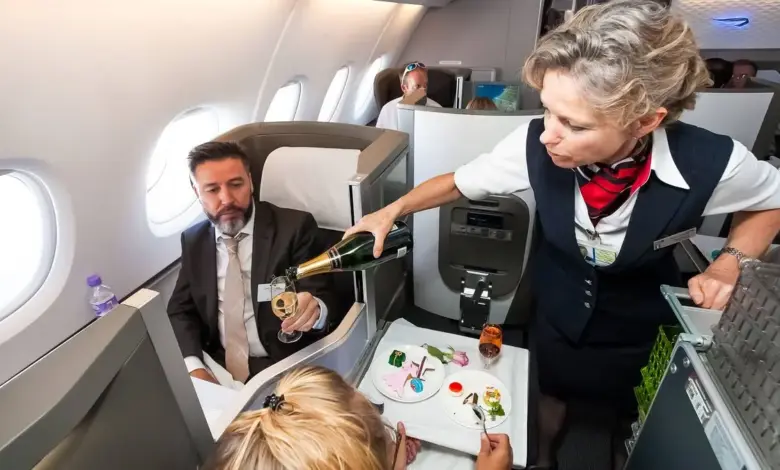
The promise of luxury can unravel fast. In this British Airways flight, a content creator spent £6, 800 for first class and still walked away calling it “shocking, ” not because the cabin was small, but because one missing feature and one failed meal request shaped the entire experience.
What was the central complaint on British Airways?
Verified fact: Jabz documented the flight in a vlog-style video shared on social media, where he said he paid £6, 800 for British Airways first class and praised the cabin as modern, minimal, and spacious. He said the seat was “super wide” and left “more than enough space” for his long legs. But he also identified a major drawback: there was no privacy door. He said that was a shame because even business class seats now have them.
Informed analysis: That detail matters because the story is not simply about comfort. It is about expectation. When a passenger pays first class prices, design features become part of the product, and the absence of privacy became the symbol of a bigger disappointment.
Why did the meal service become the turning point?
Verified fact: Jabz said first class passengers can request different meals before departure, and he did make such a request. Staff later told him they had forgotten to load it onto the plane. He said British Airways only had one fish meal in first class, and that another passenger had already requested it. He added that staff said they would check what was available in the lower cabins.
Verified fact: The food that followed did not rescue the experience. He described tomato soup as “actually quite decent, ” but said a cold plate of tomatoes, paneer and couscous was “really not good. ” He also mocked his main course as “glippy gloop and fizzy widgets, ” and said dessert looked good but tasted like “baby oil and sugar. ” The fruit plate included mangoes that were not ripe.
Informed analysis: For a premium fare, the issue was not only taste. It was reliability. A missed pre-ordered meal suggests a breakdown in service execution, and that breakdown appears to have mattered more than the cabin’s polished appearance.
What did British Airways still get right?
Verified fact: The flight was not presented as a total loss. Jabz said the amenity kit and pyjamas impressed him immediately. He also liked the welcome drink and the wardrobe outside the first class seats, which he called “really cool” because it allowed passengers to hang up their clothes after changing.
Verified fact: He later found that the flight attendant had transformed his seat into a bed. He described it as “really spacious” and said it was “one of the more comfortable cabins to sleep in. ” He also praised the cabin’s modern look and minimalist design.
Informed analysis: These positives show why premium travel can remain persuasive even when flawed. British Airways appears to have delivered some expected comforts. The problem is that the strongest praise centered on space and cosmetics, while the strongest criticism centered on one missing door and one failed meal request.
Who benefits when first class feels premium but incomplete?
Verified fact: The account was shared to Jabz’s 213, 000 followers, extending the criticism beyond a single cabin. The response inside the flight, at least as presented in the video, was limited to staff explaining that the requested meal had not been loaded.
Informed analysis: The airline benefits when the product appears luxurious from the outside, but the passenger’s account suggests that presentation alone cannot sustain a first class promise. The story also places pressure on premium carriers more broadly: if business class now offers privacy doors, then first class must justify its own price through consistency, not branding alone.
Verified fact: Jabz’s final plate of food was made up of “miscellaneous ingredients” that he was not impressed by. That ending matters because it shows the flight’s central contradiction: the cabin looked premium, but the service sequence did not consistently match the ticket.
Informed analysis: The deeper question is whether passengers buying premium travel are paying for a defined standard or for an image of luxury that can still fail at the most basic level.
British Airways is left with a simple but uncomfortable test: if a £6, 800 ticket can still hinge on a missing privacy door and a meal that was never loaded, then the gap between premium pricing and premium delivery remains visible. Until that gap is addressed, the lesson of this British Airways flight will stay the same: luxury can be advertised in minutes, but trust is earned in details.