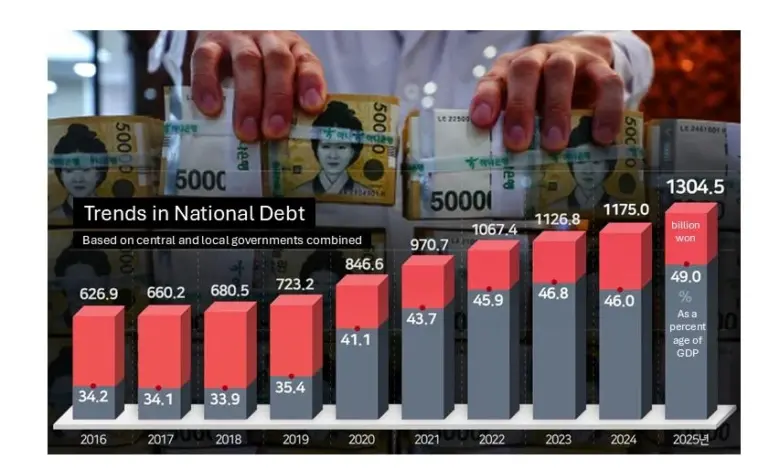
South Korea’s government debt exceeded 1, 300 trillion won for the first time in 2025, and government debt pressure remained visible as the managed fiscal deficit stayed above 100 trillion won for a second straight year. Official data released on Monday showed the national debt reached 1, 304. 5 trillion won, while the debt-to-GDP ratio rose to 49. 0% from 46. 0% a year earlier. The report came as authorities also warned that continued deficits and spending pressure are adding to concerns over fiscal sustainability.
Debt Climbs as Borrowing Continues
The annual settlement report showed total national debt rose by 129. 4 trillion won from a year earlier, with per capita debt climbing to about 25. 2 million won. Central government debt made up 1, 268. 1 trillion won of the total, and the increase was driven mainly by additional bond issuance after tax revenue fell short of spending needs. Foreign exchange stabilization bonds also increased as authorities sought to manage currency volatility.
Government debt has risen sharply since the COVID-19 pandemic, increasing by nearly 500 trillion won over the past five years as authorities expanded borrowing to support economic stimulus and welfare spending. The same report said the managed fiscal deficit, a key measure that excludes social security funds, reached 104. 2 trillion won, or 3. 9% of GDP.
Government Debt and the Fiscal Gap
Total revenue in 2025 came to 637. 4 trillion won, while spending reached 684. 1 trillion won, producing a consolidated fiscal deficit of 46. 7 trillion won. The managed fiscal deficit of 104. 2 trillion won remained above the government’s fiscal rule target of 3% of GDP. The report also said the deficit was slightly lower than the previous year, even as the overall debt burden continued to rise.
Hwang Soon-kwan, director general for treasury at the Ministry of Finance and Economy, said the government executed two additional supplementary budgets to support advanced strategic industries such as artificial intelligence and semiconductors, while also promoting domestic demand recovery and stabilizing people’s livelihoods. That explanation framed the latest rise in government debt as a result of policy support and weak revenue, not a single spending shock.
What Officials Say Comes Next
The government’s own budget framework points to more pressure ahead, with the debt-to-GDP ratio projected to move above 50% this year. That would extend the climb already visible in the 2025 settlement report and keep government debt at the center of fiscal debate.
For now, the message from the latest figures is straightforward: government debt is still rising faster than officials want, and the deficit remains too wide to signal a clean turn toward consolidation. The next data points will show whether spending pressure eases or whether government debt keeps moving higher into the current year.