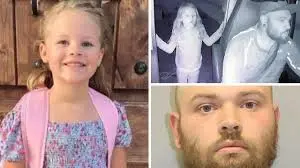
The first thing people saw was not a courtroom, but a child standing in a black-and-white image, her small frame behind the driver who prosecutors say took her life. In the case of Athena Strand, that photo has become a stark symbol of how an ordinary delivery turned into a family’s worst day and a legal process now centered on punishment.
What does the Athena Strand photo show?
The image released by prosecutors shows Athena Strand on the day she was killed, standing behind Tanner Horner as he drove a FedEx van during a Christmas delivery in Wise County. Her expression appears uneasy, while Horner faces the road. It is a quiet frame, but in court it carries the force of a final moment before a child vanished from home.
Horner, a former delivery driver, pleaded guilty in Tarrant County to capital murder and aggravated kidnapping. The plea ended what had been expected to be an emotional trial and moved the case into the sentencing phase, where jurors will decide whether he should face the death penalty. Horner had originally pleaded not guilty in 2023.
How did a holiday delivery turn into a death investigation?
Horner was accused of going to the girl’s home in Paradise, a town of fewer than 500 people about 60 miles northwest of Dallas, to deliver a package containing a Christmas gift. Investigators say he accidentally struck the child with his truck while backing out of the driveway. He then told investigators he panicked, put her in his van, and strangled her because he feared she would tell her father what happened.
Authorities say Athena was found two days after she was reported missing, about 9 miles from her home, southeast of Boyd. The arrest affidavit says Horner was tracked down through digital evidence that same day. In court, the details have made the case one of the most painful kinds of prosecutions: a child, a holiday delivery, and a sequence that ended in death rather than return.
What has the courtroom heard so far?
After Horner entered his plea, Judge George Gallagher briefly recessed the courtroom before jurors were brought back and told the case had shifted to punishment. The prosecution warned that jurors would hear and see graphic material, including video and audio, and framed the delivery job as one that usually brings “joy and happiness. ” Prosecutors also said the jury would hear what “a 200-pound man can do to a 67-pound child” and that Horner’s first words to Athena were “Don’t scream or I’ll hurt you. ”
The defense urged jurors to weigh Horner’s background and consider a sentence of life without parole. They said he lived with autism, had a history of mental illness, had not had access to services until age 18, and had been exposed to high lead levels. They also said his family struggled with substance abuse and asked the jury to fully consider the evidence before deciding his future.
Why has Athena Strand remained at the center of the case?
Much of the case has stayed close to Athena herself: a 7-year-old who loved drawing, writing, and coloring, and who her elementary school teacher, Lindsey Thompson, described as a “typical 7-year-old girl” and a “true gem” who was “always smiling. ” Thompson also said Athena spoke her mind and stood up for herself. Those words have helped turn the trial from a procedural moment into a portrait of a child whose presence was larger than the facts of her death.
Athena Strand is now the name jurors will carry into sentencing, alongside the image of a little girl behind a delivery driver and the question of what justice can mean when the harm is irreversible. In the courtroom, the case has moved beyond guilt and into judgment, but the photo keeps returning the room to the same unsettling point: the moment before a routine stop became a family’s permanent loss.