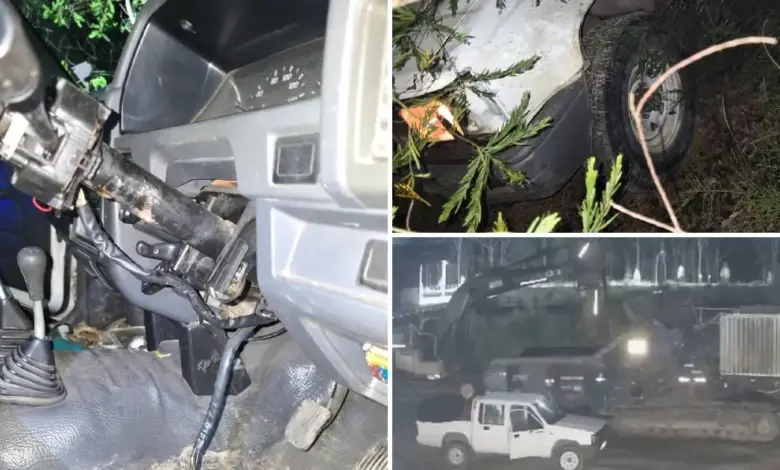
Gasoline theft is no longer a small-scale nuisance in the Hunter Region. In one late-night incident near Black Hill, police say two people were stopped after diesel was allegedly siphoned from excavators at a construction site, and the alleged sequence ended with a stolen ute, a crash, and an arrest after a bushland pursuit. The detail that stands out is not only the chase, but the setting: a rural work site where fuel, machinery, and reduced visibility created a narrow window for theft.
What happened at Black Hill, and why does it matter?
Verified fact: Police were called to a construction site at Black Hill in the New South Wales Hunter Region at about 9. 30pm on Sunday, April 5, after reports that two individuals were siphoning fuel from several excavators. Police allege the pair used a Mitsubishi Triton stolen from a Rutherford residence the night before.
The vehicle then fled through nearby bushland toward Black Hill Road, and Newcastle City Highway Patrol began a pursuit. During that chase, police say the Triton forced its way through a locked gate and continued for several kilometres before crashing into a large stone bollard. The impact immobilised the ute, which was towing a large fuel carrier. Both occupants then ran from the scene. A 31-year-old woman was arrested afterward, while the 30-year-old male driver was tracked for around three kilometres through dense bushland with the help of a police dog before being taken into custody.
Informed analysis: The combination of a construction site, heavy machinery, and a stolen vehicle suggests planning rather than opportunism. That matters because gasoline theft in this case appears tied to mobility, access, and speed, not just a single siphoning attempt.
What does the evidence say about the scale of the problem?
Verified fact: Police said the man had swallowed diesel fuel while trying to siphon it and later vomited the substance. He returned a negative roadside breath test but failed a subsequent sobriety assessment. Police also said a small quantity of prohibited drugs was found on both individuals. Both were taken to Maitland Hospital for treatment of minor injuries.
The man has been charged with multiple offences, including police pursuit, dangerous driving, larceny, entering enclosed land without lawful excuse, driving under the influence of drugs, and possessing prohibited drugs. His licence was suspended, and he was first refused bail by police before later being granted strict conditional bail in court. The woman faces court on charges including being carried in a stolen vehicle, larceny, trespass, and drug possession.
Verified fact: The arrests came as fuel theft is surging at service stations nationwide, with a peak industry body saying incidents have risen by 30 per cent and that aggression toward service workers has also increased. The same context notes that petrol and diesel supplies remain tight in parts of the country, with ongoing pressure on fuel distribution and rising costs affecting businesses and motorists.
Informed analysis: These facts point to more than one pressure point. Tight supplies and high prices can make fuel a more attractive target, but they also make theft harder to absorb for businesses. In that environment, gasoline theft becomes both a criminal act and an operational threat.
Who is implicated, and who bears the cost?
Verified fact: The incident involved a construction site, a stolen Mitsubishi Triton, and a fuel carrier, while police said the vehicle had been taken from Rutherford the night before. The Rural Crime Prevention Team has urged farmers and rural residents to become more resilient against fuel theft amid increased prices.
That warning places the burden on the people most exposed: site operators, rural workers, farmers, and service station staff. The retail side is also under strain, since the wider fuel-theft environment is linked with rising costs and increased aggression toward workers. No response from the two accused is included in the available material, and no broader explanation has been provided by the people directly affected at the Black Hill site.
Informed analysis: The issue is not only what was taken, but how quickly a single theft allegation can escalate into injuries, a pursuit, a damaged vehicle, and a court process. Gasoline theft in this case sits at the intersection of property crime and public safety.
What should the public take from the Black Hill case?
Verified fact: The reported events unfolded on a Sunday night, involved a stolen ute, and ended with two arrests, hospital treatment, and multiple charges. The broader context includes tight fuel supply in parts of the country, rising costs, and a 30 per cent increase in incidents flagged by a peak industry body.
What remains unanswered is how many similar incidents are happening outside the spotlight and how much preventive action is being taken at rural work sites before a theft attempt becomes a pursuit. The available facts suggest that gasoline theft is not isolated from the larger fuel environment; it is being shaped by it. If public agencies and employers want to reduce harm, the evidence points toward more secure storage, clearer site controls, and stronger coordination around rural fuel protection.
For now, the Black Hill arrests show a pattern that is difficult to ignore: gasoline theft is being driven by opportunity, but its consequences are spreading far beyond the point of siphoning.