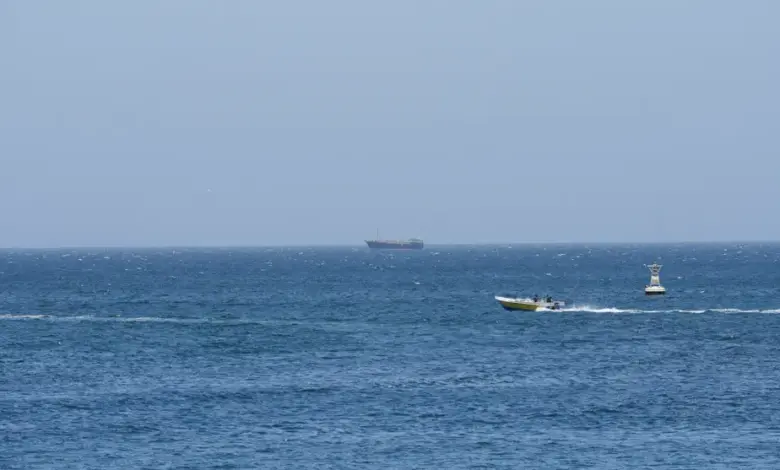
At dawn over the Strait of Hormuz, a navire slipped through water that had spent days carrying more anxiety than traffic. The movement was small, but the meaning was larger: after the ceasefire announcement, the world’s most watched passage remained open in theory and uncertain in practice.
Why did the first crossings matter so much?
Two ships crossed the strait after the ceasefire announcement, a sign that the route could begin to move again after a period of heavy restriction. The first was the NJ Earth, a Greek-owned bulk carrier, which passed at 8: 44 UTC. The Daytona Beach, sailing under the Liberian flag, crossed earlier at 6: 59 UTC after leaving Bandar Abbas, in Iran.
That limited motion stood in sharp contrast to the wider backlog around the Gulf. More than 800 ships remained immobilized there, a reminder that one or two crossings do not yet mean normal traffic. For crews waiting offshore, the pause is not only logistical. It affects schedules, cargo confidence, and the basic question of whether a route is safe enough to trust.
Richard Meade, editor-in-chief of Lloyd’s List, said the mood was understandable caution. He warned that if one vessel were hit, confidence in the ceasefire could collapse again. His view reflects the broader tension around the strait: movement is possible, but trust remains fragile.
What is still unclear about the Navire route through Hormuz?
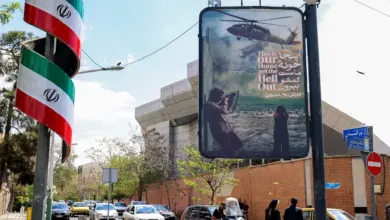
The main uncertainty is not whether ships can move at all, but under what conditions they may do so. Iranian Foreign Minister Abbas Araghchi said passages through the strait during the two-week ceasefire would take place in coordination with Iranian armed forces. A diplomatic Iranian source also described a new mechanism involving Oman, another state bordering the strait.
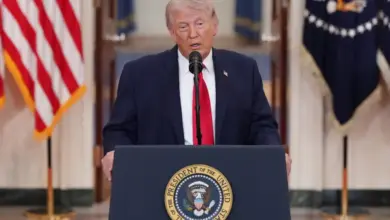
Yet the practical rules remain blurred. The status of the so-called toll system introduced in recent days has not been clarified. One version of the Iranian plan would keep Iranian control over the strait. At the same time, Donald Trump said Iran had accepted the “total, immediate and secure opening” of the Strait of Hormuz. Those two positions do not fully meet, and that gap helps explain why many ship operators are still waiting.
Jakob Larsen, director of safety and security at Bimco, said leaving the Gulf would not be advisable without coordination with the United States and Iran. John Stawpert, director of marine at the International Chamber of Shipping, said shipowners want enough confidence before resuming navigation. The Japanese shipowners’ association also said it was still not clear whether the zone was safe for passage.
How are institutions responding to the risk?
The International Maritime Organization, the United Nations agency responsible for safety at sea, said it was working on a mechanism to guarantee transit security. That effort matters because the risk is not only military. Richard Meade noted that a disorderly departure could also lead to collisions or groundings, especially in a tense and crowded waterway.
There is also a broader institutional picture around the strait. In the United Nations Security Council, Russia and China vetoed a resolution that would have reopened the passage, after the text had already been softened several times. The resolution had been further reduced to avoid references to offensive force and then to Security Council authorization itself. Its rejection left diplomacy with fewer tools and the shipping sector with fewer guarantees.
For now, the evidence is narrow but telling: a navire crossed, then another, while more than 800 others waited. That contrast captures the moment better than any formal statement. The strait is not closed in the absolute sense, yet neither is it back to normal. In a place where one passage can be read as reassurance and warning at once, the next ships may matter even more than the first.