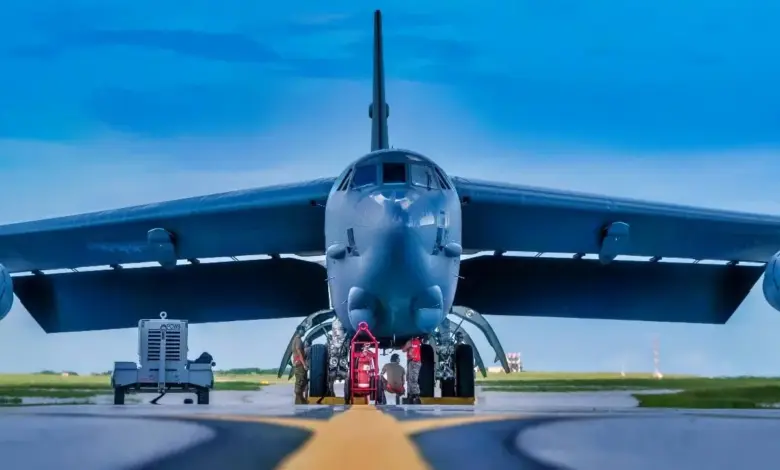
A B52 flying from RAF Fairford declared an in-flight emergency over southern England on March 24, using the universal 7700 distress signal before returning safely to base. The aircraft had left the Gloucestershire airfield the previous evening and was seen circling near Southampton at about 10, 000 feet before making a controlled landing. No official cause has been confirmed.
What Happened Over Southern England
The B52 was identified as a B-52H Stratofortress operating from RAF Fairford, which has become a key hub for U. S. long-range bomber activity tied to the ongoing campaign in Iran. Flight-tracking observers suggested a possible cabin-pressure issue, but that remains unconfirmed. The emergency was brief, and the aircraft landed without further reported incident.
The 7700 code is a standard aviation alert for a general emergency, often associated with mechanical faults or system problems. In this case, the timing drew attention because the aircraft was part of a broader operational cycle linked to strikes on Iranian missile sites. The B52 was not reported to have suffered any damage in the landing.
B52 Operations From RAF Fairford
RAF Fairford is the only forward operating location in Europe designed to support U. S. heavy bombers with a runway and infrastructure capable of handling fully loaded aircraft. That role has made it a recurring launch point for U. S. operations over the years, and it is now being used in the 2026 Iran War. The base’s importance increased after the British government approved U. S. use of Fairford and Diego Garcia for strikes targeting Iranian missile infrastructure in early March.
Since that decision, multiple deployments have been confirmed, including B-1B Lancers and B52 aircraft operating from Fairford. U. S. officials have described the strike days as some of the most intense of the campaign, with bombers launching from the United States, Europe, and the Indian Ocean and being supported by aerial refuelling.
Why The B52 Still Matters
Despite first entering service in the 1950s, the B52 remains central to the current conflict. The H-model is expected to stay in service into the 2050s, and it continues to serve as a high-capacity standoff strike platform capable of carrying 70, 000 pounds of mixed ordnance. That makes it especially useful in Iran, where remaining air defenses still pose a risk.
The B52 allows the U. S. to launch cruise missiles and precision-guided munitions from outside the threat envelopes. In that setting, even a short-lived emergency over England underlines the pressure on aging aircraft operating far from home bases. For now, the aircraft is back on the ground, but the larger tempo around the B52 campaign is likely to remain high as operations continue.