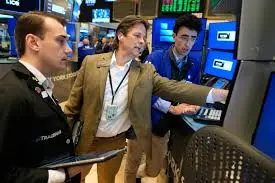
The dow jones industrial average is not moving like a market that believes the danger has passed. Traders opened Monday with hesitation after a dramatic Easter weekend for the war in Iran, and the broader message was unmistakable: the market is waiting for a decision that could reshape energy prices, military risk, and investor confidence all at once.
Verified fact: the S&P and crude were little changed at the open, then edged slightly higher in the first hours of morning trading. Informed analysis: that calm looks less like relief than a pause before a deadline, with traders appearing to price the possibility that neither side wants to be the one that blinks first.
What is the market waiting to learn about Iran and Trump?
The central question is not whether tension exists; it is what has not yet been settled. Late Sunday evening, mediators from Pakistan, Egypt, and Turkey were making a last-ditch effort to broker a deal. A senior White House official said a 45-day ceasefire was one of several ideas under discussion, but that President Trump had not signed off on it. By Monday morning, Iranian foreign ministry spokesperson Esmail Baghaei rejected a short-term ceasefire as illogical and unacceptable, arguing that no rational person would agree to terms without guarantees against another strike.
Verified fact: the ceasefire concept remained unresolved, and the public statements from both sides pointed in opposite directions. Informed analysis: that gap matters because markets dislike ambiguity more than bad news; uncertainty about whether fighting pauses, widens, or intensifies is enough to hold investors in place.
Why is the Dow Jones Industrial Average reacting to an energy choke point?
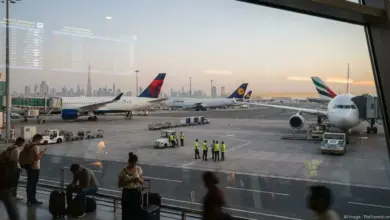
The dow jones industrial average is being watched alongside a far more immediate pressure point: the Strait of Hormuz. Gregory Brew, a senior oil analyst at Eurasia Group, said Iran has little incentive to give up the strait for a temporary reprieve, especially with more U. S. assets moving into the region. That view aligns with the market’s mood. Every day the strait stays effectively closed, the energy crisis deepens.
Verified fact: U. S. crude is trading around $111 a barrel, roughly double where it started the year. Two Qatari LNG tankers tried to exit the strait Monday but turned back. S& P Global Market Intelligence said 35 ships transited the strait over Easter weekend, up from negligible traffic in the weeks since the war began on Feb. 28, but still far below the 150-plus daily transits seen before the conflict. Informed analysis: for equity investors, that is not a side story; it is the channel through which war risk becomes inflation risk, shipping risk, and eventually corporate earnings risk.
Who is benefiting, and who is paying the cost?
On the political side, Trump extended his deadline for Iran to reach a deal to Tuesday at 8 p. m. ET. The extension came with an explicit threat to strike Iran’s power plants and bridges if no agreement is reached. Humanitarian groups have warned that targeting civilian infrastructure would constitute a war crime, and Iran’s deputy foreign minister echoed that point, citing the Geneva Conventions.
Verified fact: casualties continue to rise. Iranian state media said at least 25 people, including six children, were killed overnight as U. S. -Israeli strikes hit a Tehran university and two petrochemical plants. Israel said it struck the South Pars petrochemical facility in Asaluyeh, which its defense minister said accounts for roughly 50% of Iran’s petrochemical production. Iranian missiles killed four people in a residential neighborhood in Haifa, and an infant was among the injured. Informed analysis: the current pattern suggests the burden is being borne first by civilians, industrial infrastructure, and shipping routes, while policymakers trade threats and deadlines from a distance.
What does this mean for investors and public accountability?
The market is not simply reacting to headlines; it is registering the possibility that the conflict has entered a phase where every gesture carries strategic cost. A temporary ceasefire may look plausible to mediators, but Iranian officials have already signaled resistance, and Trump has kept the deadline short. That combination leaves little room for ambiguity.
Verified fact: the energy market is already signaling strain, and the strait remains the most visible pressure point. Informed analysis: investors should not mistake a muted opening for stability. When crude is elevated, shipping is disrupted, and officials are discussing strikes on civilian infrastructure, the dow jones industrial average is reflecting a geopolitical risk that has not been resolved, only deferred. The public deserves clarity on the terms being considered, the civilian consequences being weighed, and the extent to which military pressure is being used as a bargaining tool. Until that is answered, the dow jones industrial average will remain a barometer of unfinished war risk rather than economic calm.