China is not untouched by the Iran oil crisis, but it has a cushion many other buyers do not have. Small independent refineries, often called teapot refineries, have helped keep imports moving even as the United States-Israeli war on Iran has pushed global oil markets into another spike. That does not mean China is immune. It means China prepared earlier, and is now drawing on a system built to absorb shocks.
What is China not being told about its oil cushion?
Verified fact: The Strait of Hormuz has remained a major pressure point after Tehran blocked it, disrupting global oil and gas flows just hours after strikes began on February 28. Brent crude rose sharply, reaching $106. 16 per barrel on Thursday morning after trading at $104. 86 the day before, and earlier in the week it had surpassed $116. Many countries have turned to strategic oil reserves to soften the blow.
Verified fact: China appears to have been partially insulated. The reason is not a full break from Middle Eastern oil, but a supply structure that has long relied on sanctioned barrels and smaller refineries able to process them. China gets more than half of its oil from the Middle East, especially Iran. Data from Kpler shows China bought more than 80 percent of Iran’s shipped oil in 2025, with imports of Iranian crude at 1. 4 million barrels per day out of 10. 4 million barrels per day of seaborne crude imports.
Analysis: The central question is not whether China is exposed. It is how much of the shock can be delayed. The answer so far appears to be: enough to prevent immediate breakdown, not enough to eliminate future strain.
How did Beijing prepare for this before the war began?
Verified fact: When the US and Israel commenced strikes on Iran on February 28, and Tehran blocked the Strait of Hormuz shortly after, Beijing had already been preparing for years. In 2021, during a visit to an oilfield, Chinese President Xi Jinping said the country would take its energy supply matters “into its own hands. ”
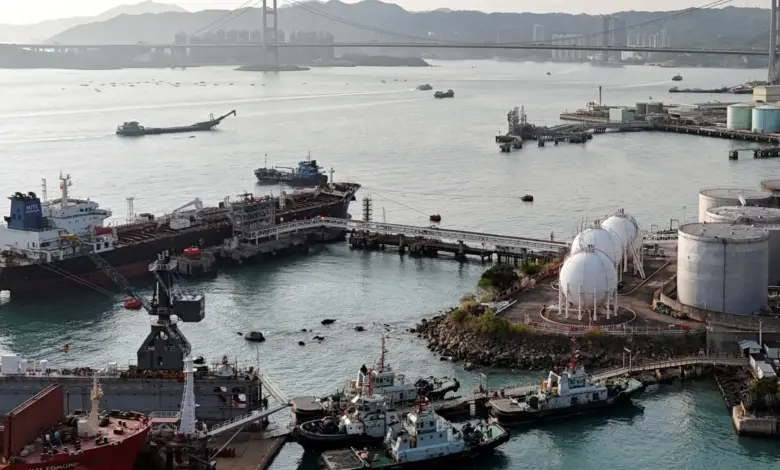
Verified fact: One of the key tactics has been the use of teapot refineries. These smaller, independent facilities have taken advantage of oil made cheaper by international sanctions, while also stockpiling reserves and increasing imports from Iran, Russia and Venezuela. Until the US launched its strike on Caracas in January and effectively seized control of the Venezuelan oil industry, China was the largest buyer of oil from Venezuela.
Analysis: This matters because the current cushion was not improvised in response to the Iran war. It was assembled through a broader strategy of diversification, stockpiling, and sanctioned-crude absorption. The teapot refineries are important not because they eliminate dependence, but because they make dependence more flexible.
Why does the latest data show both resilience and risk?
Verified fact: Muyu Xu, senior crude oil analyst at Kpler, said China’s seaborne crude imports in March were 10. 19 million barrels per day, down from 11. 51 million in February, but still broadly in line with the 2025 average of 10. 41 million. She added that most March arrivals were loaded before the war began in February. Because Middle Eastern crude accounts for more than 50 percent of China’s total seaborne imports, and less than half of those barrels were able to reach the international market in March, China is expected to see a sharp decline in April arrivals.
Verified fact: Xu also said Iranian oil on water outside the Persian Gulf remains close to 165 million barrels, equivalent to about four months of China’s Iranian imports. But she cautioned that this does not mean China will rely on Iranian crude as a primary solution to ease the supply crunch.
Analysis: That distinction is critical. China’s buffer is real, but it is not limitless. Continued purchases of Russian and Iranian crude have provided a cushion, yet the loss of non-Iranian Middle Eastern supply cannot be fully replaced by that buffer alone. In other words, the same system that supports China now also reveals where its vulnerabilities remain.
Who benefits, and what should the public understand now?
Verified fact: The immediate beneficiaries are the small independent refineries that can process cheaper sanctioned oil and keep China’s import channels active under stress. The broader beneficiary is China’s energy system, which has so far avoided the worst effects seen elsewhere in the market.
Verified fact: The war is still pushing global prices higher, and China’s supply picture remains tied to what happens in the Middle East. The drop in March arrivals, the expected decline in April, and the heavy dependence on Middle Eastern crude show that the insulation is partial, not permanent.
Analysis: The hidden truth is that China’s apparent stability rests on a narrow set of arrangements built around sanctions, shadow supply chains, and independent refineries. That is a form of resilience, but it is also a warning. When the next disruption hits, the same arrangements may soften the blow again, but they will not erase the underlying dependence.
What the public should know is simple: China has not escaped the Iran oil crisis. It has managed it better than many others because it spent years building a buffer around teapot refineries, sanctioned crude, and alternative supply lines. The question now is how long that buffer can hold if the war keeps narrowing the market for China and the rest of the world. The answer will determine whether China remains shielded or whether the pressure eventually breaks through China’s defenses.