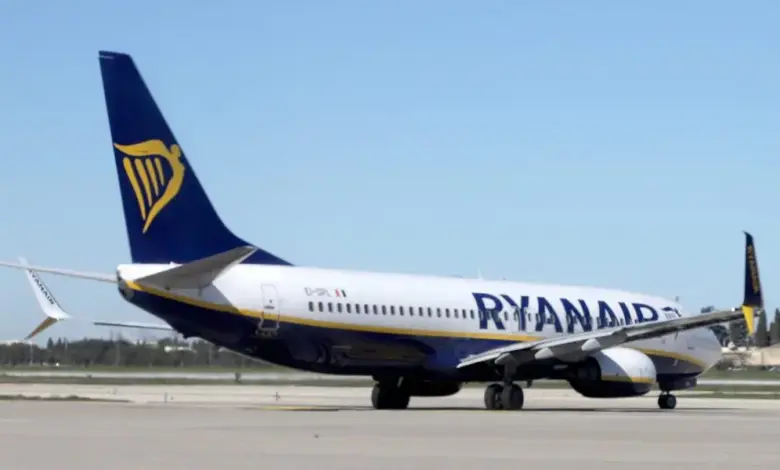
For travelers staring at summer calendars, jet fuel has become more than an industry term. It is now part of the calculation behind whether a family books early, waits for a deal, or risks higher fares later. Ryanair CEO Michael O’Leary says the safest move is not to delay.
Why is Jet Fuel now driving travel anxiety?
O’Leary said that if the U. S. -Israel war on Iran continues into the summer, airlines could begin running out of jet fuel and be forced to trim flights. In comments Thursday on the U. K. ’s ITV News, he described the outlook as an “unknown scenario” if the Strait of Hormuz remains closed for two to three more months.
He warned that 5% to 10% of flights in May, June, and July might have to be canceled. The concern is not only whether flights will operate, but how quickly airlines would know which ones to reduce. In his view, carriers may get little advance notice and would need to decide based on how much jet fuel each airport still has available.
That uncertainty, he said, could make summer travel harder to plan even before anyone reaches the airport. For families, it turns a booking decision into a bet on price, timing, and availability.
What does O’Leary want travelers to do now?
Despite the risk of cancellations, O’Leary said he would “strongly advise” anyone planning a trip this summer to book as soon as possible, before fares rise further. His message was simple: waiting may cost more than taking the risk of a disruption.
He said he does not think booking now is a major gamble. “Life is a gamble, ” he said, adding that he sees the risk as affecting perhaps 5% or 10% of flights in June or July, while most flights would still operate. In his view, travelers are more likely to lose money by delaying and facing higher prices later.
He also said passengers whose flights are canceled may not always be refunded, since airlines could argue that disruptions were beyond their control. Still, he said travelers within Europe should not expect to be stranded. He said airlines would be expected to reroute trips or bring passengers back home if needed.
How are airlines and passengers feeling the pressure?
The wider pressure is already visible in costs. O’Leary said jet fuel prices have risen even faster than gasoline prices, as the Iran war has restricted not only part of the world’s oil supply but also refining capacity that produces jet fuel. He said major U. S. airport hubs including Chicago, Houston, Los Angeles, and New York have seen the average price for a gallon of jet fuel reach $4. 88, nearly double the prewar level.
That kind of jump does not stay at the fuel pump alone. It can push airlines toward higher fees for checked luggage and sharper fare increases. United Airlines, he said, is preparing for a prolonged war scenario that could send oil as high as $175 a barrel and is making contingency plans that include reducing capacity.
For passengers, the result is a narrower choice set: book early and accept some uncertainty, or wait and risk paying more. O’Leary’s message suggests that summer travel may still happen for most people, but it may feel less predictable than usual.
What happens if disruption does hit the route?
O’Leary said Ryanair would try to minimize inconvenience by grounding one or two aircraft if necessary, but he acknowledged it would be difficult. He also said travelers within Europe who face a disruption should be reasonably confident that they can be re-accommodated, get back, or get out.
He added that there may be other causes of disruption this summer as well, saying travelers should keep in mind that French air traffic controllers could create more trouble than fuel shortages. Even so, the warning at the center of his message remains the same: summer travel is still possible, but the cost of waiting may be rising faster than the comfort of certainty.
At the airport gate, the scene may look familiar enough. The difference is that jet fuel now sits behind the ticket price, the scheduling decisions, and the quiet question many travelers are already asking: book now, or hope the summer stays calm.