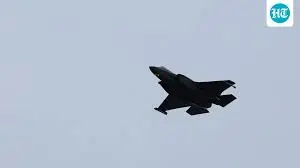
The a10 Thunderbolt II, nicknamed the “Warthog, ” drew immediate attention after one aircraft was reported to have crashed near the Strait of Hormuz while an F-15E was said to have been shot down over Iran; the pilot of the A-10 was rescued safely. In a single moment — the glow of a helicopter’s searchlight, the thud of ships’ engines, the counted hours of a search — material facts about a combat jet’s price and the people who hunt for survivors became urgent and public.
A10 cost and operational footprint
The A-10 Thunderbolt II is highlighted not only by its battlefield role but by its relative affordability. The aircraft’s present-day flyaway cost has been cited at about $18. 8 million per airframe, a figure derived from an original 1970s flyaway cost that adjusted for inflation aligns with the same number. Production produced 716 A-10s built by Fairchild Republic between 1972 and 1984. Operating costs are comparatively low: roughly $6, 000 per flight hour in direct flight costs, or about $17, 716 per flight hour if all expenses are counted, with an annual operating cost per aircraft of roughly $4. 5 million. Those numbers help explain why the plane remains valued for close air support even amid modern air fleets.
What the crash and the rescue reveal about combat search-and-rescue
When an aircraft is lost in hostile territory, the stakes shift instantly from hardware to human life. Combat search-and-rescue (CSAR) operations are designed for these contingencies. “Combat search and rescue, or CSAR, missions are considered among the most complex, time-sensitive operations that US and allied militaries prepare for, ” reads a description of these missions, underlining the urgency teams face when working deep inside contested areas. The ongoing search for a second crew member from the F-15 underscores how quickly a rescue operation can demand broad, layered resources.
People, institutions, and the long arc of rescue work
The US Air Force holds primary responsibility for finding and rescuing military personnel; the work is often carried out by pararescuemen embedded in special-operations communities. Those units trace institutional lineage to early wartime rescue efforts and have evolved tactics over decades. In modern CSAR, helicopters, refuelling aircraft and other support platforms operate in concert to reach isolated personnel, and the time-sensitivity of such missions is critical because opposing forces may be converging on the same location.
Manufacturing history intersects with human risk: the A-10’s builder, Fairchild Republic, produced hundreds of the aircraft, and the design’s durability and operating profile have made it a staple of close air support — a role that places pilots in low-altitude, high-risk environments where the possibility of needing rescue is real.
How people on the ground and in the air respond
When an A-10 goes down, immediate priorities are survivor recovery and protecting rescue assets. In the recent incidents, military helicopters and at least one refuelling aircraft were observed operating in contested airspace to support recovery efforts. The pilot of the A-10 was rescued safely, a discrete human outcome amid broader search activity for other crew members. The mechanics of response — rapid deployment of CSAR teams, coordination among aircraft, and the endurance of pararescue personnel — are the operational backbone that translates cost figures and production history into urgent life-saving action.
For families, aircrews and the teams that answer a distress call, the numbers attached to an a10 are not abstract budget lines but part of the calculus that determines how quickly a rescue force can arrive and what assets it will bring. The contrast between the aircraft’s relative affordability and the high cost, complexity and danger of rescue operations creates a human-centered tension at the heart of these events.
Back at the scene where searchlights traced the night and sailors and airmen kept watch, the image of a rescued pilot returns as a reminder that beneath technical specifications and program totals, the work of saving lives remains the defining mission. The a10’s price tag and production history are fixed entries in its record; how institutions and people respond in the hours after a loss will continue to shape how those facts matter in human terms.