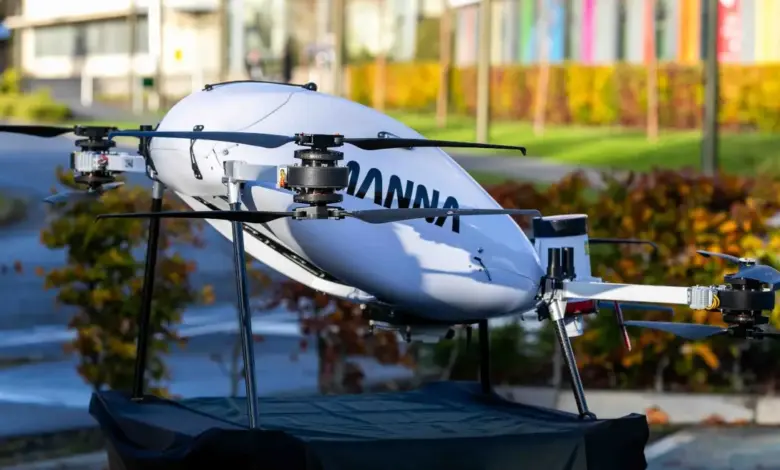
drone delivery firm Manna has confirmed a $50m Series B funding round and announced plans to create 400 new jobs across Ireland and the US, marking a clear growth inflection for the company.
What Is the Current State of Play?
The funding round brings total investment in the company to $110m and includes participation from ARK Invest, Schooner Capital and the Ireland Strategic Investment Fund (ISIF), alongside existing investors Enterprise Ireland, Coca-Cola HBC and Molten Ventures. The hiring push will expand headcount from 170 to more than 570, with the 400 new roles understood to break down as 300 in Ireland and 100 in the US. Roles will span robotics, software engineering, mechanical engineering, aviation operations, ground operations and regulatory functions, with a strong focus on STEM disciplines.
Manna says it has completed more than 250, 000 regulated drone flights, including 60, 000 in Blanchardstown. Operational footprints listed include Dublin (Blanchardstown), Balbriggan, Moneygall, Oranmore and Cork, and international activity in Texas and Finland. Service categories cited by the company include delivery of food, clothing, books and over-the-counter pharmaceuticals, and it has simulated hospital sample transport with The Rotunda Hospital.
What Happens When Drone Hiring and Funding Scale?
The announcement combines three forces that will shape near-term trajectory: a sizeable capital injection, institutional investors with scale, and aggressive hiring concentrated in STEM and operations. Investor participation from ARK Invest, Schooner Capital and ISIF provides both growth capital and credibility; Enterprise Ireland and other existing backers signal continued domestic support.
- Best case: Manna translates funding and hiring into accelerated manufacturing and operations from its Irish bases, broadening service reach internationally while preserving a high share of advanced STEM roles at home. One investor source cited in context suggested the round could precede a larger capital injection.
- Most likely: The company scales methodically—increasing flights, consolidating operations in its current hubs, and hiring to fill robotics, software and aviation roles—raising total employment and operational density in Ireland while expanding select US operations.
- Most challenging: Growth faces operational and competitive friction. The company will need to navigate aviation and regulatory demands as it scales, and it operates alongside named competitors that also pursue delivery logistics at scale. Slower regulatory clearance or stiffer competition could constrain planned expansion or delay realization of scale benefits.
What Should Stakeholders Anticipate and Do?
Employers and talent: companies recruiting in robotics, software and aviation should expect heightened competition for STEM talent in regions where Manna expands. Training and retention strategies will matter as 400 jobs are distributed across manufacturing, development and operational roles.
Policymakers and economic agencies: institutional stakeholders already cited the announcement as a vote of confidence in national innovation and advanced manufacturing. Continued engagement on regulatory frameworks and infrastructure that support scaled operations will be central to converting investment into sustained economic impact.
Investors and partners: the mix of backers illustrates both commercial and strategic appetite for drone delivery at scale. The presence of public and private capital suggests a pathway for follow-on funding if operational milestones are met.
For readers watching this sector, the core implication is straightforward: Manna’s $50m raise and 400-job plan materially increase the company’s ability to scale manufacturing, software and flight operations from its Irish foundation while expanding US activity. That combination of capital, hiring and operational track record is the immediate signal to watch as the company attempts to turn investment into expanded services and sustained employment in the drone