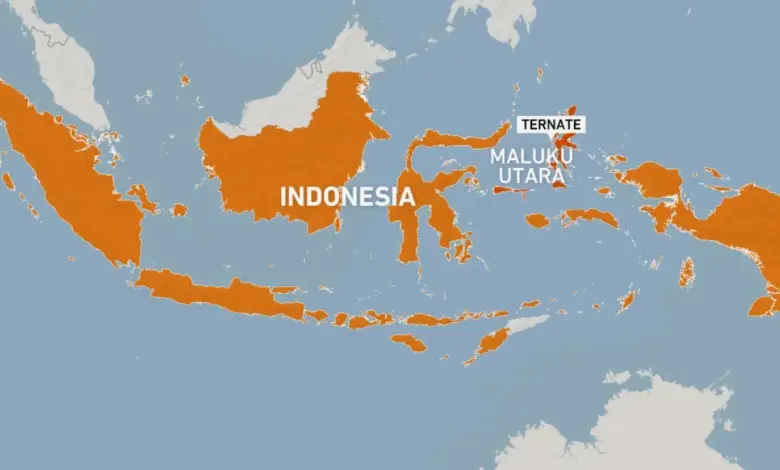
A 7. 4-magnitude event in the Northern Molucca Sea has set off tsunami alerts across a wide arc, but on-the-ground reports show concentrated destruction and at least one fatality — raising basic questions about preparedness and public messaging after the indonesia earthquake.
Indonesia Earthquake: What is not being told?
Verified facts: The United States Geological Survey (USGS) recorded the seismic event, initially logged at magnitude 7. 8 before being revised to 7. 4, with a depth noted at 35km. The USGS placed the epicentre roughly 120–127km from the city of Ternate. The US Tsunami Warning System and the Pacific Tsunami Warning Center issued alerts that waves were possible within 1, 000km of the epicentre, including coasts of Indonesia, the Philippines and Malaysia. Forecasts from tsunami authorities included potential wave heights of 0. 3 to 1 metre above tide level for some Indonesian coastline and lesser sea-level changes for other regional coasts. The Japan Meteorological Agency warned of slight sea-level changes for Japan, and Australia’s bureau of meteorology advised there was no tsunami threat to the Australian mainland, islands or territories.
Verified facts: National seismic authorities reported two aftershocks of magnitude 5. 5 and 5. 2 and cautioned that more are expected. A local search and rescue team said a 70-year-old woman died after being crushed by building debris in Minahasa regency, North Sulawesi. Rescuers shared video evidence of a badly damaged building at a Manado sports complex and described debris and bent metallic structures. The national geological agency advised the public to avoid coastal areas and cliffs prone to landslides and to follow evacuation signage. Local authorities in cities close to the epicentre were urged to prepare for evacuations.
Evidence and documentation: How the warnings and the damage line up
Verified facts: Timing and placement details are consistent across institutional reports: the event occurred early local time and was logged by the USGS; tsunami authorities issued a broad alert zone extending up to 1, 000km from the epicentre. Documented local consequences include structural damage in Manado and at least one fatality in Minahasa regency. The national geological agency documented aftershocks and public-safety guidance.
Analysis (informed): The combination of a high-magnitude event, a declared tsunami alert covering a vast maritime radius, and concentrated evidence of structural collapse onshore points to two competing operational challenges. First, broad tsunami messaging aims to protect large populations across multiple countries but can obscure where immediate search-and-rescue and relief resources must be deployed. Second, aftershock forecasts and landslide risk advisories require rapid, local execution of evacuation plans that hinge on effective communication and pre-positioned response capacity. These are matters of emergency management practice rather than new seismic science, and they affect whether warnings translate into lives saved.
Stakeholders and accountability: Who must answer and who must act?
Verified facts: Institutional actors currently engaged include the US Geological Survey, the US Tsunami Warning System, the Pacific Tsunami Warning Center, the Japan Meteorological Agency, Australia’s bureau of meteorology and the national geological agency. Local search-and-rescue teams are conducting recovery and documenting casualties and damage.
Analysis (informed): Responsibility for public safety is shared between international warning centres that detect and forecast wave potential and national and local agencies that operationalize evacuations and post-quake response. The verified record exposes a gap: international alerts communicate remote risk across a wide geography, while verified local impacts—structural collapse and a confirmed death—show immediate needs concentrated in specific communities. That gap must be bridged by clear protocols for rapidly translating regional alerts into local action, transparent public reporting of damage assessments, and timely disclosure of aftershock risk by the national geological agency.
Accountability call (informed): Public authorities should publish consolidated, time-stamped damage and casualty tallies, make evacuation routes and shelter capacities explicit, and clarify how international tsunami advisories will trigger local operational thresholds. Independent review of the recent event’s warning-to-evacuation timeline would help identify whether warnings were timely and accessible to vulnerable coastal and urban populations.
Final verified note: The indonesia earthquake produced both a wide-reaching tsunami alert and immediate, verifiable local harm. Clearer alignment between regional warning systems and local response operations is essential to reduce casualties and confusion in future events of this scale.