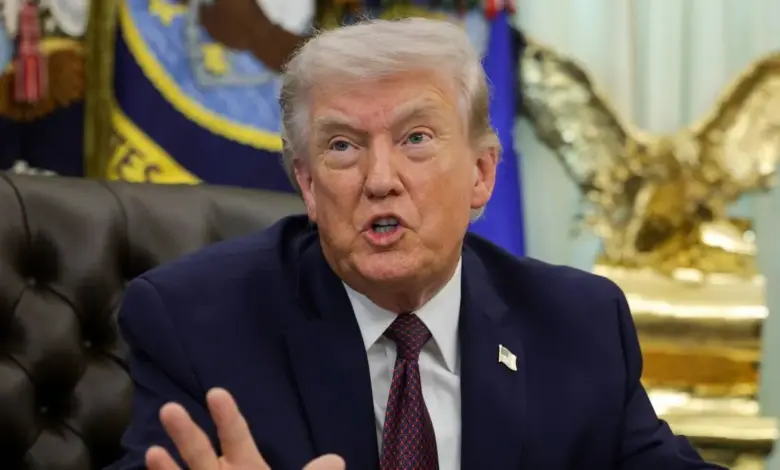
In a cramped Oval Office moment captured on clips, President Donald Trump snapped at a White House correspondent who interrupted him, calling her “a fresh person” as he dismissed the interruption and steered the exchange toward Iran and policy. The brief confrontation came as he was answering questions after signing an executive order related to voting rules.
framing of the exchange: voice, interruption, reaction
The scene opened with a reporter pushing for clarification on the administration’s posture toward Iran. “No, Iran doesn’t have to make a deal, no, ” the president interjected, before the reporter tried to resume the question. He cut again: “Wait a minute, you want me to answer the question? You’re a fresh person. We’ve had a lot of problems with you, haven’t we?” The rebuke landed amid a flurry of questions that ranged from foreign policy to domestic economic concerns.
What the moment says about press relations and policy focus
This exchange was not isolated theater. It echoed a pattern in which the president has publicly singled out journalists during on-the-record encounters and used sharp language when an answer is interrupted or a question is unwelcome. The moment also dovetailed with broader policy moves: the president was taking questions after signing an executive order aimed at creating a national voting list to limit mail-in voting, and a separate line of questioning about rising gas prices drew him into a prolonged discussion of Iran and military operations.
Voices on the scene: the president, the reporter, and the response team
President Donald Trump’s words dominated the exchange: he defended his Iran posture and objected to the interruption. The reporter, White House correspondent Libbey Dean, pushed to pursue answers on Iran-related military operations and was met with the “fresh person” rebuke. The White House’s Rapid Response team later framed the encounter as a political victory for the president, characterizing the interaction in celebratory terms.
Implications and reactions inside the room
For those who watched closely, the encounter illuminated three pressures converging in the briefing space: a presidency shaping its public narrative around national security, reporters pressing for accountability on both foreign policy and the cost-of-living questions, and rapid-response communications teams quick to turn tense moments into messages. When a question about fuel costs shifted the president into an extended Iran-focused answer, it made clear how domestic concerns and foreign policy can collide in short exchanges and prompt swift messaging responses.
Officials present leaned on prepared lines and institutional muscle: an executive action on voting rules, terse pushbacks in real time, and immediate framing by communications staff. The exchange also highlighted a gendered pattern of sharp rebukes that has emerged in prior interactions, a dynamic that shapes how reporters of different backgrounds navigate follow-ups under pressure.
As the room dispersed, the line between on-the-record answers and political theater felt thin. The reporter who interrupted left with a terse rebuke; the president left having reasserted his talking points on Iran and the limits of negotiation; the communications apparatus left ready to amplify a short, decisive narrative. The moment closed with the same abruptness with which it began, and viewers were left parsing whether the hot exchange had clarified policy or simply underscored a volatile rapport between leader and press.
Back in the Oval Office, the now-familiar choreography of interruption, rebuke and rapid messaging continued to shape public perception — a small scene that, on screens and beyond, revealed how individual confrontations can become policy moments and political signals.